

In November 2020, at the height of the “woke” movement, I became a casualty of what I call revenge culture. It destroyed my livelihood, shattered my reputation, and upended my life. For five years I’ve struggled to rebuild what was taken from me, warned by lawyers not to speak out for fear of lawsuits or court sanctions. But I can no longer remain silent. People must understand how devastating this culture of vengeance can be for ordinary individuals who have done nothing wrong.
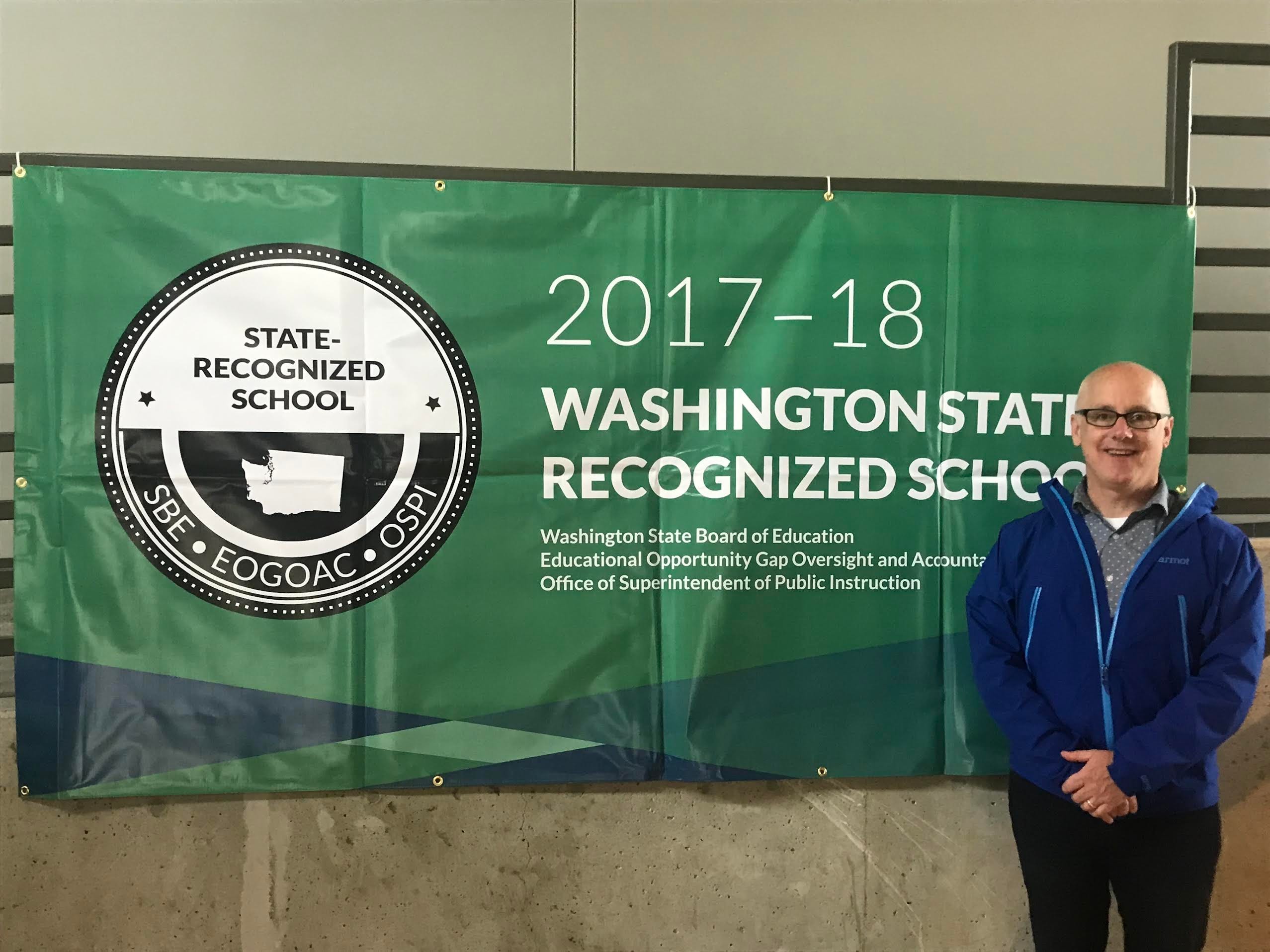
In the fall of 2016, after fourteen years of exemplary teaching in the Seattle School District, I achieved my dream job as an elementary school assistant principal. The following year, I was promoted to principal. By the spring of 2019, our school was recognized as one of the district’s top performers, with outstanding feedback from students, staff, and families. We worked tirelessly to create a welcoming, inclusive, and culturally responsive environment—and it was paying off. Washington State’s Educational Opportunity Gap Oversight and Accountability Committee honored us multiple times for our work in eliminating opportunity gaps.
But even as we celebrated our success, troubling changes were taking root across the district.
By 2019, a sweeping ideological shift had taken hold, redefining what it meant to pursue equity and anti-racism in Seattle schools. At a principal meeting that fall, a district administrator stated that only white people were capable of racism because “white people created racism.” During a subsequent district DEI training, the instructor told our staff that “all white people are racists,” and urged attendees to write “I’m a racist” on a sign, wear it, take a photo, and post it on social media as an act of acknowledgment. He even showed a photo of a participant who had done so.
As Luke Rosiak later documented in his book Race to the Bottom: Uncovering the Secret Forces Destroying American Public Education, in January 2020 a Seattle School District Ethnic Studies Program Manager wrote to a senior official, “You’re just a white person at the central office, so everything that you say is racist.” Such rhetoric created an environment ripe for weaponization—where accusations could easily replace facts.
In the fall of 2020, I had to place a teacher on progressive discipline for repeatedly arriving late and leaving her kindergartners unsupervised, frightened and alone. Soon after, she retaliated by leaking false claims to a local NPR reporter, accusing me of discrimination and even of “caging” a black student. The truth? The student and I were playing ball in the fenced court pictured below:
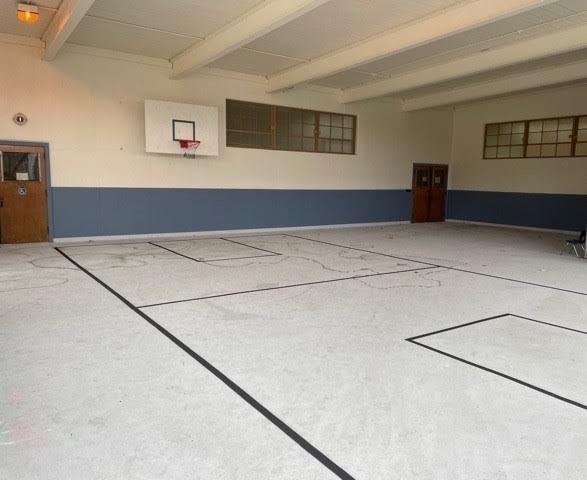
When the district learned of the allegations, they told me they needed to “save face” and would be letting me go. Since they found no evidence to support the claims, they couldn’t fire me—but they paid out the remainder of my contract and forced me to leave the job I loved.
Shortly after my departure, KUOW (Seattle’s NPR affiliate) published a sensationalized, one-sided article describing the playcourt as a “cage.” The story went viral, picked up by The New York Post, The Washington Post, and other outlets. Other than the original story, not a single reporter reached out to me for comment—not even when it became the lead story on local evening news.
The media frenzy triggered investigations by both Seattle Public Schools and the Washington State Office of Superintendent of Public Instruction (OSPI). Twenty-six staff members were interviewed, including eight staff of color. Not one person could corroborate any claims of discrimination or misconduct. One even described me as “very much an anti-racist.”
After three grueling years, I was fully exonerated. Both Seattle Schools and OSPI dismissed the investigations for lack of evidence and credibility. I retained my teaching and principal certifications with no reprimands.
Seattle Schools concluded:
“The investigator’s findings indicate that although [teacher] expressed concerns about a number of alleged events, she was unable to recall specific dates, times, or details to support that the incidents occurred or to support a finding of discrimination... The investigator was unable to find any supporting evidence for those allegations.”
OSPI stated:
“OSPI has dismissed this case because we have found that the evidence does not support a violation.”
But by then, the damage was irreparable. My name was forever tied online to the phrase “caged a student.” In my hometown of Seattle, where I’d lived all my life, everyone—from old classmates to members of my childhood church—had seen the lies. My reputation, painstakingly built over decades, was in ruins.
For five years I have been unable to find full-time work. One school district told me:
“The determination has been made to not move your application for substitute teaching forward... based on a review of your background and previous employment.”
Another wrote:
“Your Applicant Disclosure form excludes you from employment with our district.”
Despite being cleared of all wrongdoing, I was effectively blacklisted from education.
The repercussions went far beyond my career. In 2022, a neighbor began building a fence near my property line (an extension of my front yard). When I politely informed him it was illegal, he and his wife weaponized the old news stories, shouting, “It’s time for you to go back to work—I know you caged kids and got fired!”
Soon after the city ordered them to remove the fence, an anonymous letter appeared in neighbors’ mailboxes. It began, “Hello, it is important that you know who you live around and allow around your children…” It included my photo, address, and links to the false articles. Though I met personally with each neighbor to tell them the truth, the harassment hasn’t stopped.
The cruelty even reached my children. Recently, my son told me with a trembling voice that his friend’s mother found out about the articles. She told her child that they were not allowed at our house or anywhere around me. Hearing that nearly broke me. My family—my innocent wife and children—have suffered because of lies.
Since the story broke, I’ve endured public humiliation, death threats, lawsuits, and a deep depression I’d never known before. I lost my livelihood, my passion, and my sense of purpose. I felt like a log in a raging river, tossed and powerless.
Now, as I approach my 60th birthday, instead of preparing for retirement, I’m starting over. After countless rejections from both the private and public sectors, I found solace in volunteering at a local nonprofit. That volunteer work became a part-time job, earning a fifth of my previous salary, but it restored a glimmer of meaning to my life. I help people in need every day. It gives me purpose, but it’s not enough to support my family. And I still ache for the profession that once defined me. Education wasn’t just a career—it was my calling.
Even after being completely exonerated, Seattle Schools has refused my repeated requests to be rehired.
My story is not unique—but it’s proof of what happens when truth is sacrificed to ideology, and when vengeance replaces justice. No one should ever have to endure what I did for simply doing their job.
Text FAIRFORALL to 707070 to donate to FAIR’s 250 for 250 Campaign.

If Ed’s story moved you, consider joining us for FAIR’s Supporting Teachers Under Pressure webinar on November 17th at 7pm EST.
We welcome you to share your thoughts on this piece in the comments below. Click here to view our comment section moderation policy.
The opinions expressed here do not necessarily reflect those of the Fair For All or its employees.
In keeping with our mission to promote a common culture of fairness, understanding, and humanity, we are committed to including a diversity of voices and encouraging compassionate and good-faith discourse.
We are actively seeking other perspectives on this topic and others. If you’d like to join the conversation, please send drafts to submissions@fairforall.org.

Hi Mary - Yes, FAIR is the one organization that listened and gave me an opportunity to tell my side of the story. Forever grateful!
Great post and article. I never thought about how it's the "E" in DEI that ruins it. I agree that diversity and inclusion are a positive thing, but DEI goes too far. When it gets to the point of hyper focusing on oppressors and oppressed and making racist statements such as "all white people are racist," it's divisive, destructive and dangerous, such as what happened to Richard Bilkzto: https://quillette.com/2023/07/21/rip-richard-bilkszto/
True DEI training should focus on understanding and celebrating our differences, not dividing us.
On another note, you mentioned, “so many people who got burned were the ones who were originally holding the pitchforks.” Yes, I had drunk the Koolaid and got burned. So did the district superintendent, who threw me under the bus by basically stating that they got rid of me so the problem is over, as reported here: Seattle schools superintendent responds to racism allegations – KIRO 7 News Seattle
And then there was the school board president, who was the most woke person I’d ever met: REVEALED: Woke Seattle school board chief who shut down gifted and talented sites because they had too many white and Asian students was accused of RACISM by colleagues during anti-racism training scheme | Daily Mail Online
You’re right that the woke movement eats their own.