

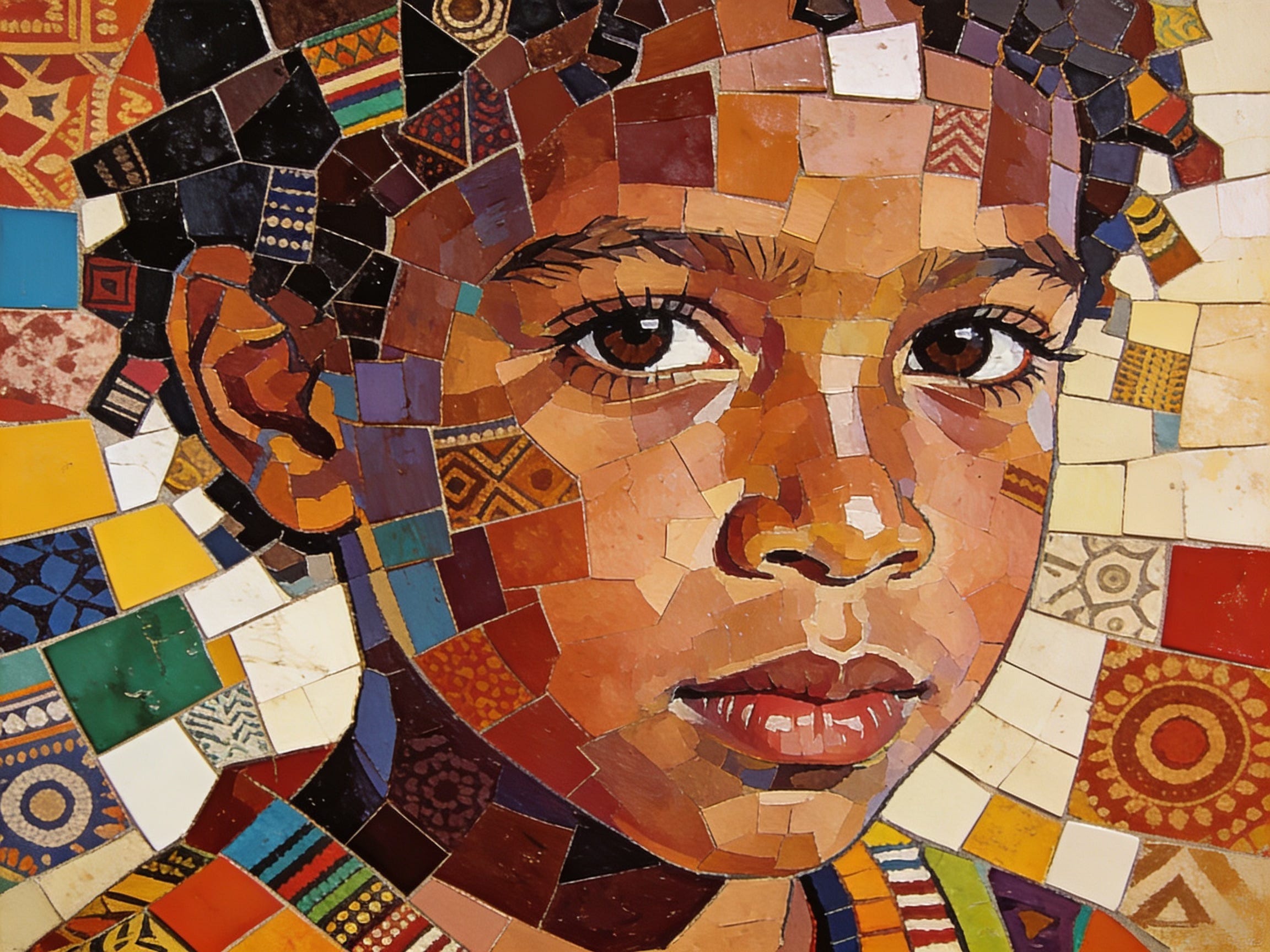
Several years ago I began hearing whispers of something I couldn't quite believe: interracial relationships like mine were now under suspicion. People of color who chose white partners were being labeled "white-adjacent," as if somehow complicit in their own erasure. White partners, in turn, were accused of “exploiting” or “colonizing” the bodies of people they love. As someone who has spent her entire life in interracial and interethnic friendships and relationships, I was mystified and disheartened by this new narrative.
Because my mother was an anthropologist, her research endeavors and social functions often immersed me among people from a variety of races, ethnicities and cultures different from my own. I learned to appreciate differences but also to recognize our shared humanity from a young age. In high school, my first boyfriend was Mexican American; the next, Native American and French; another, Puerto Rican.
As a college student traveling the world, I was drawn to people of all ethnicities and origins, eager to learn new perspectives and ways of being. It was during that time that I met and married my former South African husband. The women in my life who came later were equally varied: one Mexican American, another Jewish American; my wife of twenty years is African American. Throughout the years of study, travel, and career, my friendships extended across an even wider range of races, ethnicities and cultures. Cultivating connections across differences is, quite simply, in my nature.
Until 2020, I never gave much thought to the “interracial” nature of my own family beyond ensuring that our multiracial son fostered relationships with both sides of his extended family and had mentors who reflected his unique heritage. Family and friends in California and Montana have always embraced us. But shortly after the death of George Floyd, I started paying attention to the messages our 7th grade son was absorbing from teachers and administrators at his school. I noticed they were categorizing him as "black" to boost their diversity numbers while assigning him to read Stamped for Kids, a book that sorts every child into one of two roles: oppressor or oppressed.
Except our adopted son is neither.
His birth father is African American, and his birth mother is Mexican-Zacatecan. His two mothers are African American and European American. Our son isn’t a fraction of any of these heritages; he is all of them — just like Myles, one of the children in W. Kamau Bell and Melissa Hudson Bell’s HBO documentary 1000% Me, who describes himself as “100% Filipino, 100% African American, and 1000% a person.”
Multiracial kids are 100% of each of their parent’s ancestry, all at once and simultaneously. Yet this reality wasn’t reflected in the “black” box our son’s school had forced him into.
• • •
This experience prompted me to look more deeply into the historical practice of flattening people's identities into a single category. That’s when I learned that the monoracialization and invisibility of multiracial children runs throughout American history and continues today — initially to discriminate against people of color, and now to satisfy diversity, equity and inclusion metrics
In the 1800s, the infamous “one-drop rule” was instituted to exclude any individual with a known black ancestor from White society. Anti-miscegenation laws criminalized interracial marriage and treated the children of those unions as illegitimate. “Mulattoes,” as multiracial people were referred to at the time, were removed from the 1900 census, restored in 1910, then dropped once more in 1930. Each shift was driven by the political interests of the day.
In 2000, the U.S. census model changed once again, permitting Americans to “mark one or more” races to describe themselves. The multiracial population has since climbed to roughly 8.5 million Americans in 2024, growing about 2.7 percent a year and ranking among the fastest-growing of any demographic group. This demographic is also the country’s youngest: the median age of multiracial Americans of black ancestry, like our son, is just 19.5 years old, and nearly half are under 18.
Multiracial children comprise a large share of the next generation, yet many of them aren’t being counted — and even more aren’t being understood.
This dynamic even plays out in descriptions of our most prominent multiracial Americans. Barack Obama, whose mother was white, is almost always described as “the first black president.” On the other hand, Kamala Harris, whose parents are Jamaican American and Indian American, is described as the “first black and Indian American Vice President.” When both heritages are non-white, each is acknowledged; when one is white, however, that heritage quietly disappears. This pattern — so consistent and so unexamined — convinced me that this was a story far bigger than my own family.
• • •
I had seen this same erasure play out closer to home. For two years I served on the DEI committee of our son’s school in Missoula. My wife joined me in proposing the school become a FAIR School, committed to cultivating an environment that honors both unique identities and common humanity, welcomes diverse perspectives, and teaches civil discourse as a skill for democratic life. We presented our proposal to the school, after which the DEI committee dutifully formed a subcommittee to “explore” the idea. Despite our numerous attempts to follow up, we never heard from it again.
Months later, when the committee turned its attention to comparing the diversity of the school’s student body to that of Missoula and Montana more broadly, I volunteered to gather the data. What I found surprised me. The largest non-White group in the city, and in the state as a whole, is multiracial — yet our school provided no category for multiracial or biracial students. These children were instead sorted into a single ethnic minority box chosen by administrators: “African American,” “Asian American,” or “Latin American.” Regardless of which non-white heritage the school elected to assign, the rest of the child — every other heritage they were 100% of — simply disappeared from the data.
Determined to see how widespread this was, I pored over the school’s family directory and discovered that every single “student of color” enrolled had a white parent. They were either adopted by, or born to, a white and non-white parent. In other words, the school's diversity profile consisted almost entirely of children whose white heritage had been erased to meet diversity metrics.
Ironically, school administrators had the diversity they claimed to want. They simply refused to see it.
Watching our son navigate these frameworks made one thing clear: they weren't built for him. Race essentialism, mandatory affinity groups, and rigid oppressor/oppressed binaries do more than oversimplify the identity of multiracial children; they subtract from them. These children, and all children, deserve an education that does the opposite: one that honors every part of who they are, recognizes both America's failures and its successes, and cultivates the discourse skills needed to live in a diverse democracy.
My family’s experience, it turns out, wasn’t unusual. While listening to FAIR Advisors Eli Steele and Greg Thomas discuss multiracial identity and how to navigate belonging when society demands we choose, something clicked. That’s when I realized that arguing against existing frameworks wasn't enough. Someone needed to build a better one, starting with the children these frameworks were leaving behind.
• • •
That conviction ultimately led me to FAIR’s curriculum work. I served as the lead curriculum developer for Many Stories, One Nation, a high school Ethnic Studies course that tells the American story through the lived experiences of diverse and historically underrepresented communities, all within the framework of our shared founding principles. The curriculum has been independently assessed by the Johns Hopkins School of Education, meets ethnic studies standards in California and Oregon, and is adoption-ready for Fall 2026.
The second lesson in the curriculum’s first unit — “Identity Beyond Boundaries: Understanding Multiracialism in America” — puts students in direct conversation with the questions our family has been navigating for years. Through Toni Morrison’s short story Recitatif and contemporary case studies, students examine how racial categories are socially constructed, how multiracial experiences illuminate identity complexity for everyone, and how navigating multiple heritages can build resilience rather than fracture identity. Across nine units, the curriculum centers Indigenous, black, Latino, Asian, multiracial, religious, and immigrant voices alongside the founding ideals their experiences have tested and expanded. Civil discourse — the ability to engage across difference with honesty and respect — is woven throughout the course.
FAIR built Many Stories, One Nation for students like our son and for all students navigating a country that’s more complex than any single category can capture. If you’re an educator, administrator, or parent who wants to learn more or bring this curriculum to your school, please visit manystoriesonenation.com.
This is the course I truly hope my son has an opportunity to take before he finishes high school.
Lisa Gilbert, MPH, MA, is founder of Convergence Educational Consultancy. She lives in Montana with her wife and son.
We welcome you to share your thoughts on this piece in the comments below. Click here to view our comment section moderation policy.
The opinions expressed here do not necessarily reflect those of Fair For All or its employees.
In keeping with our mission to promote a common culture of fairness, understanding, and humanity, we are committed to including a diverse range of voices and to encouraging compassionate, good-faith discourse.
We are actively seeking perspectives on this topic and others. If you’d like to join the conversation, please send completed drafts to submissions@fairforall.org.

Thank you so much for this thoughtful piece. I also enjoyed perusing the Many Stories, One Nation website. I teach baccalaureate-level nursing students, so my population and content focus are very specific. However, the divisive DEI ideology is alive (rebranded as culturally responsive curriculum) and well in the EdD courses that I am taking. I am tired of reading about the "whiteness of education" and that I should speak to my students in the lingo spoken at home. I am tired of diverse educational strategies that focus only on the color of the students' skin (unless the skin is white) and not on the whole person. My teaching philosophy centers on teaching students HOW to think and NOT what to think. The Many Stories, One Nation curriculum focuses on critical thinking and analysis. I hope that it is implemented in ALL high schools. Also, I shared information about the curriculum in one of my EdD discussion posts that focuses on "all good culturally responsive curriculum creators use only the 8 concepts developed by New America." I bet I lose points! Again, thank you for such a thoughtful post and for helping to develop a truly "culturally responsive" curriculum.
" Race essentialism, mandatory affinity groups, and rigid oppressor/oppressed binaries do more than oversimplify the identity of multiracial children; they subtract from them. "
It subtracts from everyone...rigid oppressor/oppressed binaries are not beneficial to anyone except those who wish to sow animosity and hatred and get power from it. Mandatory affinity groups likewise. These all reduce people to members of an identity group which is expected to think/behave/be a certain way, to a stereotype. It certainly should not be getting taught. A shared cultural history can be recognized without these rigid (unsupported, we are not stereotypes or determined by our ancestry in key ways that are assumed in these groups) assumptions.