


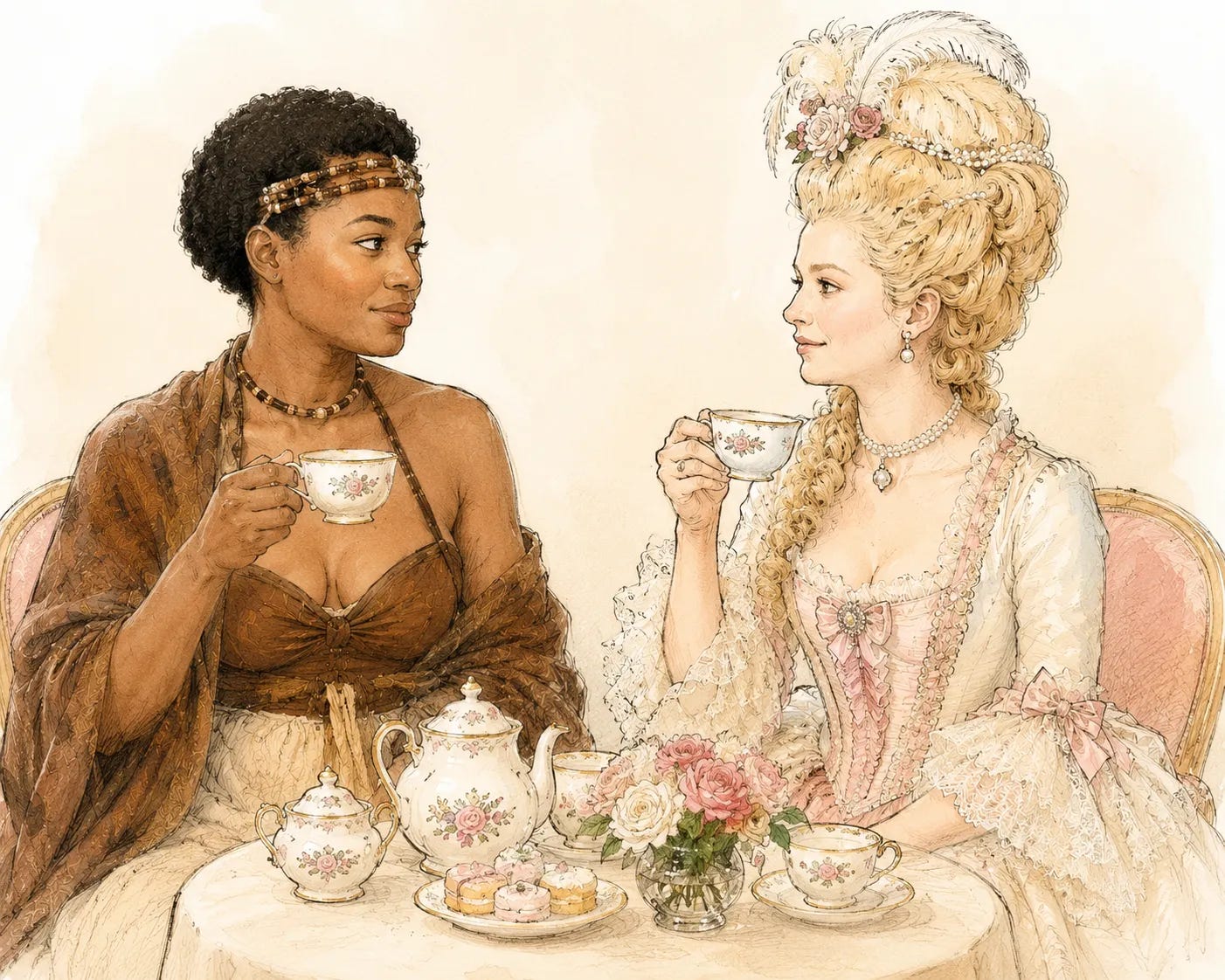
Wildcard: On Authorship and Refusing the Script
This week, we featured Johari Mayfield’s (M. Octavia Faulkner) reflection on Wildcard, an evolving performance project inspired by the life of Saartjie Baartman. What began as an attempt to confront spectatorship and objectification gradually became something more personal: an exploration of embodiment, artistic integrity, and the tension between inherited narratives and lived experience.
Drawing from years of research, collaboration, and recovery, Mayfield traces how Wildcard transformed from an intellectual exercise into what she describes as a “satirical séance” — a communal practice of integration rather than accusation. Her essay raises enduring questions about identity, historical memory, and the relationship between art and authenticity, suggesting that wholeness cannot be engineered or imposed, but must be continually practiced.
“Wildcard is evolving into a larger work — part satire, part embodied inquiry- and what I call a “satirical séance.”…Through movement, dialogue, and humor, participants explore what it means to remain whole — to resist fragmentation in their own thinking and bodies. The aim is not accusation, but integration. Wholeness is not achieved in isolation; it is practiced in relationship.”

When the UK Betrayed Justice for White Guilt
This week, FAIR Board of Advisors member and filmmaker Eli Steele examines the cultural and historical forces that have shaped modern conversations about race, identity, and institutional responsibility in Britain. Reflecting on the legacy of anti-racism policies and the tension between group identity and individual dignity, Steele argues that societies flourish when they remain grounded in universal principles rather than inherited guilt or tribal divisions.
His essay explores how the pursuit of justice can lose sight of its original aims when institutions prioritize narratives over individuals, and asks what it would mean to renew a shared commitment to character, accountability, and common humanity.
“If we do not wish to be defined by tribes or condemned because of our skins, then we must accept that we are judged by what we do. That is what it means to be Western. We are judged by our character and actions and that includes protecting and defending the universal Western principles and values for all.”

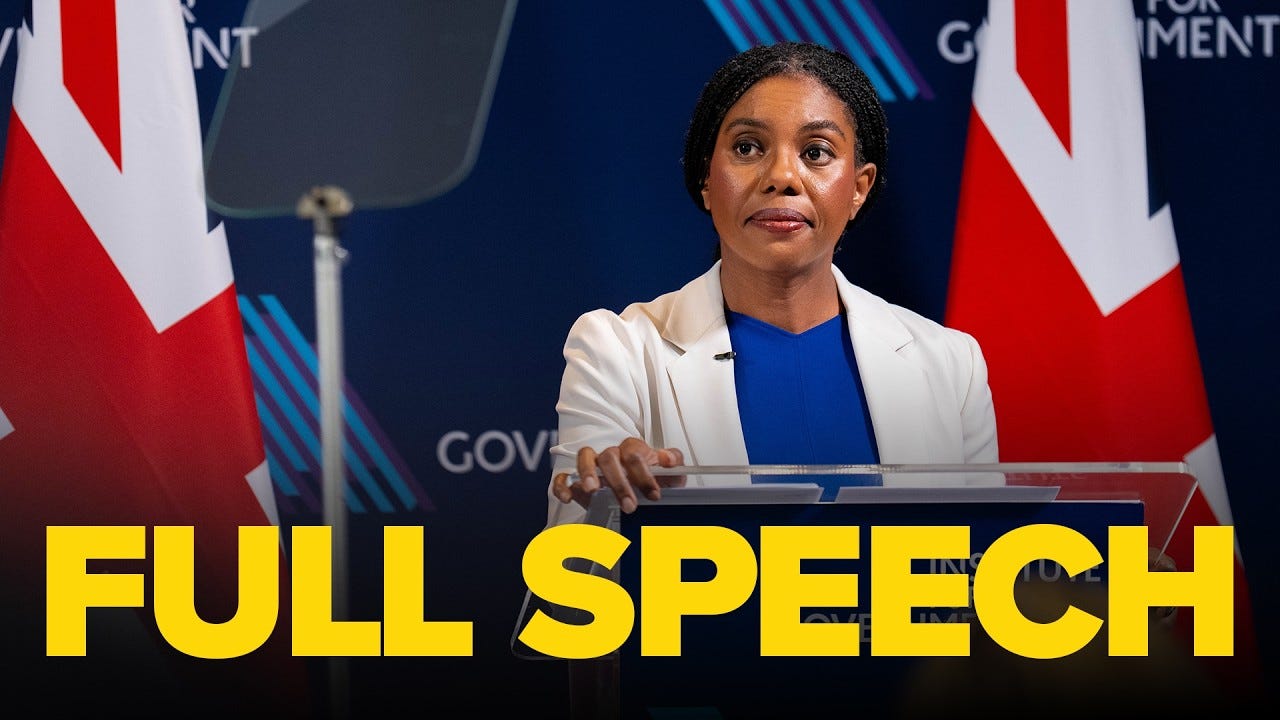
Kemi Badenoch: My Plan to Bring Back Common Sense
Kemi Badenoch, leader of the British Conservative Party, gave a powerful speech outlining her vision for restoring what she describes as common sense to public life. The speech provides a compelling case for the importance of free speech, institutional trust, and civic confidence. Addressing questions of national identity and political culture, Badenoch argued that democratic societies function best when they are grounded in shared values, open debate, and a willingness to engage with disagreement rather than suppress it.
“The answer to Black Lives Matter is not a white lives matter born of the same racial grievance. We will not defeat identity politics by building a mirror image of it.”
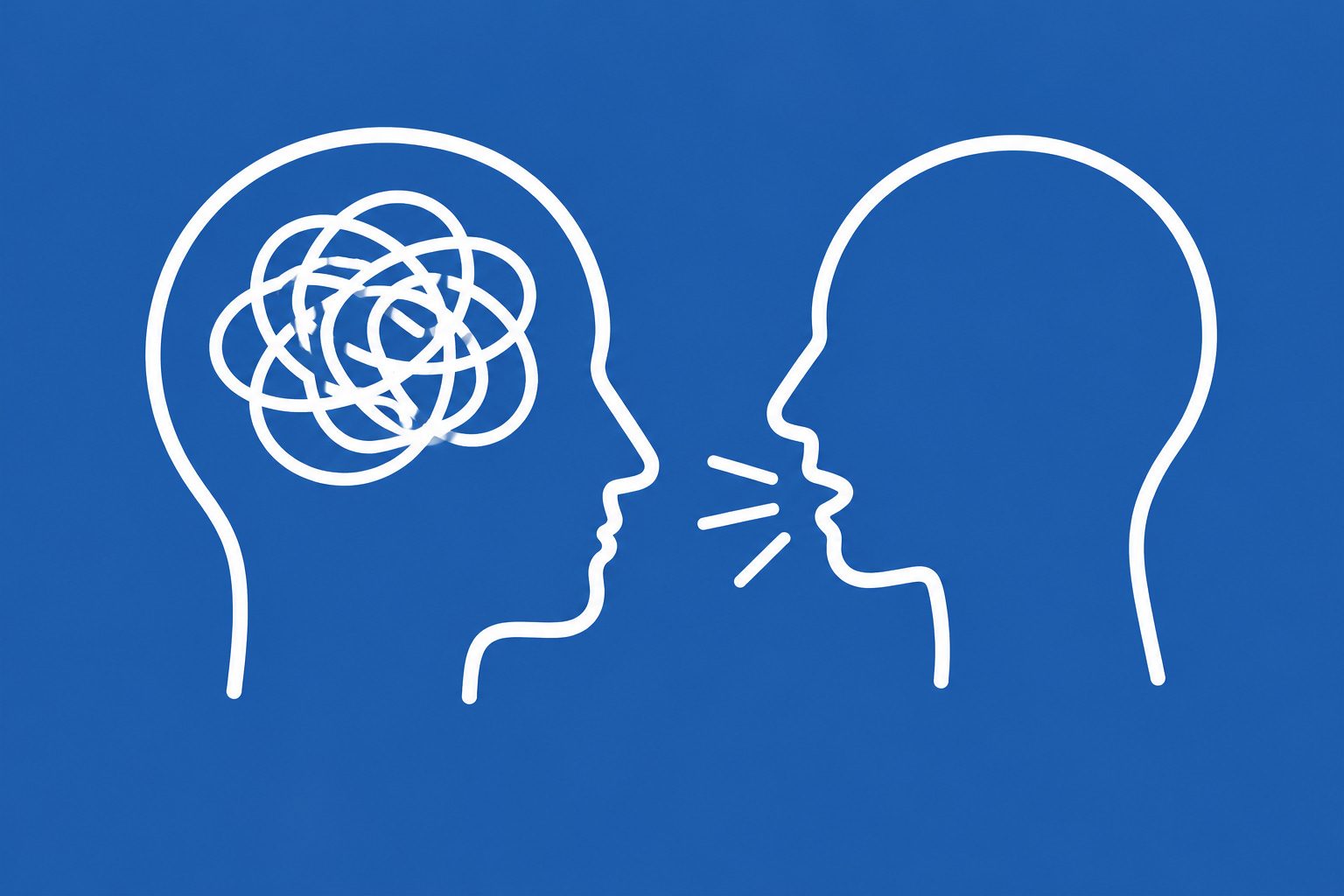
Critical Social Justice and Its Cognitive Distortions: Diagnosing the Liberal’s Poor Mental Health
In a new paper, Arnoldo Cantú and Nathan Gallo explore the relationship between ideology and mental health. Drawing on concepts from Cognitive Behavioral Therapy, the authors examine how certain patterns of thinking embedded within contemporary social frameworks may reinforce cognitive distortions and shape psychological well-being.
Their paper offers an alternative perspective on rising rates of psychiatric diagnoses and invites further discussion about the connections between cognition, culture, and mental health.
"In addition to the distortions listed, a throughline that can certainly cut across the entire ideology is that of the certainty trap: “A pervasive cognitive distortion that leads individuals to treat their knowledge and beliefs as definitive and final rather than provisional, particularly regarding contentious social and political issues”
democratic societies function best when they are grounded in the ***universal declaration of human rights - because that is the 'shared values', society needs to function!***, open debate, and a willingness to engage with disagreement rather than suppress it. because that is the change importing millions of non universalists into the west who don't follow those rules... who are either from theocracies or marxist states etc... aka anti universalist cultures.
This is the strange death of europe... that douglas murray has identified and that everyday people are seeing the abrogation of.
Love to read the article about Critical Social Justice, but the full article is paywalled.