


Rejecting the Rejection of Empathy
For FAIR’s Substack, John Wood, Jr. argues that empathy is being unfairly dismissed in today’s polarized politics. He contends that empathy is not just a feeling, but a practice of understanding those we disagree with, and warns that abandoning it risks dehumanizing our opponents and weakening democratic culture.
[Empathy] requires us to listen across differences, to sit with the discomfort of perspectives that unsettle our own, and to resist the temptation to dismiss what we haven’t yet tried to understand. Empathy, in this sense, is the foundation of deep listening, and deep listening is the foundation of democratic life.
The skills that make this possible — perspective-taking, active attention, the willingness to be changed by what we hear — are not mere instincts. They are practices. They can be learned, and they can be lost. Empathy does not require agreement. But empathy does require our love for our country to be reflected in our concern for our neighbors. Empathy requires us to take seriously the reality of the person across from us — their hopes, their fears, and the experiences that shape their convictions. That seriousness is what transforms a conversation into a community, and a community into a democracy.
We invite you to join us on Monday, April 27th, at 4pm PT/ 7pm ET for a webinar discussion with FAIR Advisors John Wood, Jr. and Ilana Redstone, moderated by FAIR Executive Director Monica Harris.


Documenting a Decade of Academic Meltdowns
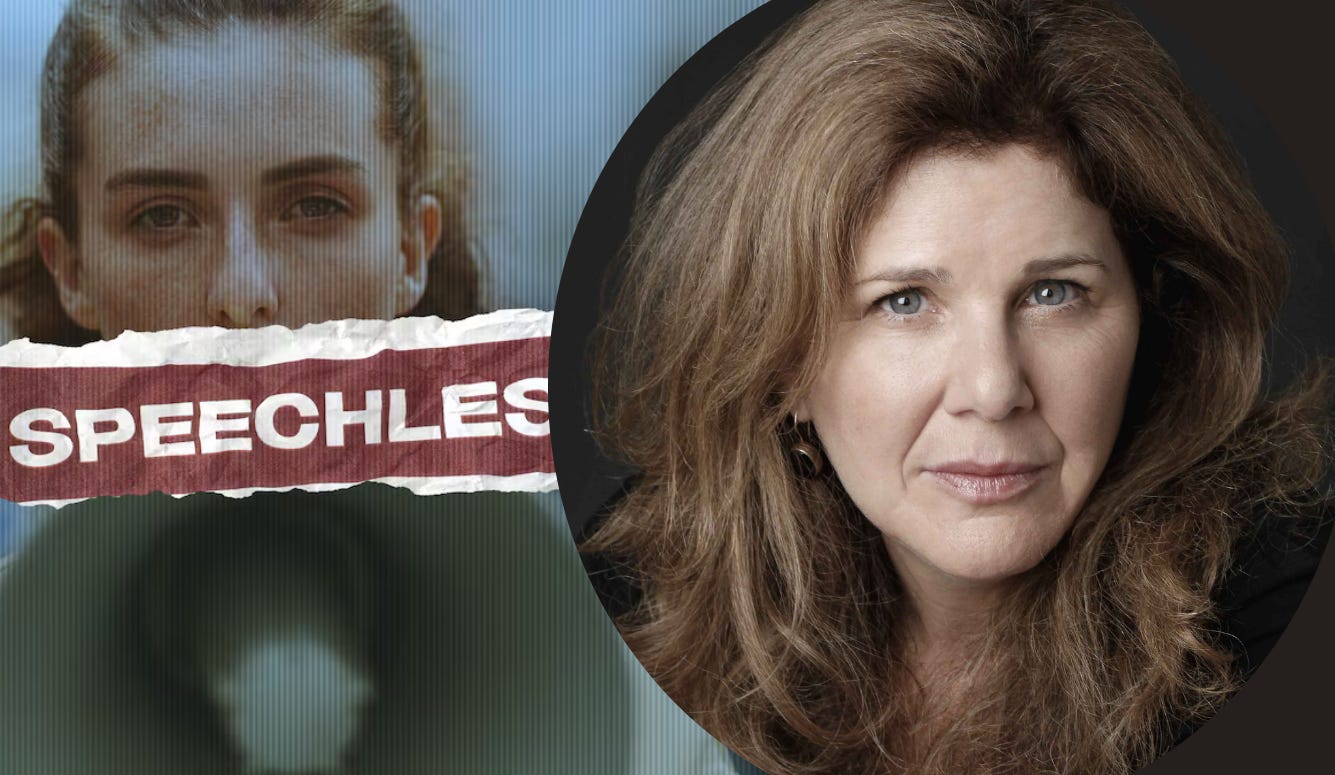
For Quillette, FAIR Advisor Jonathan Kay interviews Canadian filmmaker Ric Esther Bienstock about her new documentary Speechless, which explores the past decade of campus culture wars and their impact on free speech and civil discourse.
As I was watching Speechless, I realized that campus “cancel culture”—a term that now seems somewhat antique—has been around long enough that it has a history. And Speechless tells that history thoughtfully and fairly by focusing on a handful of major case studies—no fewer than five of which center on figures who will be well-known to loyal Quillette readers and podcast listeners: former Evergreen State biologist Bret Weinstein; Erec Smith a former professor at York College of Pennsylvania; philosopher Kathleen Stock, formerly of Sussex University; former Harvard evolutionary biologist Carole Hooven; and right-wing warrior Christopher Rufo, whom Ric and her producer accompanied as he was leading the teardown of DEI programs at New College in Florida, on behalf of his political ally, Ron DeSantis.
In our conversation, Ric discusses why she devoted so much of her life to this project—almost a decade in the end; and how she successfully sold her two-part documentary to the CBC, the BBC, and a number of non-English markets in Europe as well.
They Championed D.E.I. Now They’re Divided.
For The New York Times Opinion, FAIR Advisor Erec Smith joins a panel discussion to share his perspective on how DEI is practiced in universities and institutions. He argues that many DEI programs rely on rigid ideological frameworks — especially oppressor/oppressed narratives — that can oversimplify complex realities and discourage open discussion.
In recent years, diversity, equity and inclusion policies have shifted from an internal workplace initiative to a public reckoning. Critics argue that it has strayed from its original purpose, reshaping institutions in ways that are performative at best and discriminatory at worst… In this episode of “Divided,” we bring together four former D.E.I. leaders to reflect on their accomplishments and failures. Bo Young Lee, a tech executive, and Michael Yassa, a university professor, still see D.E.I. as a worthwhile endeavor and a set of ideals to strive for. Desiree Fixler, a finance executive, and Erec Smith, a professor, once shared that view, but have come to believe D.E.I. is counterproductive.

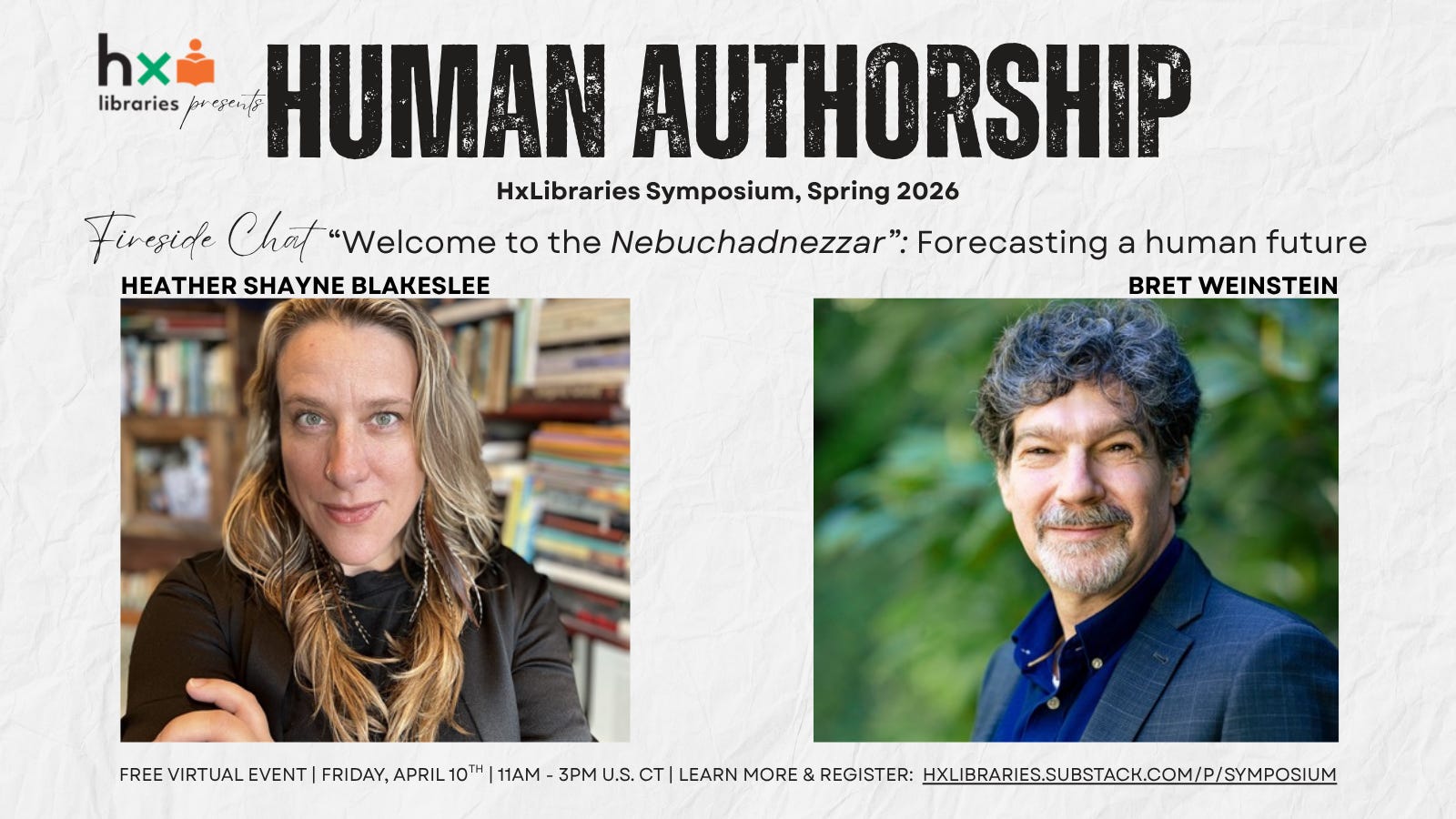
Welcome to the Nebuchadnezzar: Forecasting a human future
For Heterodoxy in the Stacks, Sarah Hartman-Caverly shares the written interview between FAIR board member Heather Shayne Blakeslee and evolutionary biologist Bret Weinstein, who share their “thoughts in-progress” on coexisting with AI while carving out a distinctly human niche.
[Blakeslee:] Ultimately, if you want to argue that humans are special, you have to get real religious real quick. You’re talking about a soul, I think—and that’s really uncomfortable for atheists or even rationalists, but I’m not sure how you avoid that path. I supposed that because I don’t think we have souls, that I’m more inclined to give moral status to non-humans, period, whether or not they have a human-type consciousness.
Our cultural norms and ethics are all over the place on whom and what we grant moral or legal status to. Over our history, some people have been given moral status but not others; we’ve granted legal status to some rivers; the Citizens United ruling granted personhood status to corporations. We give very narrow and limited consideration to other mammals, or non-human animals generally, which has never made sense to me: a great ape can be held against its will and basically tortured, but a corporation’s speech is protected by the first amendment? We have to sort this out, because this big AI tsunami is already in motion.


John Tomasi on the Diversity We Don’t Discuss
For Lean Out with Tara Henley, Tara Henley interviews John Tomasi, president of Heterodox Academy, about the new book, Viewpoint Diversity: What It Is, Why We Need It, and How to Get It, which he co-edited along with Bernard Schweizer. Tomasi discusses the importance of institutional openness to ideological disagreement and the role of viewpoint diversity in strengthening academic and civic life.
Listen to the interview or read the transcript here:

Note to readers: We have paused the FAIR News podcast. If you prefer listening, rather than reading these Roundups, an audio version is available directly on the Substack app. Thank you for tuning in!
Where can Americans see this?