


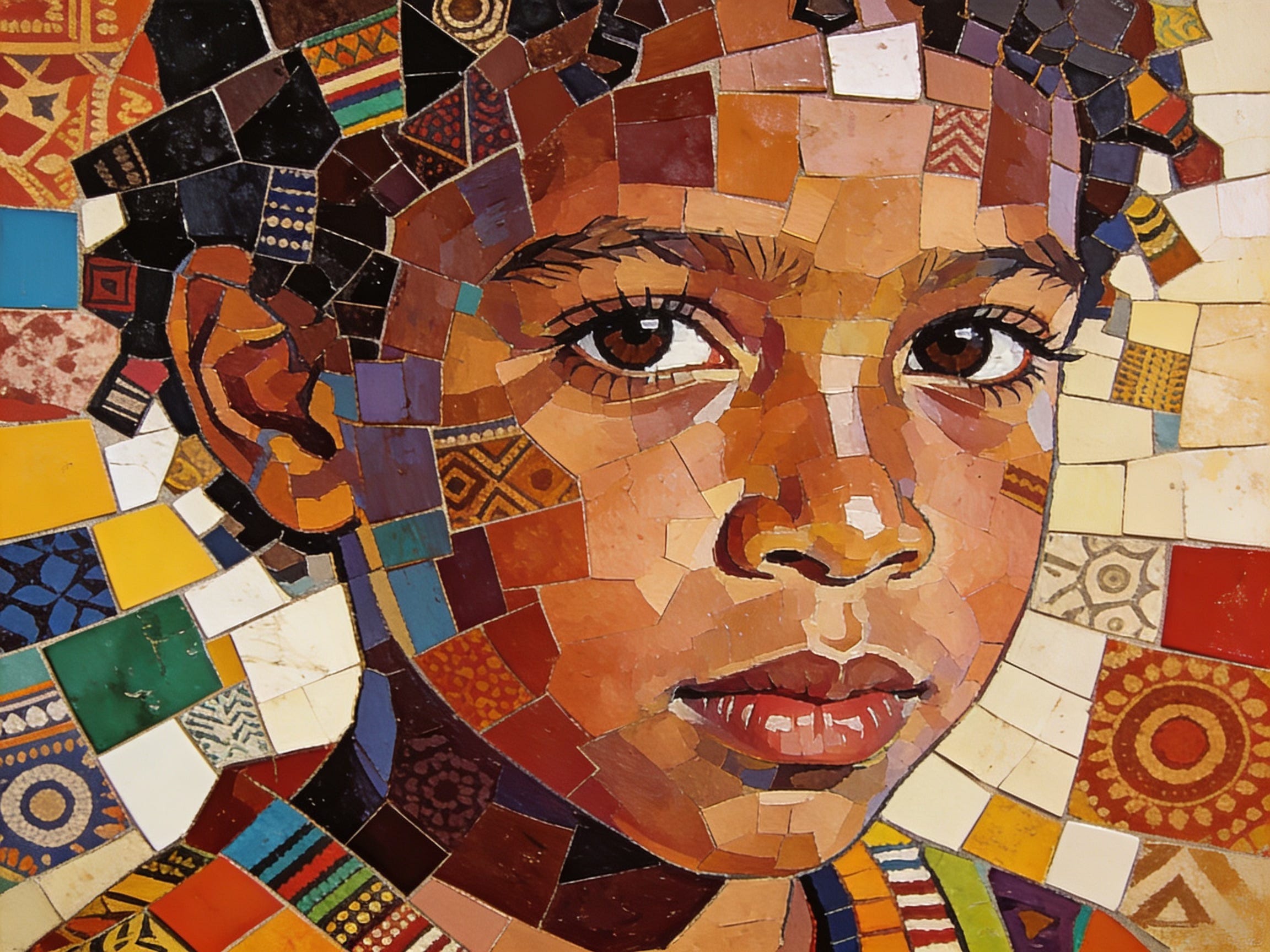
When Diversity Erases the Children It Claims to Include
For FAIR's Substack, FAIR lead curriculum developer Lisa Gilbert draws on her experience raising a multiracial son to examine how race essentialism in schools, and the DEI frameworks that drive it, erase the very children they claim to serve. Tracing the history of monoracialization from the one-drop rule to today's diversity metrics, Gilbert shows how multiracial children are routinely collapsed into a single racial category, their full heritage subtracted from view. She argues that the antidote isn't a better framework for sorting children, but instead an education that honors the whole of who they are, grounded in shared democratic principles and the skills of civil discourse. That conviction, she writes, is what led her to Many Stories, One Nation.
Race essentialism, mandatory affinity groups, and rigid oppressor/oppressed binaries do more than oversimplify the identity of multiracial children; they subtract from them. These children, and all children, deserve an education that does the opposite: one that honors every part of who they are, recognizes both America's failures and its successes, and cultivates the discourse skills needed to live in a diverse democracy.


Treasure Your Attention
For his After Babel Substack, FAIR Advisor Jonathan Haidt published the full text of his NYU commencement address, the speech that sparked protests and a student petition calling for his disinvitation. Rather than a polemic, it is an appeal to the graduating class to reclaim their attention from platforms engineered to hijack it and to invest it instead in doing hard things with other people in real life. Invoking Mary Oliver's instruction to “pay attention, be astonished, tell about it,” Haidt argues that treasuring one's attention is the foundation of a flourishing life.
You have the opportunity to become the best, fullest, and truest version of yourself. Here's something else I can tell you: The world needs you to seize that opportunity with everything you've got. It won't be easy. You'll face the universal challenges encountered by all the generations who came before you, and you'll face the unique ones that have arisen for your generation. But if you treasure your attention, and then use it to do hard things, with other people, in real life, then — and trust me on this, as a social psychologist — your life is going to be amazing.
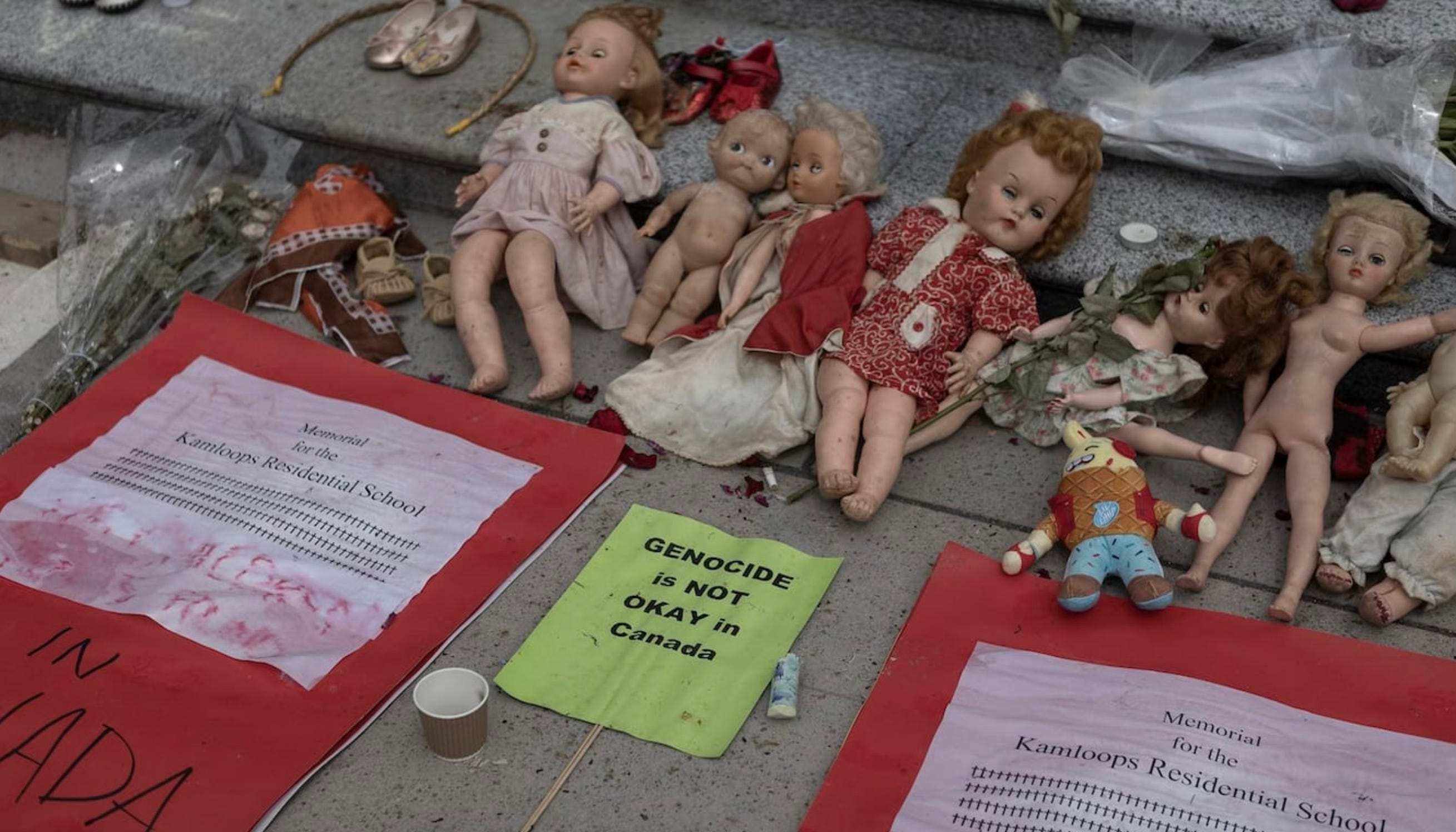
Canada’s Newspaper of Record Asks: ‘What If They Ultimately Find Nothing?’
For Quillette, FAIR Advisor Jonathan Kay examines how the Globe and Mail — five years after helping ignite a nationwide panic over “unmarked graves” at Indigenous residential school sites — is now quietly hedging its coverage as the physical evidence fails to materialize. Rather than reckon honestly with what went wrong, Kay argues, the paper is floating a new narrative: that the absence of graves may not matter much anyway. He traces this as part of a broader pattern of Canadian media institutions protecting their own credibility at the expense of journalistic honesty — and at the expense of the Indigenous communities whose grief was instrumentalized to drive a story that may never have been true.
The Globe’s approach amounts to a kind of epistemic escape hatch: having promoted the graves narrative for years without adequate skepticism, the paper now suggests that the question of whether the graves actually exist is, in some sense, beside the point. This is not journalism. It is reputation management dressed up as nuance.

What Jonathan Haidt actually said at NYU — and what The Coddling of the American Mind actually argued
For his Eternally Radical Idea Substack, FIRE President Greg Lukianoff defends FAIR Advisor Jonathan Haidt after Haidt was booed at NYU's commencement ceremony. Lukianoff rebuts the student petition misrepresenting Haidt's speech — which urged graduates to treasure their attention and do hard things — and defends NYU for not caving to demands to disinvite him. Invoking Frederick Douglass, he argues that preventing others from hearing what you find objectionable is "a double wrong."
You can object to a speaker. You do not get to decide that nobody else may hear him. Kudos to NYU for not caving to that pressure. The graduating class does not have one set of values. No large university does. Conservative students, religious students and, increasingly, Jewish students routinely sit through speakers, trainings, and institutional messaging that do not reflect their values.

Texas Tech's New Limits on How Faculty Teach Gender Identity Challenge More Than Free Speech
Writing in The Conversation, law professor Henry Fradella examines Texas Tech's new policy, effective June 2026, barring faculty from teaching gender as a spectrum and prohibiting graduate students from writing theses or dissertations on gender or sexual orientation. Fradella argues this goes further than any other major public university and raises serious questions about academic freedom — a concern FAIR has long applied across the ideological spectrum.
When the state decides which questions may and may not be researched, it is doing more than shaping curriculum. It is regulating the boundaries of knowledge itself by determining what future scholars may study and what universities are permitted to discover. That — more than any single line in a memo — is what should concern anyone who cares about the integrity of higher education.

Should It Be a Crime to Mock the Burqa?
Also in Spiked this week: at a 60,000-person "Unite the Kingdom" rally in London, three women took the stage in niqabs, then removed them to reveal themselves as protesters mocking a garment the author describes as a symbol of women's subjugation by Islamist hardliners. The response from politicians and media commentators was immediate: calls for condemnation, police action, and in some quarters, criminal charges. The piece argues that this reaction reveals something troubling about the state of free expression in Britain — that a segment of the left has become so protective of religious identity politics that it is willing to use state power to suppress lawful satire. The author warns that the demand for criminal sanction against political mockery is not a defense of pluralism but rather its undoing.
The response to this public mockery of the burqa — a symbol of women's subjugation by Islamist hardliners, let's not forget — has been depressingly predictable. "No condemnation from our politicians, no action by the police," fulminated Guardian journalist Owen Jones. This is what now passes for progressive politics in Britain: the demand that the state intervene to punish those who mock a religious garment associated with the oppression of women.