


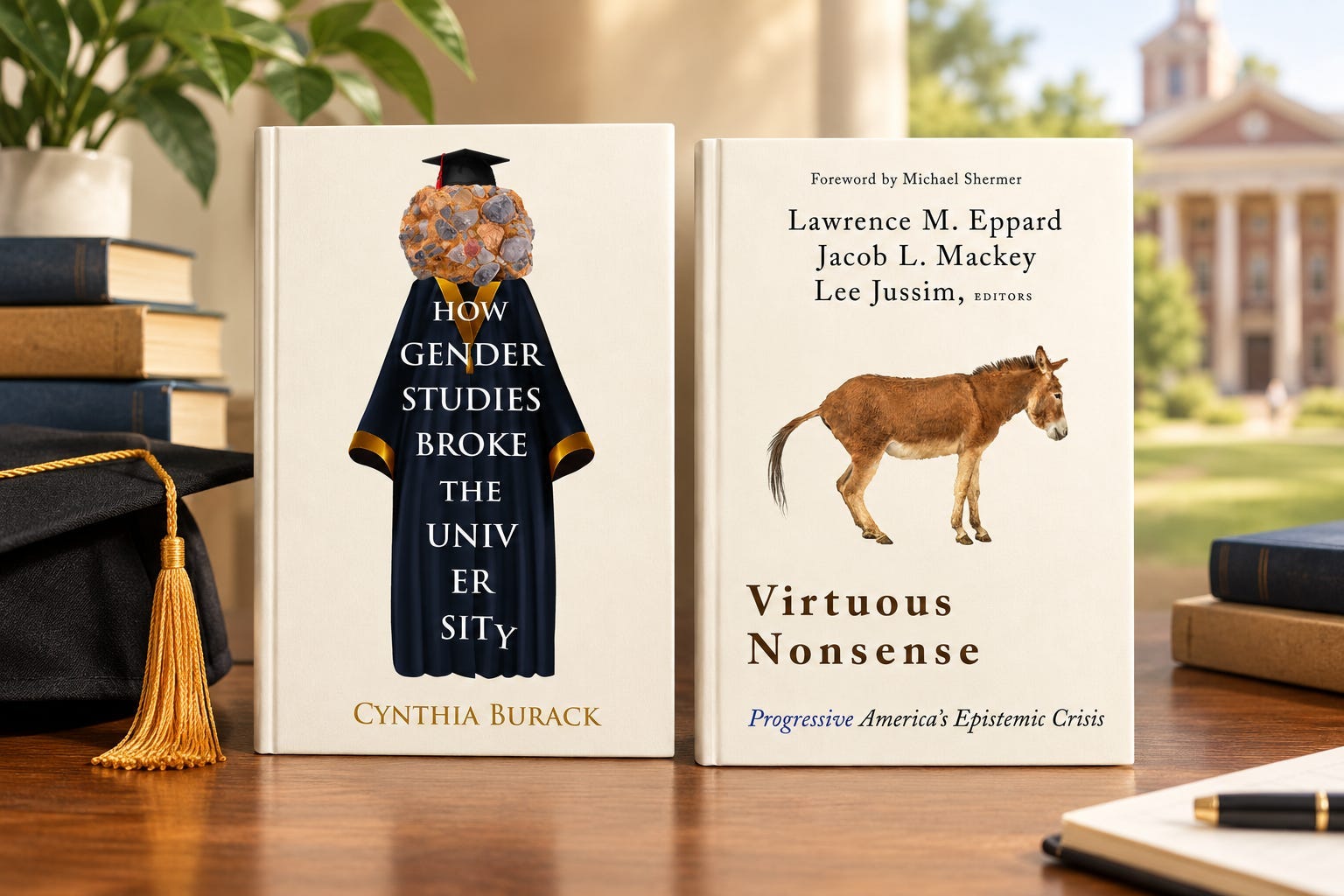
How “Virtuous Nonsense” Broke the University
In this essay, Michael Dudley examines two new books exploring how ideological conformity and the suppression of dissent have undermined academic inquiry. Drawing on Cynthia Burack’s How Gender Studies Broke the University and the anthology Virtuous Nonsense: Progressive America’s Epistemic Crisis, Dudley explores how universities have moved away from evidence-based scholarship and open debate toward moral policing, political dogmatism, and enforced consensus.
“These books offer a compelling window into the ways in which so many Americans are trapped in their own epistemic bubbles, which are often amplified by their preferred media. What is of concern here is that these epistemic political bubbles are occurring inside what should be neutral institutions. Both How Gender Studies Broke the University and Virtuous Nonsense are essential reading for anyone concerned with the future of the academy and—more troublingly—that of the world it has helped to shape in its image.”

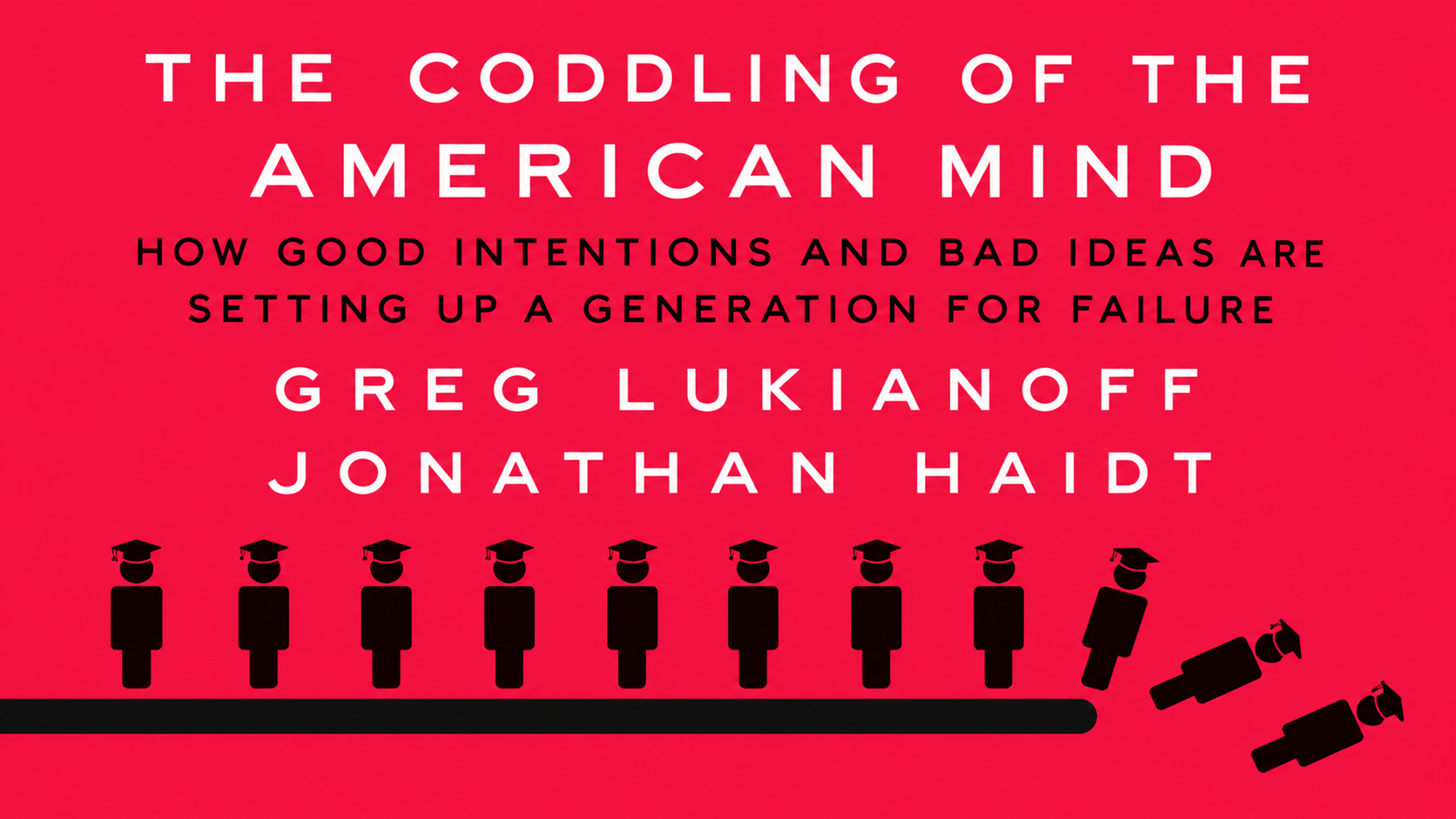
The Coddling of the American Mind: How Good Intentions and Bad Ideas are Setting up a Generation for Failure
FAIR Board of Advisors member Jon Haidt and Greg co-author Lukianoff examine how a culture of safetyism and fear of discomfort can undermine critical thinking and open debate on college campuses. They argue that shielding students from challenging ideas can leave them less prepared to navigate disagreement and complexity. Their work explores how universities can better foster intellectual humility, constructive disagreement, and the freedom to question prevailing ideas.
“Lukianoff’s biggest concern was that the rationale for justifying increased campus censorship was becoming medicalized, with students claiming that encountering certain kinds of content impaired their ability to function. Stated simply, Lukianoff’s hypothesis was: “Many university students are learning to think in distorted ways, and this increases their likelihood of becoming fragile, anxious, and easily hurt.”’

In Defense of Free Speech and the Mission of the University
FAIR Board of Advisors member Ilana Redstone and co-author John Villasenor argue that treating widely held beliefs as unquestionable truths undermines the university’s mission of open inquiry. They examine how assumptions about discrimination, social change, and identity can limit the questions scholars ask and the perspectives considered in academic discussions. The authors call for greater recognition of differing viewpoints and a willingness to question the beliefs that shape teaching, research, and campus policy.
“Open inquiry is supposed to be the foundation of the academic endeavor. And yet today, that endeavor is constrained by a set of unacknowledged beliefs that administrators, faculty and students at colleges and universities increasingly treat as unassailable truths.”


What Does Intellectual Humility Look Like?
In this article, psychologist Mark Leary examines how recognizing the limits of our own knowledge can improve decision-making, relationships, and open discussion. Drawing on psychological research, he explains how intellectual humility encourages people to evaluate evidence, consider opposing viewpoints, and reconsider their beliefs when presented with new information. Leary argues that acknowledging the possibility of being wrong can lead to better outcomes in both academic and everyday life.
“None of us thinks that our beliefs and attitudes are incorrect; if we did, we obviously wouldn’t hold those beliefs and attitudes. Yet, despite our sense that we are usually correct, we must accept that our views may sometimes turn out to be wrong. This kind of humility isn’t simply virtuous—the research suggests that it results in better decisions, relationships, and outcomes. So, the next time you feel certain about something, you might stop and ask yourself: Could I be wrong?”

My fight to save the novel from ‘progressive’ publishers
In this article, novelist Kimberley Tait argues that ideological expectations and social media algorithms are narrowing the scope of contemporary fiction. Drawing on her own experiences in publishing, she describes how pressure to conform to prevailing social and political themes can limit writers’ creative freedom and discourage complex, unconventional characters. Tait calls for a renewed commitment to artistic independence, originality, and the freedom to tell stories that challenge expectations.
“At the hands of ideology and technology, the purpose of the modern novel is no longer to provide originality and illumination – the ‘axe for the frozen sea within us’, as Kafka described it. Novels have become a means to an end, serving a collective instead of the individual. Oscar Wilde is no doubt turning in his grave.”

School Libraries in Crisis: Rebuilding Book culture for Canadian children
In this study, Paul W. Bennett examines the decline of school libraries and the growing displacement of books by digital resources and multipurpose learning spaces. He argues that shrinking collections, the removal of classic literature through equity-based screening policies, and declining emphasis on sustained reading threaten students’ cultural literacy and critical thinking. Bennett proposes restoring libraries as spaces for reading and reflection, strengthening knowledge-rich curricula, and combining literary classics with significant Canadian works to rebuild a shared foundation of knowledge and support informed citizenship.
“Recent controversies over school libraries demonstrate that both sides in the “culture war” pursue “book bans” to cleanse collections. Activist parents, professional library associations, and pressure groups on the left and the right demand that school libraries shield children from words and ideas that contain what they deem to be the “wrong” models for living.2 Both assume that by limiting what students read, they can change society to reflect their worldview… The deeper and more hidden crisis is the one posing an existential threat to book culture itself and affecting an entire generation of children.”