


The Medicalization of Adolescence
For FAIR’s Substack, Dr. Kendra Kautz explores how normal adolescent development is increasingly treated as pathology. Rising diagnoses and prescriptions (especially antidepressants and ADHD medications) suggest clinicians may be moving too quickly, without fully weighing developmental, social, and environmental context or ensuring informed consent.
Adolescence has always been one of the most biologically intense periods of human development. The brain is rapidly reorganizing, hormone systems are activating, and emotional processing pathways are maturing. Mood swings, heightened stress sensitivity, and difficulty regulating internal states are not signs of disorder; rather, they are features of a developing mind and body learning to adapt to their environment.
Yet increasingly, these normal developmental experiences are being pathologized. Antidepressant dispensing among adolescents and young adults ages 12–25 increased by 66.3% between 2016 and 2022, driven largely by rising prescriptions among female adolescents. ADHD diagnoses have surged to approximately 11.4% of U.S. children ages 3–17, more than 6 million children. Hormonal contraception is routinely prescribed to teenage girls not for pregnancy prevention but for acne, painful periods, or mood fluctuations…
Medications can help. The question is whether they are being introduced before other physiological avenues have been explored and whether families are receiving the full picture before they consent.
If this topic interests you, please join us on Wednesday, May 6th, at 7pm ET for a webinar discussion with Dr. Kautz.

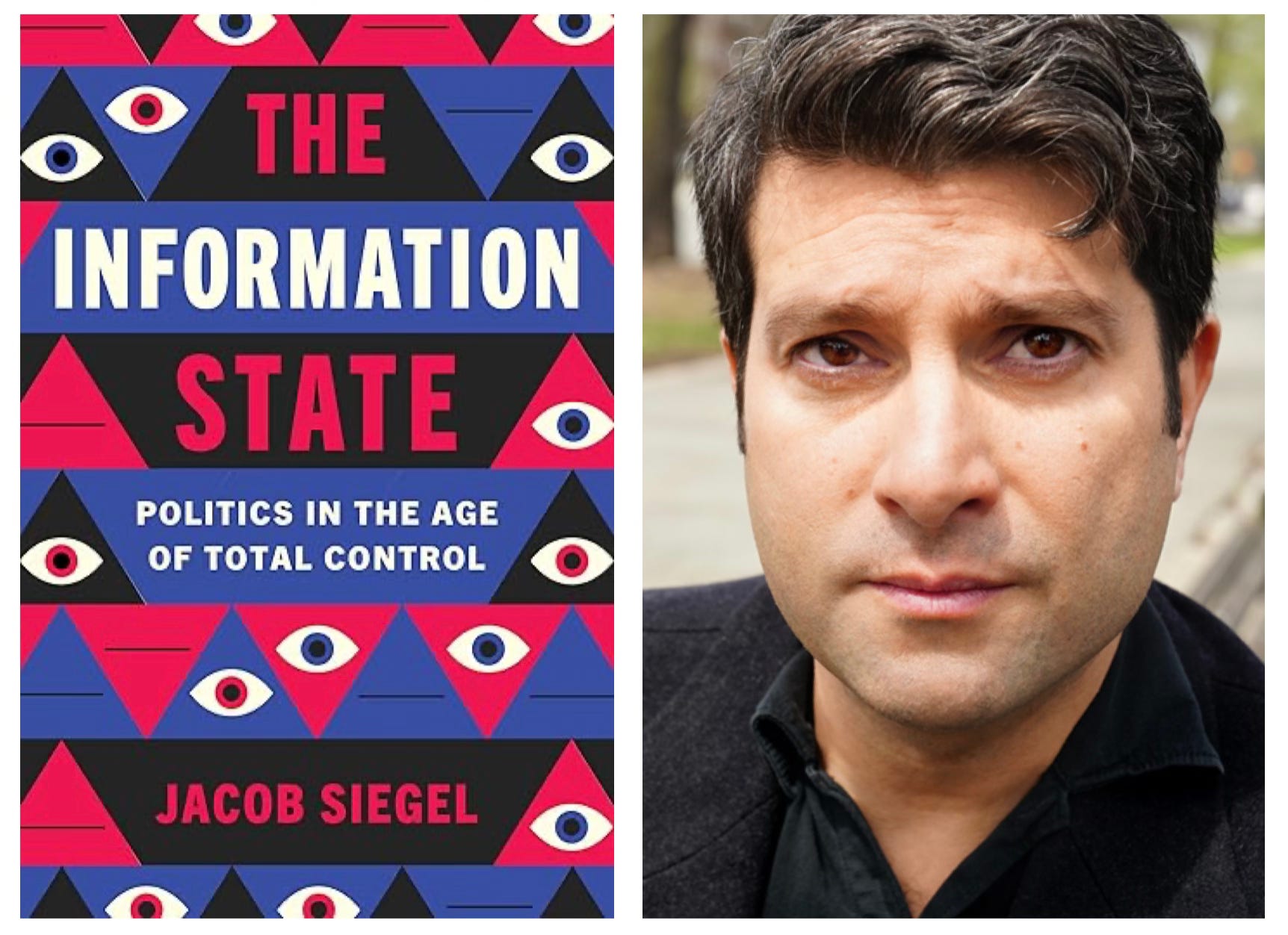
Jacob Siegel: “The old ruling party is waiting in the wings”
For PUBLIC, FAIR Advisor Michael Shellenberger interviews Jacob Siegel about his new book The Information State: Politics in the Age of Total Control. They discuss the “Censorship Industrial Complex,” the increasing tendency to label anything that contradicts dominant narratives as “disinformation,” and threat this poses to democracy.
There are good reasons to be concerned about the impact of social media on young people, but Siebel Newsom, despite her attempt not to be political, made clear her problem was with boys “moving to the right,” which is a very different concern from the ones being raised by Jonathan Haidt and others about the impact of social media on childhood. And Siebel Newsom’s remarks come in the context of efforts by her husband to control and even censor information. In 2023, Newsom announced a state initiative for citizens to report disfavored speech (non-criminal “hate incidents”) they see online.

The Tragedy of Murdered Indigenous Women is Real. So How Did Activists Turn It Into a Punch Line?
For Quillette, FAIR Advisor Jonathan Kay argues that the crisis of murdered and missing Indigenous women in Canada is real and serious, but is more closely tied to social factors like crime and domestic violence than to a coordinated state effort. He contends that framing it as “genocide” can obscure effective solutions.
In 2015, the government of then-Prime Minister Justin Trudeau announced the creation of a public inquiry into the issue—known as the National Inquiry into Missing and Murdered Indigenous Women and Girls—noting that Indigenous women were significantly more likely to be murder victims than their non-Indigenous counterparts. Its mandate was to “look at all underlying causes of violence against Indigenous women and girls including systemic issues.” While Pickton’s crimes were unusually horrific, Canadians learned, his victims represented just a small fraction of the approximately 1,200 Indigenous women who’d been murdered or gone missing over the previous three decades.


The New ‘Conversion Therapy’ Is Making Gay Kids Trans
For The Free Press, James Kirchick makes the case that “gender-affirming care” for minors functions as a modern form of “conversion therapy,” steering gender-nonconforming or same-sex-attracted youth toward medical transition.
By grouping sexual orientation and gender identity under the same “LGBTQ” umbrella, many conversion therapy bans conflate two entirely separate concepts. Sexual orientation is other-directed, determined by the sex to which one is physically and emotionally attracted…Gender identity, by contrast, is a subjective feeling of one’s own gender, which may or may not correspond with biological sex…For some, this means adopting gendered ideas about how the opposite sex is supposed to look, dress, and act. Others choose to undergo what used to be called a “sex change,” today euphemistically described as “medically necessary gender-affirming care.” This is utterly foreign to the gay experience, especially the young gay experience. Coming out of the closet does not entail the use of puberty blockers, cross-sex hormones, or irreversible medical interventions.

Yale’s ‘Trust’ Report Affirms HxA’s Reform Agenda — And Our Members Helped
For Free The Inquiry Heterodox Academy writes that Yale’s new “Trust in Higher Education” report independently validates many of HxA’s long-standing reform priorities, including a sharper institutional mission, stronger protections for open inquiry, and greater viewpoint diversity.
On self-censorship, one of HxA’s cornerstone concerns, the report is unsparing. It cites Yale’s own 2025 survey finding that nearly a third of undergraduates do not feel free to express their political beliefs on campus, up from 17% in 2015. “Self-censorship driven by fear of personal attack, academic retaliation, or other political pressure,” the committee writes, “undermines the principles of free speech and academic freedom.”
The committee’s approach to reform is also distinctly HxA’s: change from within. It calls for faculty-led self-studies, joint student-faculty committees on classroom principles, and collaborative governance. This is precisely the model HxA has championed for over a decade: equipping academics inside the institution to drive deep, lasting change.

The Decline of Confidence in Higher Ed.
For Expression, Nate Honeycutt unpacks recent data obtained by FIRE which shows that one-third of Americans have no confidence in U.S. colleges and universities.
On their own, these confidence trends reflect an untenable dynamic for higher education leaders. But viewed alongside other indicators, they suggest deeper structural problems… Just as important are signs that many high schoolers — most notably males and Republicans — are less interested in graduating from college, that ideological diversity among professors and administrators is low and still declining, and that highly visible speech controversies continue to pile up.
If colleges and universities want to remain socially relevant and financially stable, they’re going to have to confront the reality that large segments of the public increasingly see them as exclusionary rather than open.
Note to readers: We have paused the FAIR News podcast. If you prefer listening, rather than reading these Roundups, an audio version is available directly on the Substack app. Thank you for tuning in!
Interesting: all of those articles just show the symptoms of the real disease ruining everything.
PLEASE help with your comments: what’s your best way to wake-up those who didn’t yet?
The more the awakened, the sooner this nightmare will be over!
What’s your experience about asking for an opinion on the following topics?
Magneto Challenge? 20 sec video opens ANY conversation:
https://odysee.com/@nazar:d/magneto:3
Check with your own phone: the vaxxed are emitting Bluetooth
https://rumble.com/v1v4du6-bluetruth-scientific-evidence-for-nano-wireless-technology-in-the-vaxxinate.html
"Sound of Silence" Challenge?
https://scientificprogress.substack.com/p/sound-of-silence-challenge
A father gets 20 million dollars from Government? 20 sec video of a baby with vax seizures:
https://scientificprogress.substack.com/p/autism-day-shall-we-celebrate-the
CDC: 89% vax-autism correlation. We lied about autism to avoid vax hesitancy.
https://scientificprogress.substack.com/p/cdc-studies-have-not-ruled-that-infant
https://scientificprogress.substack.com/p/300-study-review-proving-vaxautism
https://scientificprogress.substack.com/p/dear-bobby-what-is-really-going-on
Big Pharma scandals as the norm, not the exception?
https://scientificprogress.substack.com/p/system-failure-ai-exposes-zero-government
PCR-test can’t determine sickness and not suitable for tracing, with up to 90% false positives: PCR-demic?
https://off-guardian.org/2020/12/18/who-finally-admits-pcr-tests-create-false-positives
https://rumble.com/v6kevka-understanding-pcr-as-a-diagnostic-test-applications-and-pitfalls.html
Dr. Fauci admitted no scientific basis for social distancing?
https://thefederalist.com/2024/06/04/fauci-admits-there-was-no-scientific-evidence-for-six-foot-social-distancing-rule/
The CDC admitted that masking was useless against COVID?
https://web.archive.org/web/20211230231436/https://www.dailyveracity.com/2021/07/26/over-50-scientific-studies-conclude-masks-do-nothing-to-prevent-the-spread-of-illness-so-why-do-people-keep-claiming-they-work/
https://www.naturalnews.com/2023-08-28-cdc-admits-masks-totally-useless-against-covid.html
You’ve been locked down for nothing? Johns Hopkins meta-analysis of 18000 studies proved that, and worse, killed people by preventing testing and treatment for cancer and heart:
https://sites.krieger.jhu.edu/iae/files/2022/01/A-Literature-Review-and-Meta-Analysis-of-the-Effects-of-Lockdowns-on-COVID-19-Mortality.pdf
No Health Agency researched the 30+ COVID effective cures, but instead censored and banned the doctors successfully curing COVID? A cure would void the Emergency Use Authorization of the lethal experimental COVID “vaccines”?
http://c19early.com
http://bit.ly/research2000
120 million people killed by the COVID injections? Excess deaths even higher now by the vax-induced thrombosis, myocarditis, cancer and auto-immune pandemics? More casualties than WW1, WW2, and Nam combined:
https://www.thefocalpoints.com/p/covid-19-vaccines-likely-killed-more
https://www.globalresearch.ca/more-americans-died-covid-19-injections-wwi-wwii-vietnam-war-combined/5878034
https://scientificprogress.substack.com/p/30-secs-for-your-health-3-graphs
Is a COVID vax infertility bomb exploding as the haxxed children grow up?
COVID designed as a primer for even worse COVID haccines:
https://scientificprogress.substack.com/p/the-real-covid-timeline
https://scientificprogress.substack.com/p/not-vaccine-not-gene-therapy-just
https://scientificprogress.substack.com/p/what-do-bioweapons-have-to-do-with
https://scientificprogress.substack.com/p/you-are-anti-haccine
https://scientificprogress.substack.com/p/us-public-health-emergency-over-infant
https://scientificprogress.substack.com/p/spike-protein-against-bone-formation
COVID shot may drive you nuts, literally, scientific “literally”
https://scientificprogress.substack.com/p/covid-shot-may-drive-you-nuts-literally
Mind control (try the COVidiot test with a 2 min fun video!)
https://scientificprogress.substack.com/p/2-min-sum-up-of-covid-days
https://scientificprogress.substack.com/p/another-proven-conspiracy-cia-project
10 sec video:
https://odysee.com/@ImpossiblyWackedOutWorld:f/WTC-7-Free-Falling:8
(caveat: pot destroys your brain + “Raises Risk of Heart Attack and Stroke”)
9/11: two "planes", yet 8 towers down.
The “owner” took an insurance policy for the WTC against terrorism, months before, when no one was taking them … he didn’t show up for work on 9/11 … just as his 2 grown up siblings.
The fore-knowledge of the 9/11 event allowed masons to make trillions by shorting the stock exchange: the records were deleted by the SEC so they wouldn't be prosecuted !!!
https://scientificprogress.substack.com/p/911-2-planes-3-towers
https://scientificprogress.substack.com/p/tucker-carlson-historical-911-was
https://scientificprogress.substack.com/p/a-duuuuuh-solution-to-the-iran-problem
https://scientificprogress.substack.com/p/107-911
https://scientificprogress.substack.com/p/cia-director-in-bed-with-al-qaeda
There's a plan to slow-murder 95% of the global population by 2050… written on the masonic Georgia guide-stones: “Maintain humanity under 500,000,000 … ”:
https://scientificprogress.substack.com/p/depopulation-or-extermination
https://scientificprogress.substack.com/p/jane-kills-tarzan
Why is food poisoning legal? (Rumsfeld forced the FDA approval of Aspartame/NutraSweet)
https://scientificprogress.substack.com/p/why-is-food-poisoning-legal
Elections: bought and stolen?
https://scientificprogress.substack.com/p/2024-elections-bought-or-stolen
Free 100 redpill movies and documentaries:
(don't miss the 1st one, 10 min at 2x, amazing tool for a discussion):
https://scientificprogress.substack.com/p/wake-up-videos
- You’ll go nowhere and you’ll be happy:
https://scientificprogress.substack.com/p/2050-youll-go-nowhere-and-youll-be
https://scientificprogress.substack.com/p/boycott-us-biometric-id-deadline
- You are the carbon they want to exterminate:
Prehistoric data from ice cores proves that temperature rise precedes carbon release in the atmosphere, not the other way around.
https://scientificprogress.substack.com/p/best-scientific-sources-to-debunk
https://scientificprogress.substack.com/p/satattack
https://scientificprogress.substack.com/p/carbon-reparations
https://scientificprogress.substack.com/p/climate-deaths
https://scientificprogress.substack.com/p/killing-me-softly-with-green-songs
Why do they want you to drink cockroach milk?
https://scientificprogress.substack.com/p/drink-zee-bugs-cockroach-milk-the
EVs cause cancer
https://scientificprogress.substack.com/p/electric-vehicles-cause-cancer
The full global-coup exposed
https://scientificprogress.substack.com/p/the-plan-revealed
Internet knockdown
https://scientificprogress.substack.com/p/internet-knockdown
President John Quincy Adams: “Masonry ought forever to be abolished. It is wrong - essentially wrong - a seed of evil, which can never produce any good.”
Satanic Secret Societies for dummies:
https://scientificprogress.substack.com/p/sss-for-dummies
https://scientificprogress.substack.com/p/not-so-happy-constitution-day
https://scientificprogress.substack.com/p/the-star-not-from-david
Who are The Powers That SHOULDN'T Be ?
https://scientificprogress.substack.com/p/criminal-intent
https://www.coreysdigs.com/global/who-is-they/
The end of money and freedom
https://scientificprogress.substack.com/p/finflation
https://scientificprogress.substack.com/p/yellow-alert-global-cyber-storm/
https://scientificprogress.substack.com/p/free-ebook-the-coming-battle-a-complete
https://scientificprogress.substack.com/p/bad-v-good-gdp
https://scientificprogress.substack.com/p/freedom-red-alert-april-19-2026
https://scientificprogress.substack.com/p/power-needs-power-electrical-computing
https://scientificprogress.substack.com/p/uncle-sam-altman
Just like Lincoln’s mason VP murdered him to become President, and mason Mike Pence backstabbed Trump in the 2020 stolen elections, mason LBJ killed JFK for the Federal Reserve, Nam and the Israel A-bomb
https://scientificprogress.substack.com/p/lbj-killed-jfk
https://scientificprogress.substack.com/p/why-was-japan-a-bombed-if-it-was
Weaponization of Justice: no democracy with Freemasonry!
https://scientificprogress.substack.com/p/petition-free-reiner-fuellmich
https://scientificprogress.substack.com/p/weaponization-of-justice
https://scientificprogress.substack.com/p/another-proven-conspiracy-steele
Illuminati David Rockefeller, finest quotes:
https://scientificprogress.substack.com/p/david-rockefeller-illuminati
Confessions of ex illuminati Ronald Bernard:
https://scientificprogress.substack.com/p/confessions-of-illuminati-ronald
https://scientificprogress.substack.com/p/illuminati-insider-spills-the-beans
Illuminati Attali, finest quotes:
https://scientificprogress.substack.com/p/attali-illuminati-finest-quotes
Chisholm, father of the WHO’s global pedophilia
https://scientificprogress.substack.com/p/brock-chisholm-father-of-the-whos
Ex mason Serge Abad-Gallardo:
https://www.ncregister.com/interview/confessions-of-a-former-freemason-officer-converted-to-catholicism
9 SOLUTIONS
https://scientificprogress.substack.com/p/9-steps-out-of-global-tyranny
FreeReach apps
https://scientificprogress.substack.com/p/check-your-x-account-throttling-score
HHS Secretary Kennedy: 50 life-death actions you can't put off any longer !
https://scientificprogress.substack.com/p/dear-bobby-what-is-really-going-on
https://scientificprogress.substack.com/p/help-banning-gene-therapy-vaccines
Would you like to earn $60,000 per year for educating your own children?
Rethinking education for the real 21st century:
https://scientificprogress.substack.com/p/rethinking-education-for-the-21st
Please share, not the articles, but the information! The messenger expendable. Saving the free world, is not!