


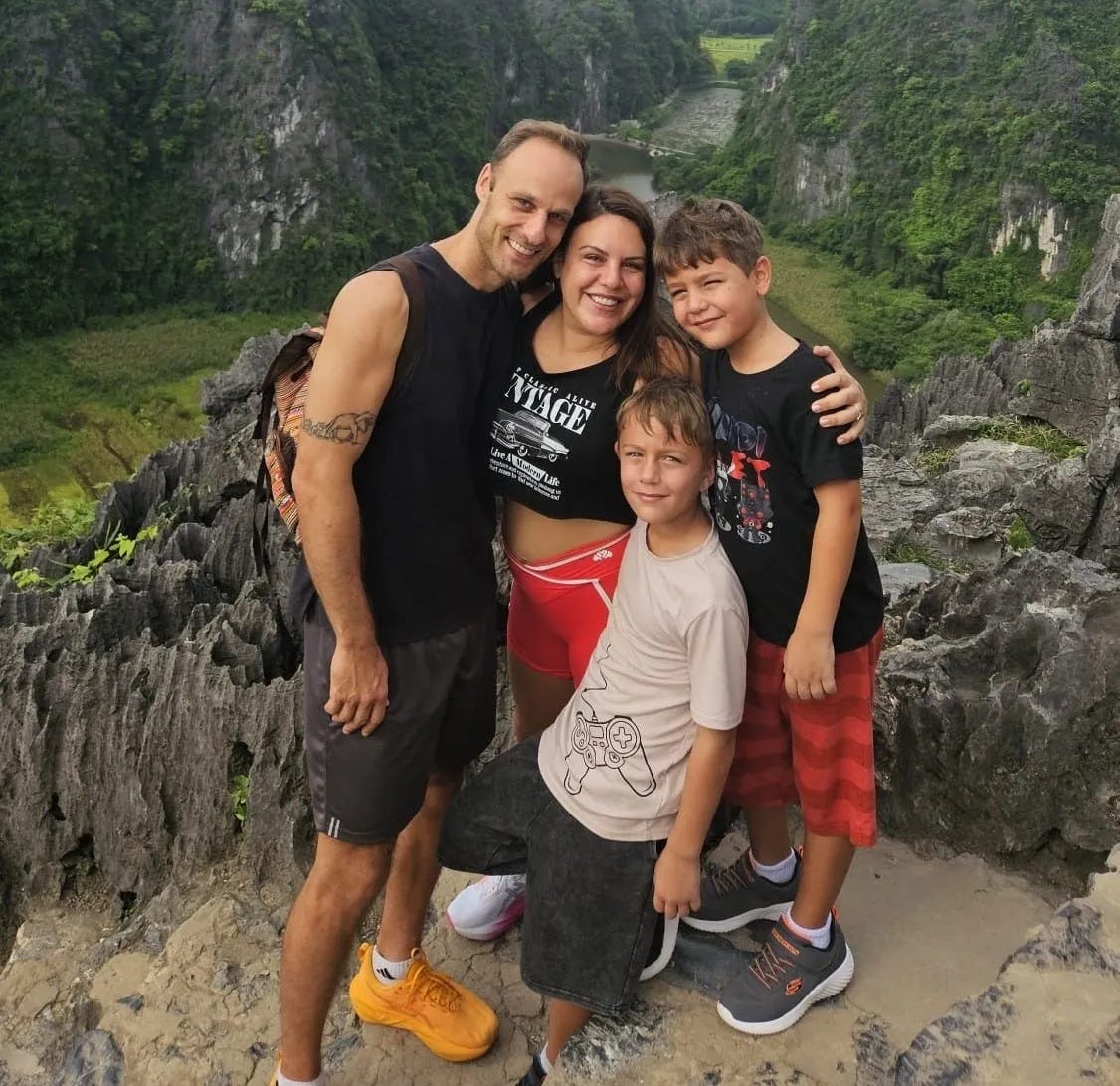
Where Are You From?
This week, we highlighted an essay by Vic Levitin reflecting on identity, immigration, and the search for belonging in an increasingly interconnected world. Drawing on his experiences growing up in Israel after being born in Ukraine, and later raising his family in Thailand, Levitin explores how moving between cultures reshaped his understanding of home, tribe, and human connection.
Rather than viewing identity as something determined by nationality or ethnicity alone, he argues that belonging is built through shared experiences, relationships, and the communities we create throughout our lives. Through deeply personal stories of family, travel, and parenthood, the essay asks readers to reconsider what it really means to answer the seemingly simple question, “Where are you from?”
“When everything from the money to the social codes becomes unreadable, your brain starts desperately scanning for any familiar anchor just to simplify things again. This is not to suggest one culture is superior to the other. As a multilingual, multicultural traveler, I have experienced the best and worst of many nations. Rather, in a world that often sends us out from our homes, away from our tribes and into places we can’t speak our mother language, familiarity becomes the ultimate comfort.”

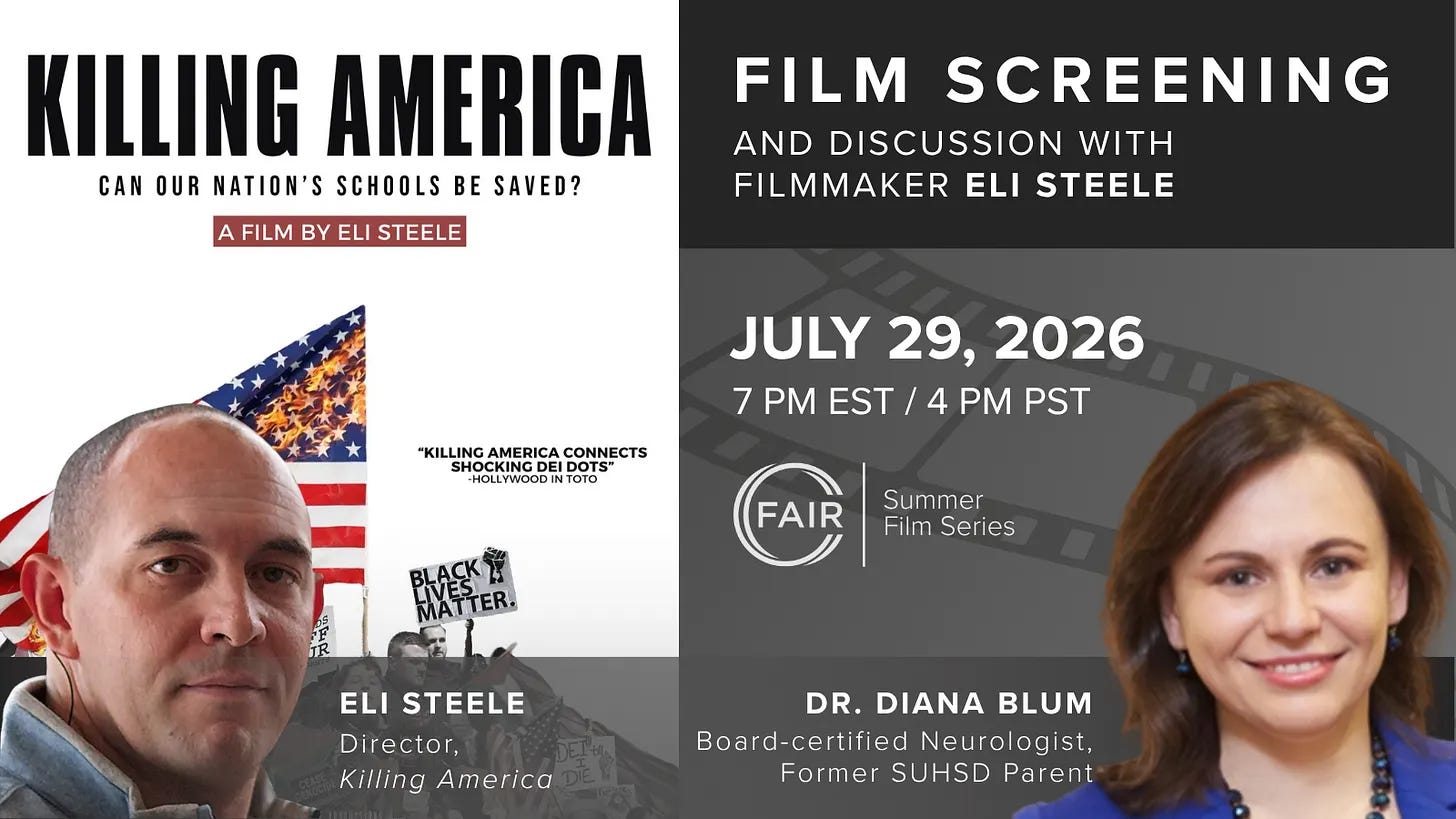
FAIR SCREENING - KILLING AMERICA
This week, FAIR hosted a screening of Killing America, followed by a live discussion with filmmaker Eli Steele, FAIR Executive Director Monica Harris, and Diana Blum, whose fight against antisemitism in one of America’s wealthiest school districts became the focus of the film.
In a companion essay, Steele reflects on the unexpected barriers the documentary faced before its release, recounting how organizations that publicly champion viewpoint diversity and combat antisemitism repeatedly declined to host screenings. The piece asks an uncomfortable but important question: What responsibility do institutions have to act on the values they publicly endorse?
“It raises a question the institutions should have to answer: What is the point of an organization that claims to fight antisemitism if it will not show up for the film, or even for the families, when it actually matters? And why do so many of these organizations refuse to address the underlying conditions that give permission to antisemitism such as liberated ethnic studies and other similar forms of indoctrination?”


Cultural Misunderstandings: On the Misuses of the Term “Culture”
Dr. Doug Novotny, FAIR’s new Interim Director of FAIR in Medicine, explores how the term culture has becomee increasingly flattened in modern mental health discourse. Rather than treating culture as a static collection of demographic traits, Novotny argues for a richer understanding rooted in shared meaning, history, traditions, and lived experience.
Drawing on psychology and anthropology, he suggests that viewing people through the lens of dynamic cultural systems—rather than fixed identity labels—allows for deeper human connection, more effective therapy, and a fuller appreciation of individual complexity.
“True culture is fascinating and evocative, like a novel, the arts, or cinema. A person, an education, or the arc of a therapy can be fruitfully understood in this way. In contrast, fetishized culture diminishes anything or anyone viewed through that lens. No one should be regarded as a mere set of concrete traits, least of all by professionals, whose job it is to see beyond—not be bound within—dehumanizing tendencies.”
Not to mention divisions and subdivisions of cultures and if you're not part of the big culture you're always going to be the one against the wall. And it's absolutely scary how you cannot even mention what is happening on in certain parts of the world
Thank you for hosting the video series. I appreciated the chance to watch Killing American and then being able to engage with the makers of it. It is distressing to see what it is happening in our institutions, but these documentaries give me hope that positive change will come soon. As they say, sunlight is the best disinfectant.