


Something Unusual Happened at the Emmys
Is Hollywood moving away from the expectation that major arts events double as political platforms?
FAIR in the Arts Interim Director Karen JP Howes looks at this year’s Emmy Awards through the lens of FAIR in the Arts, asking whether Hollywood is rediscovering the power of art to bring people together without requiring them to share the same politics. With the ceremony focused on creativity, craft, and the people who make television, the Emmys offered a glimpse of the pluralistic artistic culture FAIR in the Arts seeks to support—one where artists can disagree profoundly and still create something extraordinary together.
“But freedom of expression also means an artist should not have to adopt a political identity in order to belong to an artistic community, a point made by Pluribus creator, Vince Gilligan when he said ‘We will never agree on everything, but we can treat each other with respect.’”

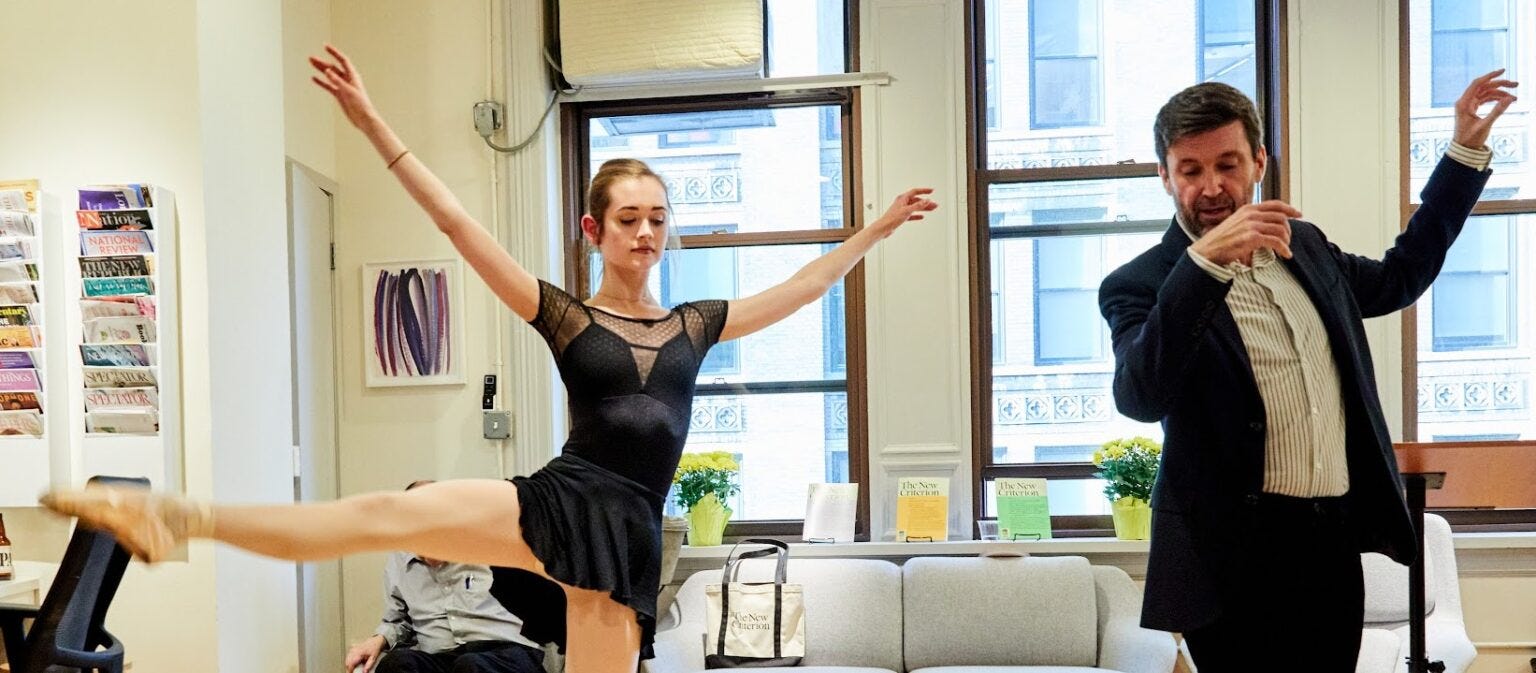
What Ballet Is
In this essay for The New Criterion, ballet director and FAIR Board of Advisors member Lincoln Jones considers what happens when artistic spaces become increasingly shaped by political and ideological expectations. Drawing on his experience directing American Contemporary Ballet, Jones argues for preserving art as a space for beauty, expression, and creative freedom—and asks what happens to art when artists no longer feel free to say what they think.
“Our society needs political thought, we need activism, and we need art. We don’t need them—nor can we have the best of them—in a single experience.”

Art as Political Discourse
Philosopher Vid Simoniti explores what art can contribute to political conversations that conventional debate cannot. From satire to television, Simoniti argues that different artistic forms can challenge our assumptions, complicate our perspectives, and help us see people beyond political or social categories. His essay offers a complementary perspective to Howes’s look at the Emmys: rather than asking whether art should be political, it considers how artistic expression can create space for more thoughtful and pluralistic public discourse.
“There is no claim here that some distinct know-how or wisdom is acquired, nor that artworks are substitutes for lived experience. Artworks are simply contributions to a public debate. Those that are best at it will leave their audiences with beliefs better attuned to how the world is, in ways that would not have been possible had those audiences engaged in the objective-style debate alone.”