

Jason Arday, the Cambridge professor considered a darling of academia and recently exposed for his many lies, plagiarism and fraud, is dead.
With this recent turn of events, we must turn our attention to the system that birthed, incubated and suckled his peculiar psychology to the degree that, in the end, he could not live with the public revelation of his true self. Or at least, of a self that differed too greatly from the mask he presented to the public to be endured.
Much is unknown as to the facts of Arday’s death at this time.
Here, though, are a few things we do know to be true: A man with a desperation for admiration and a propensity for lies was promoted unquestioningly to heights he was incapable of maintaining. An airless elevation that, when all the scrutiny missing from his early days was brought to bear, caused his tragic fall.
But the end of Arday’s story was written in its first paragraphs.
Arday had all the markers of the ideal symbol adored by the white intellectual academic left: He was handsome, charming, articulate, heroic, slightly feminine, and, with those locs, just a little bit dangerous.
He was perfect. Arday fit the Leftists’ bill, and they fit his. Thus a transactional relationship of mutual exploitation was born.
Academia adopted its favorite son. And its culture, specifically as defined by DEI policies, prohibited initial critical assessment, prevented scrutiny over time, and propelled Arday into scenarios where his con, his masquerade, his song-and-dance, had to continue at full speed.
We can ask ourselves who was playing the tune, but if we looked closely, we’d see Cambridge, its hangers-on and Arday at the instruments. This wasn’t a lone fabulist dreaming in an attic; this was a uni don, carried on the shoulders of dozens. Hundreds. A folie à beaucoup, performing hymns and anthems to the man.
The 21st Century tarantella went on, until it didn’t: Once Arday was found out, the music came to a screeching halt, and he was the only one left on the dance floor.
And there in the silence, Arday must have known–despite the university crowd that shot him, with his enthusiastic aid, to the topmost of its ivory towers–that he was now alone, exposed, and would never, ever be the lauded unicorn he had been again.
Nor would his former admirers come to his rescue.
That ballroom was empty, and echoing.
Something about that broke him.
Arday, it seems to me, was a full partner in his demise, just as he co-authored his best-selling life before he committed suicide.
And that’s a damn shame, and as sad as any death on a hot Friday in August can be.
But there is an inevitability to Arday’s end, set as it was from the start by who he was, and what academia and some ideologies are. And in some sense, it may prove to be his beginning.
There are many still alive who had a hand in this. And they are frantic to re-write his story now: Those who fawned over him. Who deliberately looked away from the many signs and portents signaling that the shaky credentials and the man himself demanded deeper scrutiny. The smug universities that treated him like both an exotic prince and a scalp brought home from the Indian Wars. The Marxists, who cynically turned him from a troubled man into a golden calf.
All of them put this man in the earth.
Arday himself, of course, conspired in this folly. But he is no longer his biographer.
As quickly as Brezhnev airbrushed Khrushchev out of the picture, Arday, both real and fake, is being removed from this moment, and replaced with a man fallen to racism, rabid right-wing politics, a ravening press. In this he will come to resemble George Floyd, Alex Pretti, Luigi Mangione.
To an extent, this ploy will work. But it shouldn’t.
Arday, and thousands of others like him, exist in our universities, companies, non-profits, everywhere from airlines to zoology departments, without the internal makeup or external accreditation required of the work. Hired to tick a box that has nothing to do with merit, this is as cruel to them as it is harmful to the businesses and the people they serve.
Downstream from this is a deluge of dangerous decisions, consumer loss of faith, lost profit, fraud, and death. DEI hiring practice is a wolf in feel-good sheep’s clothing, gnawing at America’s foundations. And in the ruin lie the men and women fetishized, pushed past their limits, and ultimately betrayed.
So, no. It wasn’t racism that killed Jason Arday. Not the kind now being offered as an excuse by some politics, anyway.
Now, once again, we will shake our heads, trying to bring the world into focus: We thought we had a reasonable idea of Arday’s story, and now down is up. He hasn’t fallen; he is quickly becoming a risen saint.
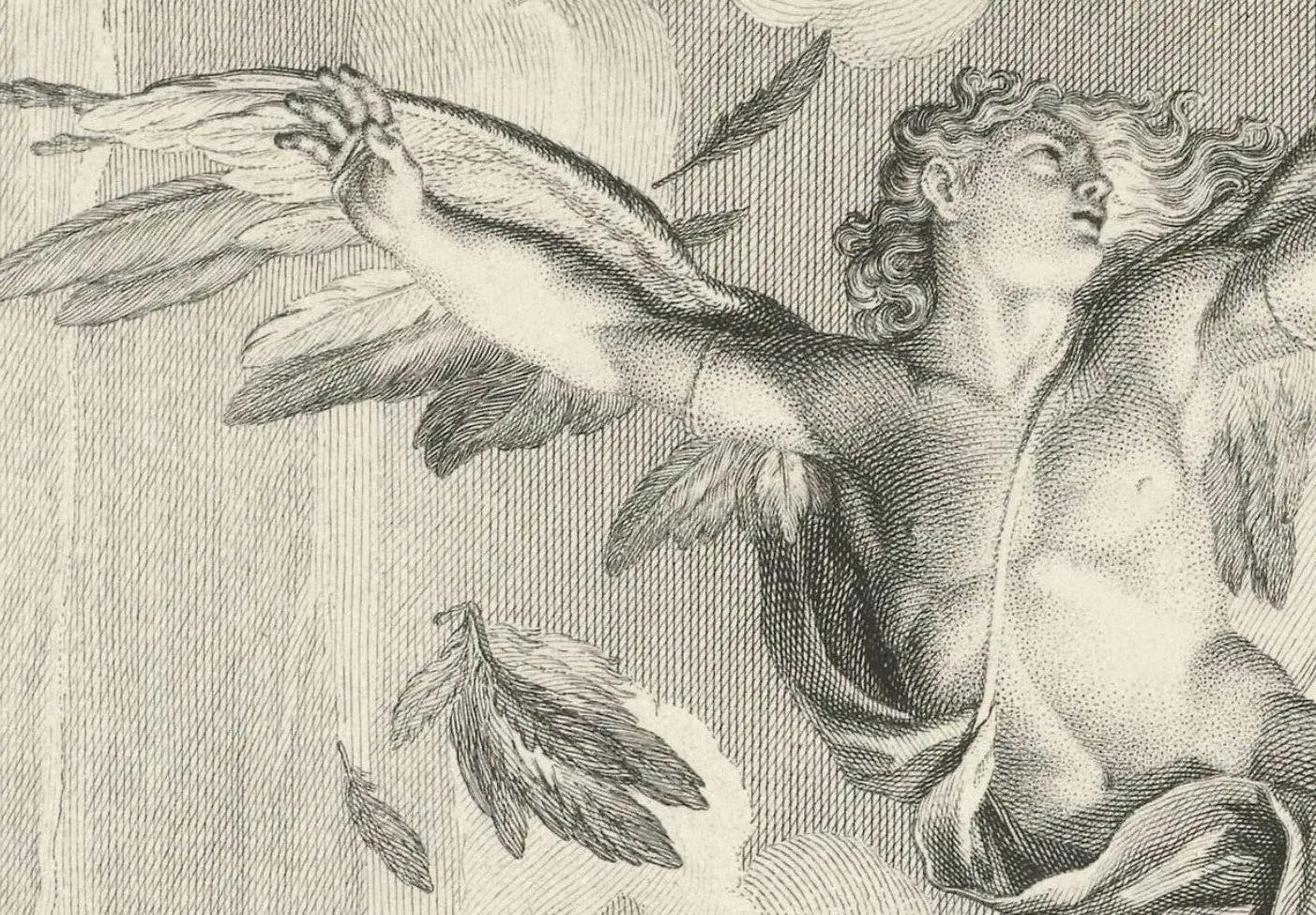
We must resist this temptation. The elements of this story are as stark as a Greek myth, and as enduring. A man riddled with hubris and a mental state we will never understand, slathered his wings with waxen lies, and with the aid of those who did not hire Arday on merit, was catapulted skyward.
Then the heat of revelation slowed his arc upwards, and brought him down.
Earth, with its relentless gravity and light, left Arday as naked and lonely and terrified as Adam.
Grounded, he gave up.
We have to leave him there, where he fell. And we have to watch carefully for those slipping away from the gathered crowd into the shadows, there to concoct the alternate fable for the fabulist.
Arday was no saint. But he had help.
We must hew to what is real, we must stand on character and merit. We must wrest this story, and all the stories they are writing now, from the hands of liars, and write a true one.
Telling Arday’s story plainly is where we can begin.
Attention must be paid.
We welcome you to share your thoughts on this piece in the comments below. Click here to view our comment section moderation policy.
The opinions expressed here do not necessarily reflect those of Fair For All or its employees.
In keeping with our mission to promote a common culture of fairness, understanding, and humanity, we are committed to including a diverse range of voices and to encouraging compassionate, good-faith discourse.
We are actively seeking perspectives on this topic and others. If you’d like to join the conversation, please send completed drafts to submissions@fairforall.org.

Award show ratings in general have been in decline in part due to the persistence of presenters and recipients making political statements. I suspect telecast broadcaster NBC must have imposed a political-talk embargo in an effort to improve things...
wasn't selecting colbert for an emmy a political statement in and of itself? how many right leaning (or progressive critical) broadcasts/programs were among the winners? (and by right-leaning i don't mean the candace owens types.) when they give an emmy to bill maher (he's had 41 nominations and one win 22 years ago) or some other dissident democrat whose contnet goes against the progressive bible, i will consider whether the title of this piece has any merit.