


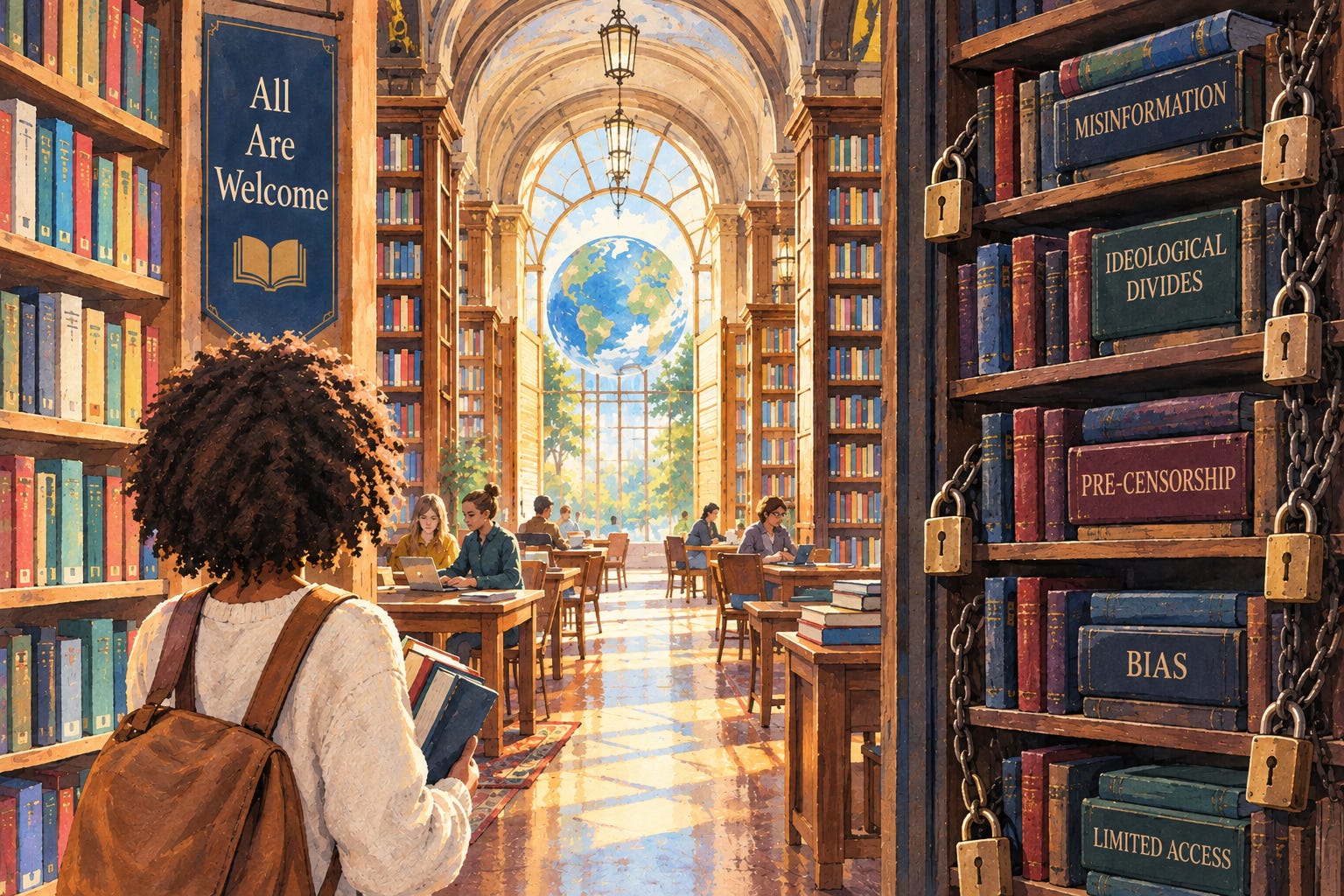
What Are Libraries Including in Their “Inclusion” Policies?
Michael Dudley examines the competing meanings of “inclusion” within the library profession, asking whether efforts to promote diversity and inclusion can sometimes come at the expense of intellectual freedom. Drawing on library policies and recent controversies involving books, speakers, and public events, Dudley explores the tension between creating welcoming spaces for everyone and adopting ideological approaches that may exclude certain ideas or perspectives. He argues that libraries must carefully consider what they mean by “inclusion” if they are to uphold their commitments to neutrality, equal access, and the freedom to read.
“These examples illustrate how “inclusive” policies can result, ironically, in a form of exclusion. In applying this social justice lens to library policy, librarians can end up imposing their own world views onto the craft and seeking to champion diversity and inclusion through the removal of ideas they view as harmful. All other things being equal, however, holding unpopular views–even those some find offensive–is not grounds for censorship.”

Narratives and Reality with Wilfred Reilly
In this episode of FAIR Perspectives, political scientist and FAIR Advisor Wilfred Reilly examines the gap between popular narratives and objective reality. Reilly discusses how political and cultural narratives can persist despite contradictory evidence, the role of data and expertise in challenging prevailing assumptions, and the consequences of ignoring uncomfortable facts. The conversation also explores censorship, ideological conformity, and the importance of confronting reality—even when doing so challenges deeply held beliefs.
“So the focus of censorship today, and I would actually suspect the focus of censorship throughout history, is not on removing false information, it's on removing true information that powerful people don't like.”

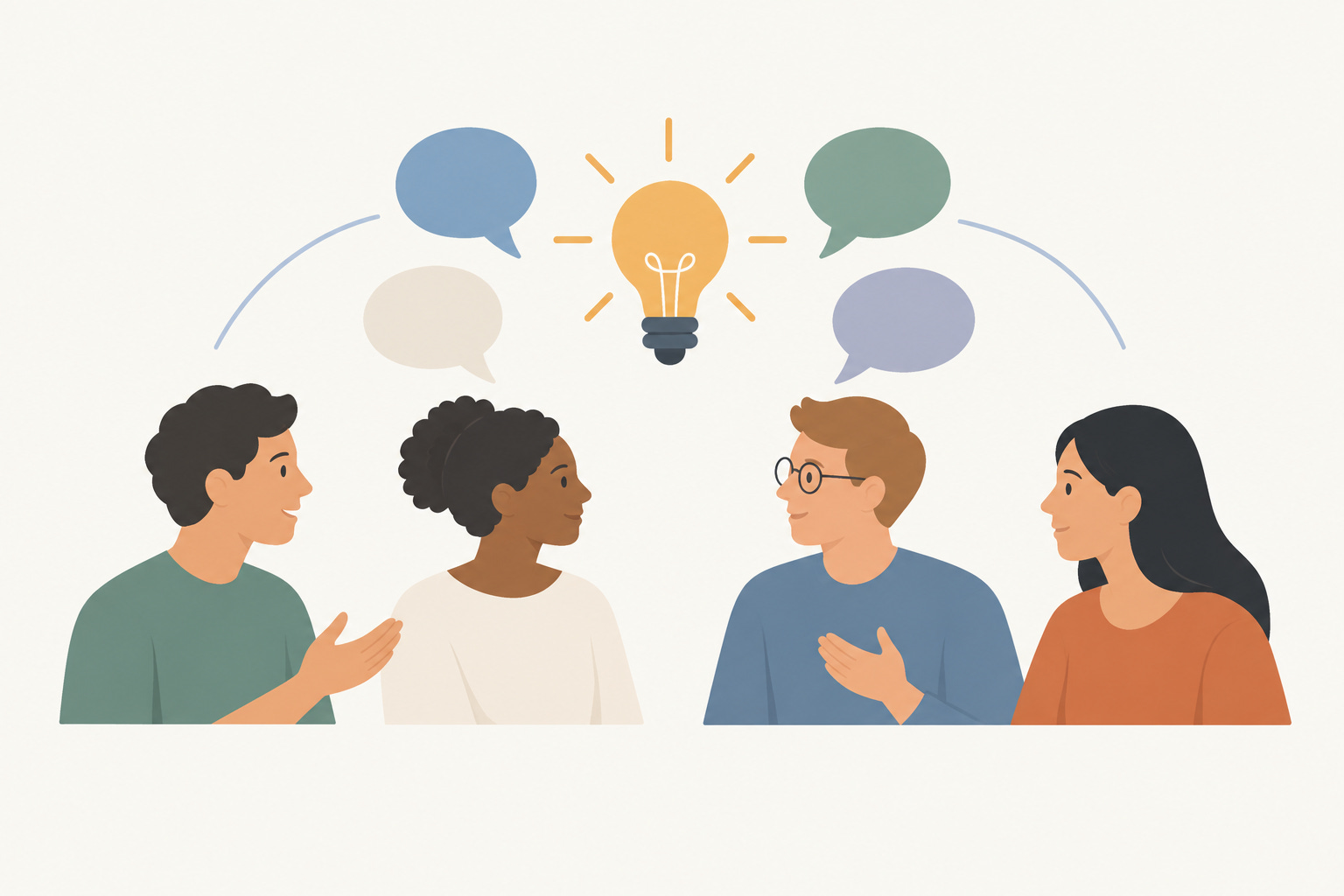
Misunderstandings of Intellectual Humility
Psychologist Todd B. Kashdan examines intellectual humility and challenges the idea that it is simply an individual trait. Drawing on psychological research, Kashdan argues that humility, curiosity, and openness to new ideas are also shaped by the social environments we create. He explores how groups and institutions can cultivate cultures that encourage questioning, perspective-taking, and a willingness to revise our beliefs in light of new evidence.
“It’s about how we, as a group, create an environment that encourages humility, that values questioning and curiosity, and that isn’t afraid to say, “I am definitely not the smartest person in the room, so where is my thinking off?”
This idea is in line with some of the latest psychological research. There’s a growing recognition that traits we usually think of as individual—like implicit bias or a growth mindset—might be better understood as a product of our social environments than about us as individuals.”
Before the 1850s, only a few elite scholars and subscribers could access original materials in exclusive archives, keeping important information away from regular people. When public libraries started to grow in the mid-19th century, they still did not offer this access to everyone; instead, they were used to manage behavior and society. As a result, everyday citizens have never had a system that gives them unfiltered access to the entire historical and intellectual record.
Today, government and activist actions still limit this access by censoring collections and promoting 'approved narratives', which goes against Article 19 of the Universal Declaration of Human Rights. By not allowing the public to see unfiltered primary sources—a privilege once held by elites—important knowledge remains hidden behind institutional barriers, stopping true intellectual freedom.
Traditional cataloging systems like the Dewey Decimal classification made the full range of human knowledge clear, allowing patrons to see the complete structure of available information, even if a specific title was missing.
The old Dewey system made it obvious when a book was missing because every subject had a permanent spot on the shelf and in the catalog, so anyone could look and see a clear gap where a title used to be.
Modern DEI-driven curation frameworks replace this openness with ideological censorship "weeding' and selective acquisition to remove books based on changing political criteria. Unlike traditional oversight or clear censorship, this systematic removal leaves no trace its all digital (And now because the Dewey system is not used You don't even have ordered shelves To see the spaces created), erasing the visible record of what has been taken away and denying everyday citizens the unedited access to primary sources that was once reserved for elites.
And it's interesting to note the amount of Liberians that were killed in revolutionary Russia. When the Bolsheviks seized power, they immediately recognized libraries as vital instruments for ideological control and began systematically purging collections, banning classic philosophy, and arresting or executing intellectuals and information workers who resisted state curation. Librarians and archivists who attempted to preserve independent catalogs or protect unedited source material faced imprisonment, exile, or death as the state transformed every repository into an organ of party propaganda. True freedom of information requires that libraries remain entirely open, transparent, and completely free from political interference.
Soviet libraries maintained a hidden, restricted-access section called the spetskhran that operated entirely apart from the public catalog. This secret collection held banned philosophy, banned political texts, and unedited foreign literature stripped from public shelves. Access required special state security clearance or explicit authorization from political authorities. This setup created a two-tiered reality where ordinary citizens were fed sanitized state propaganda while political elites and trusted apparatchiks retained private access to the real historical and intellectual record.
If we want to stay free. Our libraries have to stay free. Maintaining that freedom requires protecting public libraries as completely transparent, unmonitored, ideologically free spaces where the entire record of human thought remains visible to everyone as a true marketplace of ideas, ensuring that access to unedited information is never again locked away or silently erased. - "inclusion" is the last thing they want!