



Running the DEI Gauntlet
This week, we featured Jim Condon’s firsthand account of his final years at the National Radio Astronomy Observatory and the legal battle that followed. After publicly opposing workplace DEI policies he believed conflicted with principles of merit, equal protection, and free expression, Condon says he was removed from the position he had held for decades.
Reflecting on that experience, Condon argues that institutional pressure to affirm particular viewpoints can have unintended consequences for employees who feel unable to support contradictory policies. His essay raises broader questions about compelled speech, workplace culture, and how organizations can pursue diversity while preserving viewpoint diversity, due process, and merit-based decision-making.
“The real issue throughout all of this ordeal was never about a truly diverse workplace where all are judged equally on their merits; it is about using diversity to justify compelled speech, bullying, discrimination, and retaliation by employers.”

Commencement 2026: Jonathan Haidt Address
Jonathan Haidt’s 2026 NYU commencement address, is a reflection on attention, resilience, and human connection in an age of constant digital distraction.
Drawing on decades of research, Haidt argues that our attention has become one of our most valuable resources—and one of the most contested. He encourages graduates to reclaim agency over their lives by resisting technologies designed to capture their focus, embracing difficult challenges, and investing in meaningful relationships.
Rather than offering career advice alone, Haidt presents a broader vision of human flourishing: one grounded in intentional living, real-world connection, and the courage to pursue what truly matters. His message serves as a timely reminder that how we choose to spend our attention ultimately shapes who we become.
“I ask them to delete social media apps from their phones just for one week…They get back precious hours each day and a feeling of agency over how to spend that time. So treasure your attention more than the people who want to take it from you. Never forget what it’s worth. For Meta, it’s more than a trillion dollars. For you and your life, it’s priceless.”

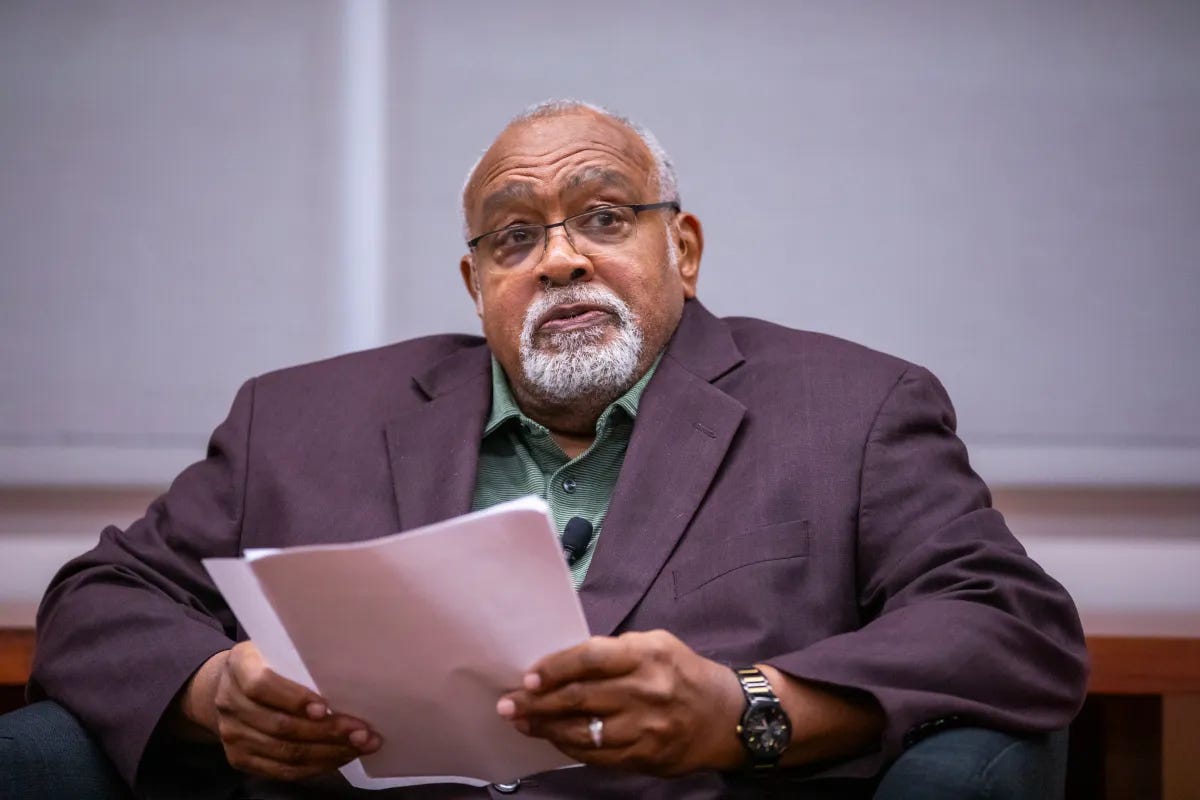
‘Disagreement itself has become morally legible’: Glenn Loury critiques self-censorship
This week, Stanford welcomed economist and public intellectual Glenn Loury for a conversation on self-censorship and the state of public discourse. Drawing on themes from his recent book Self-Censorship, Loury argued that fear of reputational consequences can discourage open inquiry, leading individuals to remain silent even when disagreement could improve public understanding. His remarks explored the relationship between free expression, institutional incentives, and the importance of candid conversation in a healthy democracy.
“Loury described self-censorship as “the equilibrium outcome of rational behavior,” and emphasized its compounding nature stating “silence today produces greater silence tomorrow.”
Curious that FAIR didn't provide links to the Loury lecture; only took a moment to locate them.
The Glenn Loury presentation is available on the sponsoring organization's (The McCoy Family Center for Ethics in Society) YouTube channel: https://www.youtube.com/@EthicsinSociety.
The presentation itself is at: https://www.youtube.com/watch?v=t-zpKt2m0Xc