

My lifelong career in radio astronomy began in 1972 when I joined the National Radio Astronomy Observatory (NRAO) as a new postdoc in Charlottesville, VA. After four decades as a Tenured Astronomer, I became an Astronomer Emeritus. Working with its excellent astronomers, engineers, and computer scientists was extremely rewarding—until the NRAO betrayed its founding principles of non-discrimination and merit in favor of DEI discrimination. For example, its revised hiring policy, “If two candidates for the same position have equal qualifications within the uncertainties, the candidate from the under-represented group should be hired” mandated discrimination against majority candidates, violating both Title VII of the 1964 Civil Rights Act and the 14th Amendment guarantees of equal protection. All scientists and managers were expected to “champion” NRAO’s version of “diversity,” which promoted performative inclusion. Most NRAO employees who oppose DEI discrimination have been silenced by fear of losing their jobs.
In 2017 the NRAO required its employees to complete online training on NRAO’s non-discrimination policies and certify that they understood them. I believed the policies were self-contradictory, and balked at this compelled speech. Consequently, in 2018 I was tasked by the NRAO Director, HR Head, and Office of Diversity and Inclusion (ODI) to write a confidential memo documenting institutional discrimination that I observed during my four decades at the NRAO.
I emailed my memo “Institutional Discrimination by Race and Sex at AUI/NRAO” to the Director. I hoped he would follow HR’s investigation policy and promptly address my claims. Instead, he tried to suppress them. Legal discovery later revealed his email to the heads of HR and ODI: “ugh. Despite how we may feel about the fight, we really need this to die down and go away.” That email showed that the NRAO would never oppose discrimination in the name of maintaining DEI standards. A month later, the HR Head emailed me to suggest I seek employment elsewhere and threatened to place a negative note in my HR file. Having tenure and nearing retirement, I was annoyed but not intimidated.
In August of 2020, the NRAO Director held my UVa PhD student hostage by threatening to remove me as her supervisor. Having nearly finished her thesis and applied for several postdocs, removing me would have set her research career back a year. I had to pay her ransom by falsely certifying that I understood NRAO’s DEI policies. Even though the NRAO Director could not punish me directly, he could exploit others to compel my speech.
On September 14, 2022 the NRAO announced that “Advance broader, equitable, inclusive participation in science and engineering” had been added to its original mission statement. The announcement also linked to NRAO’s web page advertising several prima facie discriminatory DEI programs. Who could speak up for those grad students, job applicants, and employees who would not be accepted, hired, or promoted because they were of the wrong race, sex, or sexual orientation, or because they simply wouldn’t “champion” DEI discrimination? As a 77-year-old unpaid Astronomer Emeritus, I could and so I had to. I reluctantly sent an email to the whole scientific staff publicly opposing NRAO’s discriminatory programs and policies.
The Director promptly halted the scientific staff emailer. Within an hour, he proposed to the AUI President the method of retaliation approved by the AUI Board of Trustees at its next meeting.
Less than four hours after my email, the Director emailed the Heads of HR and ODI:
“I am going to suggest to a carefully selected few members of scistaff that they create a petition (outside observatory resources) to state their support for D[E]I, then get every damn member of scistaff to sign it and present [it] to the observatory to show their support. Every. Damn. One.”
The next day he emailed the AUI President “I have seeded an effort in the scientific staff to provide a widespread condemnation of Condon’s actions/opinions, and demonstrate a firm D[E]I support.” The resulting condemnation was deceptively styled “grass-roots” but was astroturf seeded by the Director for his own benefit.
The NRAO Director also emailed the scientific staff, falsely describing my email as an “egregious abuse” of the Scistaff emailer. The Director also claimed my email disparaged other members of the staff, and AUI later claimed that I falsely alleged that NRAO engaged in career-ending retaliation. My email did neither; both claims were based on fabrications. This completed his “degradation ceremony” and led to my cancellation an hour later by the UVa Astronomy Department, where I had taught their radio astronomy course ten times.
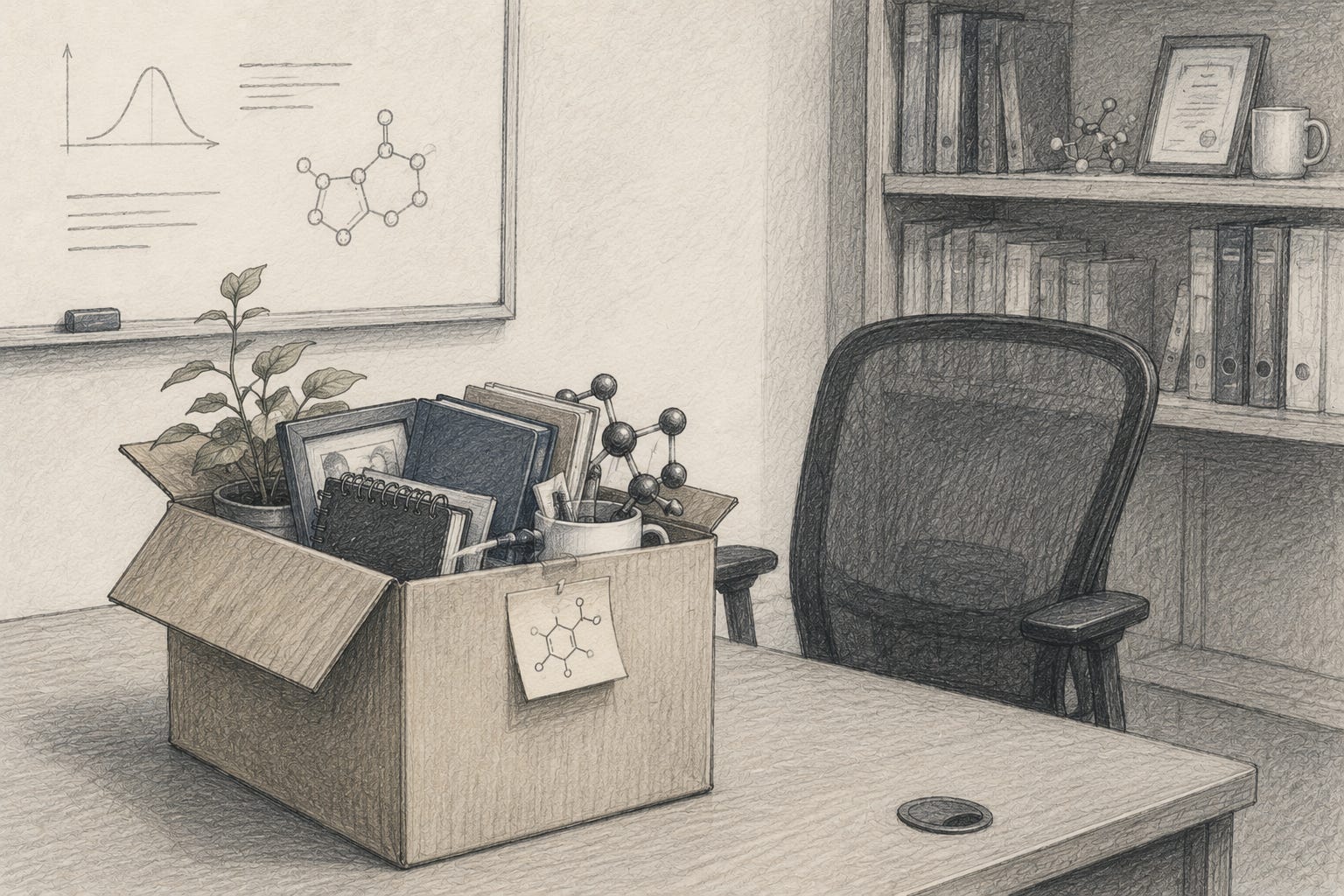
On November 4, 2022 I was shocked to receive a letter from AUI President Cohen informing me that my Astronomer Emeritus status had been revoked, any access I had to NRAO resources would be discontinued, and I should remove my personal items from the NRAO Headquarters building under guard. The letter didn’t say why, but it was in retaliation for my public opposition to DEI discrimination by race and sex at the NRAO. I hadn’t expected the AUI Board would retaliate because the previous AUI President had explicitly promised all NRAO employees “that you will never be subject to retaliation for reporting any concern that has the objective of helping this organization and its people.” Nor had I imagined the Board would act behind my back, denying basic due-process rights.
I was dismayed that my research career would be truncated by losing access to NRAO’s physical and digital libraries, critical computer support, and being made too “radioactive” for my colleagues to work with me. A week later, I removed my personal items from my office, saving what would fit into my small car and losing the rest. I will never forget looking back on the building where I arrived as a postdoc 50 years ago and was now leaving in disgrace, never to return.
I was unfairly dismissed from my lifetime career. Forcing employees to affirm contradictory policies is unjust compelled speech. I worried for the future of qualified scientists like myself who would be excluded due to their race or sex—which is ironic for DEI. Consequently, I sued AUI in federal court for retaliation made illegal by Title VII of the 1964 Civil Rights Act. This can cost about $100,000 out-of-pocket for legal expenses, several hundred hours of work helping your legal team prepare your case, and a three-year wait for results. The expensive and time-consuming process makes lawsuits like this impossible for most employees to resist injustice.
Soon after the judge ruled “AUI’s reason for terminating him [Condon] was pretext,” my case concluded in March 2026 with a clear legal victory—a judgment in my favor ordering AUI to pay $130,000 damages plus $79,171.52 to reimburse legal expenses.
Was my legal victory worth the ordeal? I was terminated, but the NRAO director was not. Because I was silenced, most NRAO employees are still afraid to oppose DEI discrimination. Even so, I don’t regret having opposed DEI discrimination, and now I can no longer be silenced. I believe that widely exposing NRAO’s actions is the best way to discourage any future attempts at discrimination or retaliation. The real issue throughout all of this ordeal was never about a truly diverse workplace where all are judged equally on their merits; it is about using diversity to justify compelled speech, bullying, discrimination, and retaliation by employers.
We welcome you to share your thoughts on this piece in the comments below. Click here to view our comment section moderation policy.
The opinions expressed here do not necessarily reflect those of Fair For All or its employees.
In keeping with our mission to promote a common culture of fairness, understanding, and humanity, we are committed to including a diverse range of voices and to encouraging compassionate, good-faith discourse.
We are actively seeking perspectives on this topic and others. If you’d like to join the conversation, please send completed drafts to submissions@fairforall.org.

The level of betrayal you describe here is chilling. Chilling to the core. And your response to all of it is courageous and highly admirable but the harm remains. And the machinery to continue the harm is intact. I am sorry for your loss .
Thank you for sharing this. I know what discrimination and institutional abuse look like because I lived through it.
My experience came through the desegregation policies that shaped public education in my state. As students, we were told that admission to our arts magnet school was based on talent, dedication, and years of hard work. We believed we had earned our place. I certainly did. I had been training as a dancer since the age of two, raised by a dance teacher, and spent my childhood working toward the opportunity I thought I had achieved on merit.
Years later, I learned that merit was not the whole story. The institution’s priority was meeting desegregation targets, and many of us were valued less for our abilities than for the demographic boxes we helped check. We were led to believe we had been chosen solely for our achievements when, in reality, we were often serving a larger political and bureaucratic objective. The realization was devastating. What I had viewed as recognition of my talent increasingly felt like I had been used as a seat-filler in a system that was never fully honest about why it wanted me there in the first place.
The contradiction became impossible to ignore when my sending district refused to pay the tuition bill. Instead of resolving the issue through the adults and institutions responsible for it, the principal’s solution was to make me a “work-study” student.
I wasn’t working for spending money. I was cleaning the school to pay for an education that I had been told was an opportunity. I was a teenager, not an employee. The dispute was between government institutions, yet I was the one forced to bear the burden. Looking back, it is difficult not to see it as a form of humiliation. Rather than being treated as a student whose education had value, I was treated as an obligation to be worked off.
Years later, when I sought accountability, I encountered the same wall that so many others do. Lawyers declined to take the case. Institutions denied responsibility. No one wanted to examine what happened or what it revealed about the system.
The promise was opportunity, diversity, inclusion, and equity. The reality, at least in my experience, was very different. I learned that lofty ideals can be used to justify unequal treatment, exploitation, and the sacrifice of individual students for institutional goals. The people who claimed to be fighting discrimination created a system in which some students were treated as human beings and others were treated as instruments.
That realization left a deeper wound than the cleaning ever did. It forced me to question whether I had ever been seen as a person at all—or whether I had simply been a seat-filler in someone else’s vision of social progress.