


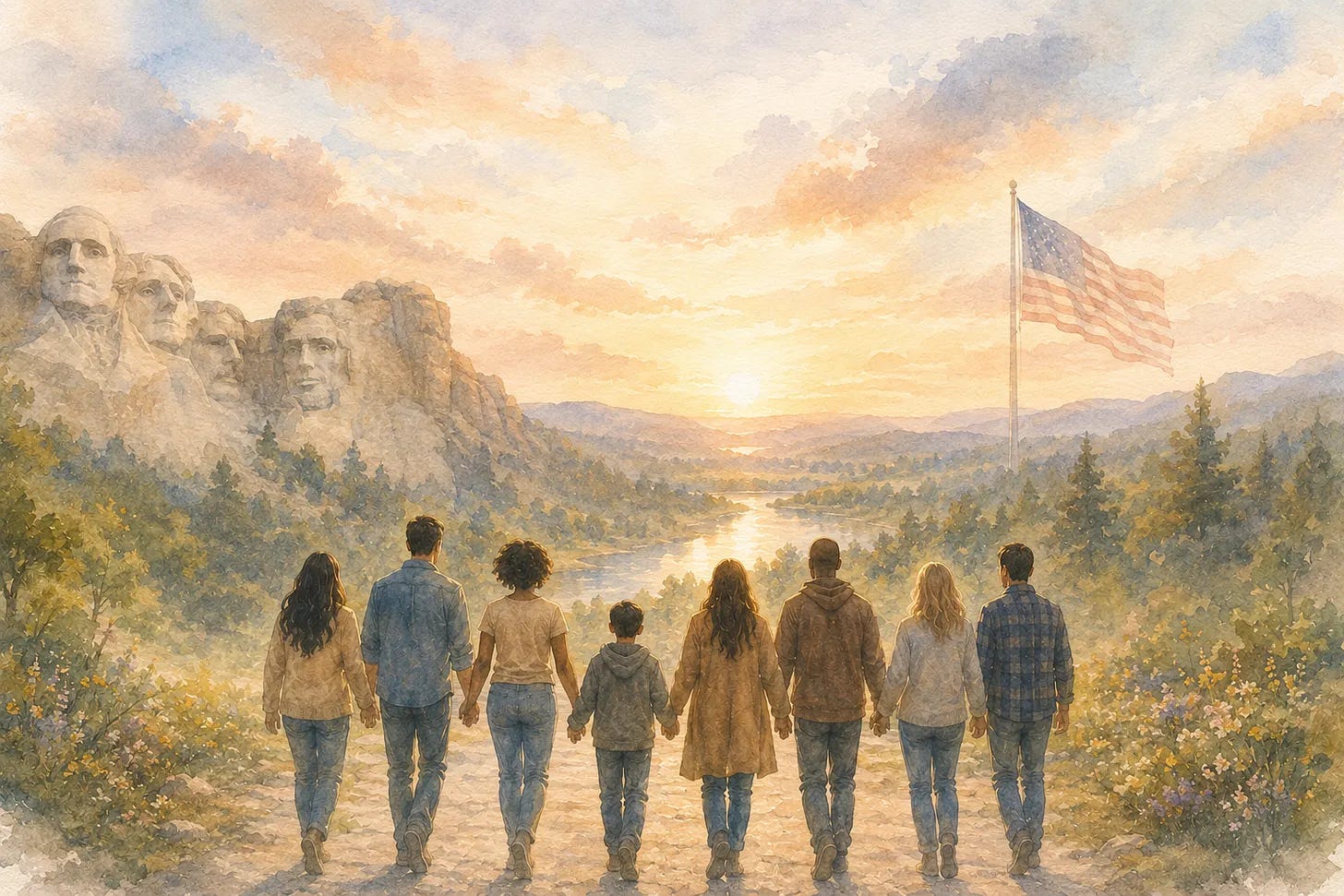
Challenges in Navigating the Good, the Bad, and the Ugly of American History
This week, we highlighted an essay by Matt Marsden examining how conflicting narratives about American history can shape our understanding of the country’s founding, Native American history, and ideals of liberty. Responding to a PBS video that he argues presents an overly simplified account of America’s past, Marsden calls for greater context and nuance when examining the country’s complicated history.
Marsden explores the dangers of replacing one revisionist narrative with another, arguing that difficult chapters of American history should neither be erased nor reduced to simple categories of good and evil. Ultimately, the essay makes the case for greater informational literacy and intellectual humility, encouraging readers to research competing claims, acknowledge historical complexity, and engage in good-faith dialogue about the past.
“Cycles of competition and cooperation are the norm throughout human history—an unfortunate aspect of our shared humanity.”
“But while American history has seen no shortage of bias, it must be maintained that replacing one revisionist history with another isn’t the answer. Such stark representations may instead create misunderstanding, confusion, distrust, or even resentment, while stunting efforts towards progress for all parties.”

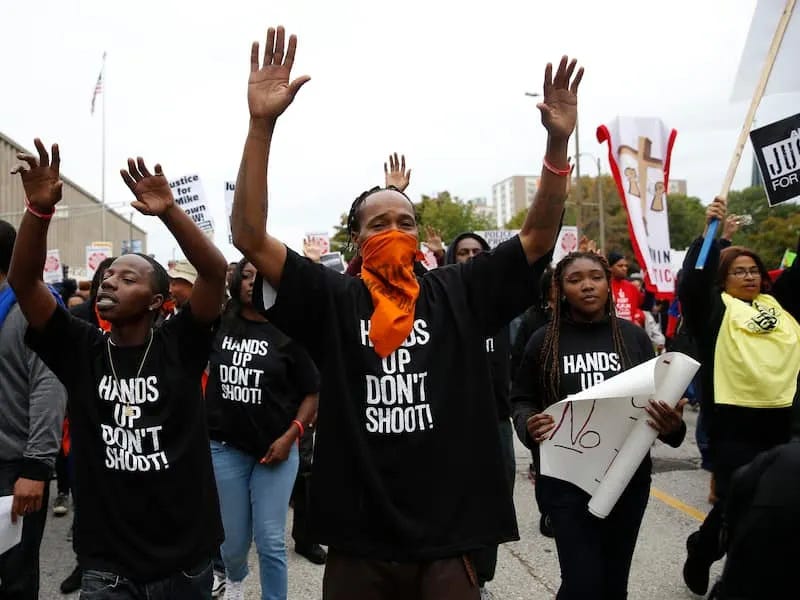
Ferguson at Twelve: The Lie That Divided a Nation
This week, Eli Steele revisits the 2014 shooting of Michael Brown in Ferguson, Missouri, and the competing narratives that emerged in its aftermath. Steele examines how the “Hands up, don’t shoot” account became a powerful cultural narrative despite subsequent investigations challenging key elements of the story, and argues that its legacy continues to shape how Americans understand race, policing, and justice.
Steele explores how the Ferguson narrative moved beyond the original event and into schools, universities, politics, and racial justice organizations, arguing that the reluctance to question an established narrative can have consequences long after the original facts have been established. Ultimately, the essay asks what happens when political and cultural narratives become so entrenched that challenging them is treated as a moral failing rather than an invitation to examine the evidence.
“On August 9, 2014, Michael Brown was eighteen years old when he was shot and killed by Officer Darren Wilson. Within hours of the shooting, Dorian Johnson, who had been with Brown prior to the shooting, told the world that Brown had his hands up in the air and said, don’t shoot. The “Hands up, don’t shoot” slogan spread across the world like wildfire…It became, to use my father’s phrase, a poetic truth, the kind of lie that a nation believes not because the evidence supports it but because it confirms what many Americans suspected of their nation.”
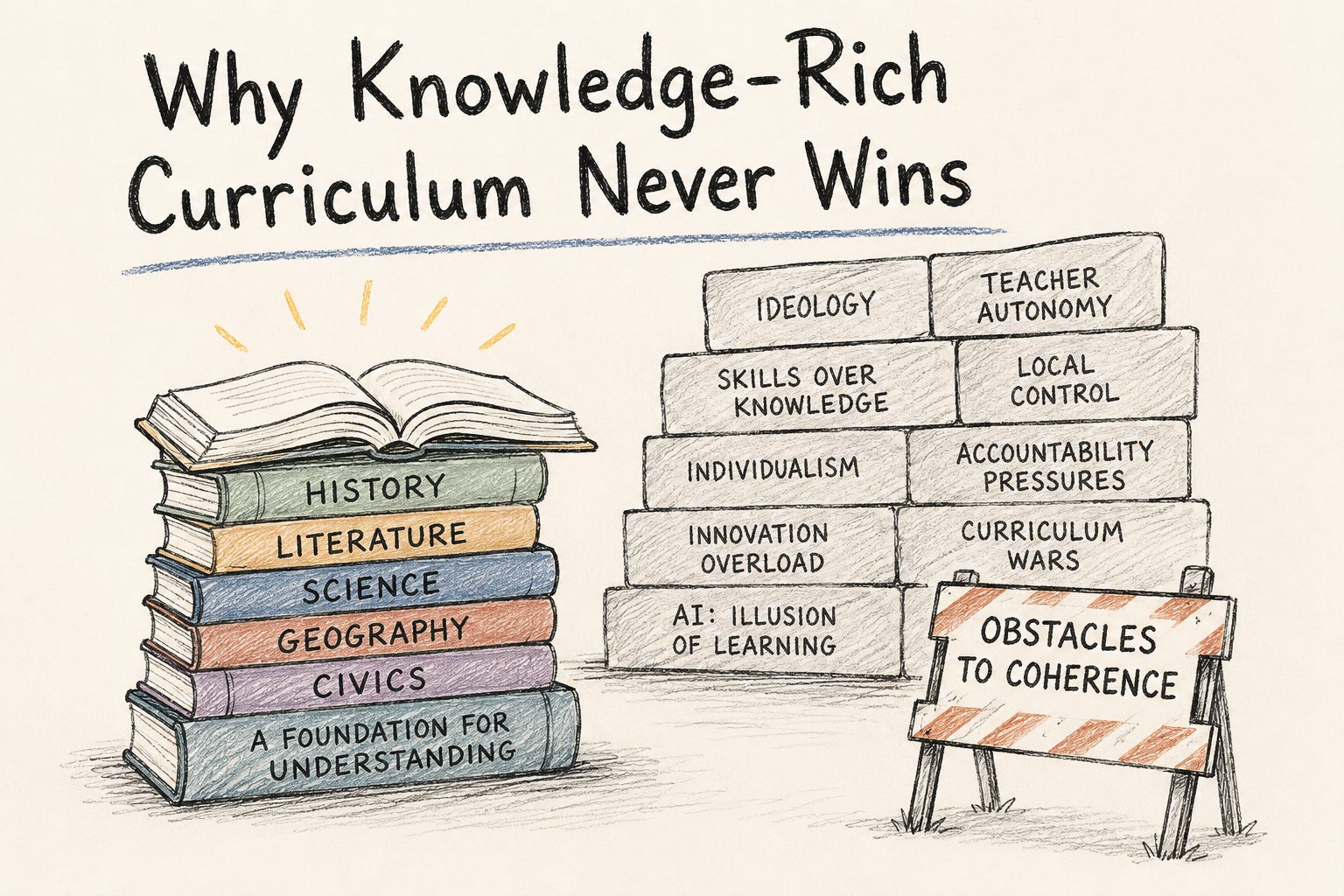
Why Knowledge-Rich Curriculum Never Wins
This week, we highlighted an essay by Robert Pondiscio examining why knowledge-rich education remains difficult to implement despite growing evidence that background knowledge is essential to reading comprehension and critical thinking. Pondiscio argues that the barriers are not primarily scientific, but instead stem from competing educational philosophies, institutional structures, teacher autonomy, local control, and an emphasis on skills over shared knowledge.
Pondiscio explores the tension between educational pluralism and a common body of knowledge, as well as the challenges posed by AI, which can make information easier to access while making genuine understanding more important than ever. Ultimately, the essay argues that while the evidence for knowledge-rich education may have won the debate, the deeper cultural and structural obstacles to putting that evidence into practice remain.
“None of these obstacles are disputes about cognitive science. Most analysts and advocates now accept that knowledge matters. There is nearly universal acceptance that reading comprehension depends heavily on what readers already know. Said differently, the obstacles to knowledge-rich education are not scientific; they are ideological, professional, structural, political, cultural, and increasingly technological. That should be sobering for curriculum advocates. It is a profound misunderstanding of the current moment to assume that knowledge-rich education is merely a matter of implementation.”


Is the Backlash Against Tech in Schools Going Too Far?
This week, we highlighted an essay by Lina Eroh examining the growing backlash against technology in schools and the need to distinguish between tools that hinder learning and those that genuinely support it. Eroh acknowledges legitimate concerns about excessive screen time, artificial intelligence, and the loss of deep thinking and human connection, but argues that treating all educational technology as equally harmful risks eliminating tools that can provide meaningful academic and accessibility support.
Eroh ultimately calls for a more evidence-based approach to ed-tech, asking whether a tool actually improves student outcomes, strengthens rather than replaces good teaching, and serves a clear educational purpose. Rather than framing the debate as technology versus no technology, she argues that schools should focus on understanding when technology helps students learn—and when it gets in the way.
“The past decade offers plenty of reasons for skepticism. Schools adopted lots of technology rapidly, often without clear evidence that it improved student outcomes. One study of tools built specifically for education purposes found only 1 in 5 showed any evidence of impact. It’s no wonder that teachers experienced firsthand how devices and poorly designed products could interrupt learning rather than support it and that parents watched children struggle with attention, social connection, and mental health in an increasingly digital world.
Those lessons matter. But another lesson matters too: Schools, teachers, and students continue to face real challenges, and technology can help address them.”