


Canadian Parents (Finally) Push Back Against Gender Cultism
For Quillette, FAIR Advisor Jonathan Kay writes about Canadians who are simply tired of living in a society that gaslights citizens.
If one didn’t know that a large majority of Canadians supported the protesters’ principal demand, one might have thought that our cities were being overrun by white supremacists. But of course, that’s the point of this kind of propaganda: to discourage dissent through collective public shaming.
This dishonest PR strategy won’t save the gender cult in the long run. In fact, it’s hard not to notice the somewhat desperate-seeming nature of the rhetoric being hurled at the protesters—not to mention the heavy whiff of class snobbery.

A New Cohort of Transgender Kids
For Persuasion, FAIR Advisor Lisa Selin Davis writes about how working out how to properly care for transgender kids means changing the debate.
That’s why we need more research, and for it to be better quality. Because at this point, there should be no question that this cohort exists—and that we don’t know the proper way to care for it. I know this personally because I’ve been talking to these kids and their parents, as well as to concerned clinicians and trans people, for six years (I’m working on a book about the youth gender culture war.) It’s clear in the rising prominence of detransitioners, who were affirmed and medically transitioned and later felt it was a mistake; their bodies are permanently changed, often damaged. By one estimate, this feeling of regret can take an average of about eight years to develop, so it makes sense that we’re hearing from more of them after the 2015 spike in cases of gender dysphoria.


Why Is TED Scared of Color Blindness?
For The Free Press, Coleman Hughes writes about how the organization’s tagline is “ideas worth spreading,” but yet they still attempted to suppress his talk on color blindness.
Either my TED content is performing extremely poorly because it is far less interesting than most of TED’s content, or TED deliberately is not promoting it. A string of evidence points to the latter explanation: unique among the TED talks released around the same time as mine, my talk has still not been reposted to the TED Talks Daily podcast. In fact, it was not even posted to YouTube until I sent an email inquiry.
According to its website, TED’s mission is to “discover and spread ideas that spark imagination, embrace possibility, and catalyze impact.” They claim to be “devoted to curiosity, reason, wonder, and the pursuit of knowledge—without an agenda.” My experience suggests otherwise, with TED falling far short of those ambitions and instead displaying all the hallmarks of an institution captured by the new progressive orthodoxy. TED’s leadership must decide whether it wants to do something about it—or let the organization become yet another echo chamber.

Whether Ibram X Kendi wasted millions is not the point
For The New Statesman, Peter Boghossian writes about why the author’s misguided ideas matter more than the inquiry into his Center for Antiracist Research.
But now we have an opportunity to grow up. We can sit at the adult table and have honest, evidence-based discussions about the issues Kendi is trying to address: how should we solve literacy disparities between African Americans and other racial groups? Is equity – redistribution based upon historical oppression – the best way to address economic disparities? Is every disparity in outcome due to systemic racism? Is racism the ordinary, everyday state of affairs? What role, if any, should anti-racism play in our government and in our institutions? Is, as Kendi writes, “the only remedy to past discrimination… present discrimination [and] the only remedy to present discrimination… future discrimination?” Should diversity and “proportional representation” be a goal in university admissions?
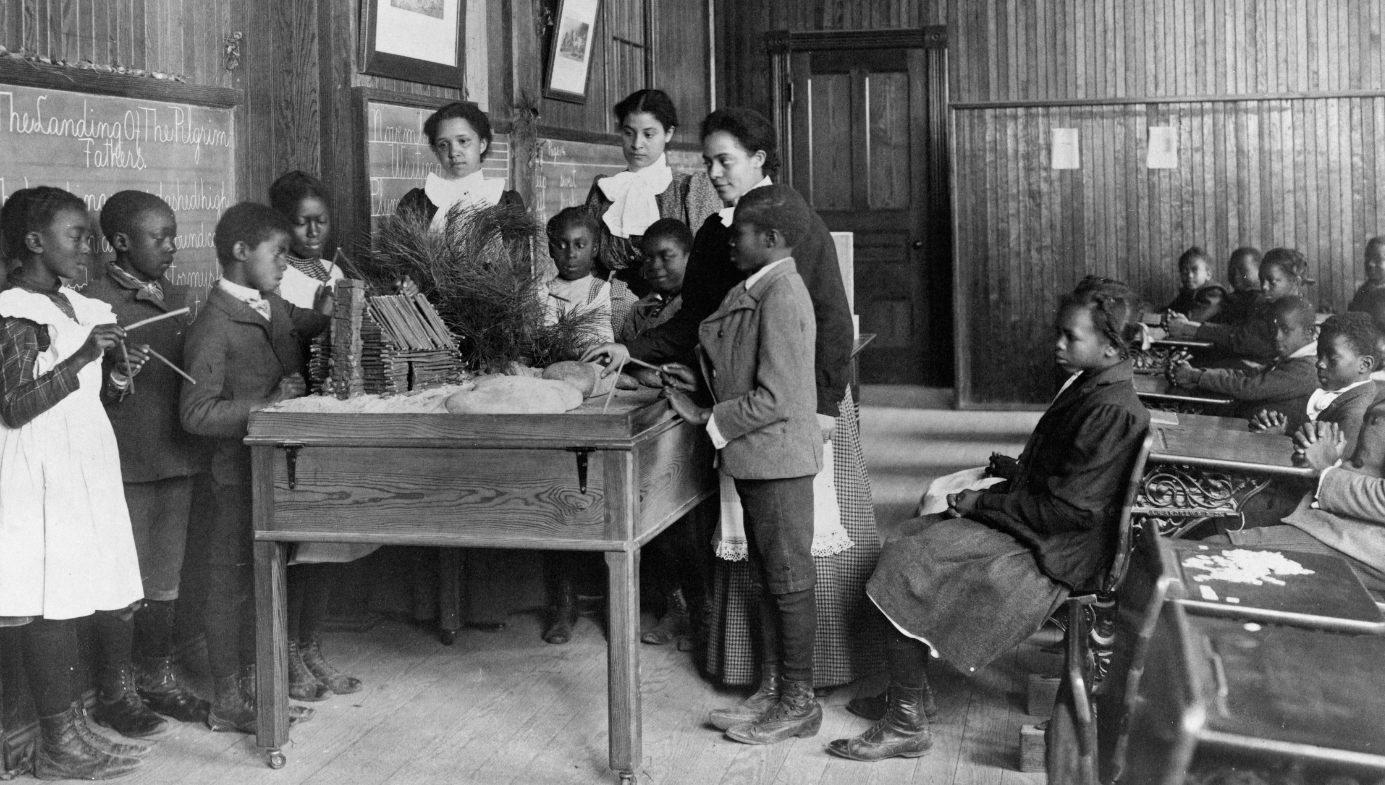
History Matters
For Quillette, Joel Kotkin writes about why a restoration of history, in all its complexity, is critical to escaping the polarized, rigid, and often insane political environment we now inhabit.
History is more than the story of remorseless white oppression—it is a shifting narrative of rising and falling power and changing contingencies. Cruelty has never been the province of one people or civilization. The African monarchs, the Chinese emperors, the Mongol warlords, and the Native American tribes all practiced brutality and mass enslavement of their enemies. At one time or another in their histories, most cultures have had the chance to dominate or have been made to experience domination. As Herodotus, the father of history, noted: “Human prosperity never abides long in one place.”

FAIR News Podcast
For audio versions of our FAIR News and FAIR Weekly Roundup newsletters, subscribe and listen to FAIR News Weekly on Apple Podcasts, Spotify, Google Podcasts, or via RSS feed.
Join the FAIR Community
Join us, and become a member of FAIR.
Become a FAIR volunteer, or join a FAIR chapter.
Take the Pro-Human Pledge and help promote a common culture based on fairness, understanding, and humanity.
Sign-up for a Welcome to FAIR Zoom information session to learn more about our mission.
Share your reviews and incident reports on our FAIR Transparency website.
Two out of the five featured articles this week are behind a paywall or require a subscription. I really enjoy your content but get frustrated when the highlighted articles require a commitment of some kind. Can you please highlight content that doesn’t require a commitment, or get a pass for your readers?
Politics makes for strange bedfellows. Sometimes simply being the enemy of the enemy is enough to make a bedfellow an ally and friend. Sometimes the enemy of one's enemy is so problematic that their mere presence in an alliance would enough to deter other potential allies from joining the cause. That is the case with Peter Boghossian. His uncritical acceptance of Viktor Orbán's hospitality disqualifies him from holding a seat at the friends and allies' table.
It's not necessary to describe Mr. Boghossian's infatuation with the now-lliberal and anti-democratic Hungary here. The New Republic already did it in a piece titled "The University of Austin Goes to Hungary." The lede reads: "Some of the 'classical liberals' who founded an ersatz college for 'free speech' sure seem more at home in Viktor Orbán’s repressive regime." Unlike Mr. Bohgossian's article, this one is not behind a paywall. https://newrepublic.com/article/168080/university-austin-hungary-shapiro-boghossian
The following excerpt captures Mr. Boghossian's attitude toward the dissent-free society Orbán has created after hollowing out Hungary's constitutional democracy:
"As his conversation . . . progressed, it became clearer that Boghossian’s affection for Hungary had less to do with a high-minded commitment to 'the liberty of others' and more to do with, well, his own feelings. 'You know when you go to a place and you can just feel it? It feels comfortable, safe,' Boghossian tells [Ilya] Shapiro. (In May, the chair of MCC [the Mathias Corvinus Collegium], who is also Orbán’s political director, told The Guardian that American right-wingers 'see Hungary as a conservative safe space.') As Boghossian describes it: 'Hungary is a place where people go if they’ve had enough and they’re fucking sick of it, or they want a taste for where it’s like where they can say anything that they want without being accused of anything heinous. I’ve experienced nothing but freedom here.… This place is like paradise to me' . . ."
Mr. Boghossian's criticism of Ibram X. Kendi (who, in the opinion of many, is an intellectual and a race grifter) is welcome, of course, even if Boghossian is in a minority in characterizing the sex-obsessed red-baiterJames Linsday's output as "quality scholarship."
However, Mr. Boghossian has earned his case of guilt by association. This is how the highly acclaimed Jacob Heilbrunn* summarizes the situation in Hungary in an essay that explores the American right's fascination with Orbán:
"The right’s ardor for Orbán has prompted some performative confusion in Western media. An Economist headline asked, 'Why Is the American Right Obsessed With Viktor Orbán?' And an article in The Hill by Kim Lane Scheppele, a sociology professor at Princeton, was titled: 'Orbán Dazzles US Conservatives—What Do They See in Him?'
The most common answer is that Orbán has made Hungary a laboratory for the conversion of a liberal democracy into an authoritarian state. The thinking goes like this: For an American right fascinated (in an obviously self-interested manner) by the creation and maintenance of minority rule, the formula begins with a crackdown on the press. Snub international institutions (in Orbán’s case, the European Union) and depict the Holocaust survivor George Soros as a diabolical financier. Add in an assault on the rule of law. Finish off any lingering political opposition by gerrymandering it out of existence. . . " https://www.theatlantic.com/ideas/archive/2022/08/viktor-orban-american-conservatism-admiration/671205/
Mr. Boghossian is certainly correct that "We can sit at the adult table and have honest, evidence-based discussions about the issues Kendi is trying to address." Let's hope those adults are staunch defenders of liberal, democratic values and systems whose bona fides have not been compromised the way Mr. Boghossian's have by association with the right-wing version of Mr. Kendi's leftist illiberalism.
* "Jacob Heilbrunn is a journalist based in Washington, DC, who serves as both senior editor and contributor to the National Interest. Formerly a member of the editorial board for the Los Angeles Times, and a senior editor for the New Republic, he is currently a regular contributor to the New York Times and Washington Monthly in addition to his efforts for the National Interest. Also, Heilbrunn is the author of They Knew They Were Right: The Rise of the Neocons, which was published by Doubleday in 2008." https://www.encyclopedia.com/arts/educational-magazines/heilbrunn-jacob