

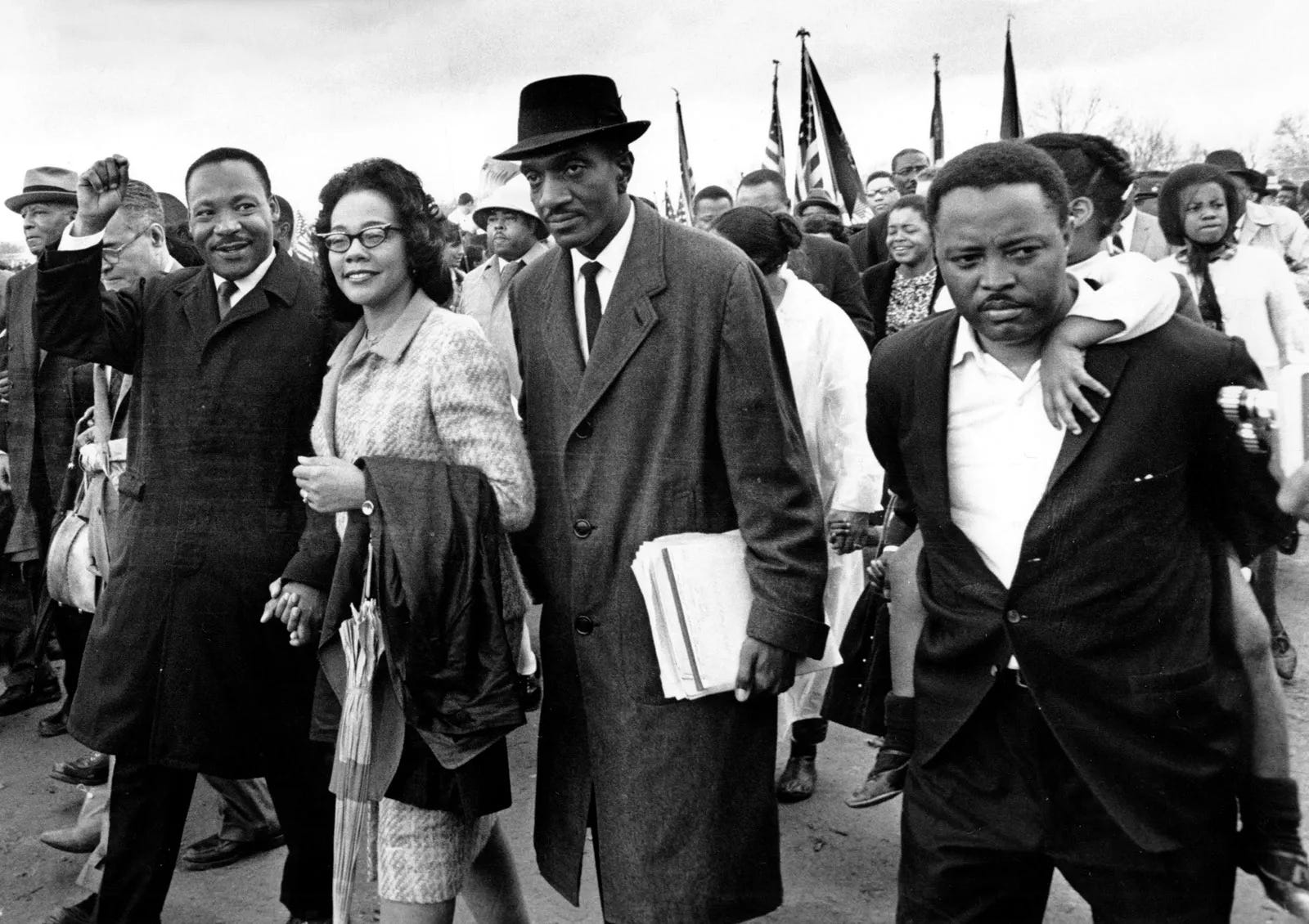
One of the reasons I like Black History Month is its showcase and celebration of the triumphs of black people in the United States from slavery, through Jim Crow, to recent history. These triumphs not only show how resilient figures in black history have been, but also how resilient black Americans can be right now. These historical figures represent the potential of contemporary figures. That said, both black and non-black Americans insist that sufficient representation of black American success is still somehow lacking. For me, that has not been the case. Though Mary Wright Edelman’s claim that “You can’t be what you can’t see” has been widely embraced, I think that embrace is both misguided and a slap in the face of those black leaders who came before us.
When people try to convince me of the importance of demographic representation in professional spaces, I always reply similarly. “Yes,” I say, “ I always make sure another black person is in a restaurant before I walk in.” When they nod in approval, I add, “Before I order the prime rib at a restaurant, I have to make sure I see another black person eating it first.” After they realize my facetiousness, I add, “If I don’t see a black man eating the prime rib, I just point to another black person in the restaurant and say to the waiter‘I’ll have what he’s having.” Clearly, this is a roundabout way of saying the concept of representation is overstated. Yes, I know the need for representation is a real thing for people. My question is, “Should it be?” Is the need for racial representation something to be satisfied, or is it something to be overcome?
I understand the appeal of representation to an extent, especially when it comes to shaping young minds during formative years. For such young minds, racial representation in professional spaces expands their perceived possibilities for future livelihood, reduces what identity-based uncertainty that may have been instilled in them, and effectively signals viable pursuits and belonging. I get that. It’s why I say representation is “overrated” and not just useless.
However, I believe the importance and efficacy of racial representation loses its usefulness after a while, the way training wheels lose their usefulness when a child learns to ride a bike without them. As far as I see it, after a certain age, representation is more of a crutch than anything else. One detriment of this crutch is the demand to see black people in particular fields because they themselves are interested in pursuing that field. But this is a flawed take.
When I was a child, I didn’t need to see black people succeed in a particular field. I needed to see black people succeed, period. When I saw a successful black professional, I knew that I could be a successful black professional as well, not successful in a particular field, just successful. I didn’t need to see a black professor before entering graduate school to earn my Ph.D. In my mind, “successful black professor” was a subcategory of “successful black professional.” All I needed was to see success, and I saw enough to make me think I could be successful too.
What’s more, the need for representation is a self-defeating concept. Somebody has to be the first minority in a field to serve as the initial representation. If every black person needed to see representation in a certain field, they would never get representatives in that field. Someone has to take the first step. Why can’t it be you?
In The Content of Our Character, Shelby Steele coined the term “integration shock,” which is the reluctance of black people to enter white spaces after the Civil Rights Movement, a reluctance born of both fear and unfamiliarity. I think this was understandable in the years following the end of the movement, but I believe the perpetuation of a victim narrative—which provided many rhetorical and political benefits—has kept this concept alive. The need for representation is a symptom of integration shock, which is a byproduct of victimhood.
I am of the mind that the best way to honor black Americans who came before us, who certainly did not have the representation many black people feel they need to move ahead, is to thwart the need to see ourselves in particular professional spaces. What did those black heroes fight for? What is the point of putting all that time and energy into opening doors of opportunity if no one is willing to walk through them? For what did they endure physical, mental, and emotional pain if we’re just going to act like we have it as bad as they did? The need for representation is a sacrilege for two reasons: it downplays the triumphs of black history and shows that black resilience may have weakened when the whole point was to strengthen it.
I plan on honoring the black intellectuals, heroes, and leaders of American history by walking through whatever doors I want, aspiring to whichever goals I want, and focusing on the present and future they fought so hard to give me. Anything else makes a celebration of black history into a mockery of black history.
We welcome you to share your thoughts on this piece in the comments below. Click here to view our comment section moderation policy.
The opinions expressed here do not necessarily reflect those of Fair For All or its employees.
In keeping with our mission to promote a common culture of fairness, understanding, and humanity, we are committed to including a diverse range of voices and to encouraging compassionate, good-faith discourse.
We are actively seeking other perspectives on this topic and others. If you’d like to join the conversation, please send drafts to submissions@fairforall.org.

So succinct as well as sagacious! Thank you for this little piece.
I am sure of only one thing: the radical leftist movement to foreground black people, in every aspect of western culture, from billboards, to actors, to ads, to, well lets face it, everything, has done nothing to change views on 'race' or attitudes to black people.
Its simply exhausting, shallow, takes jobs or attention away from all the other non white actors/stories, and if anything has made people less inclined to care about black lives.
The irony....
We were doing just fine until Obama...we had it, progress, anti racism, more equity, etc...now we see the rise of racism again...no wonder...basic pyschology.