

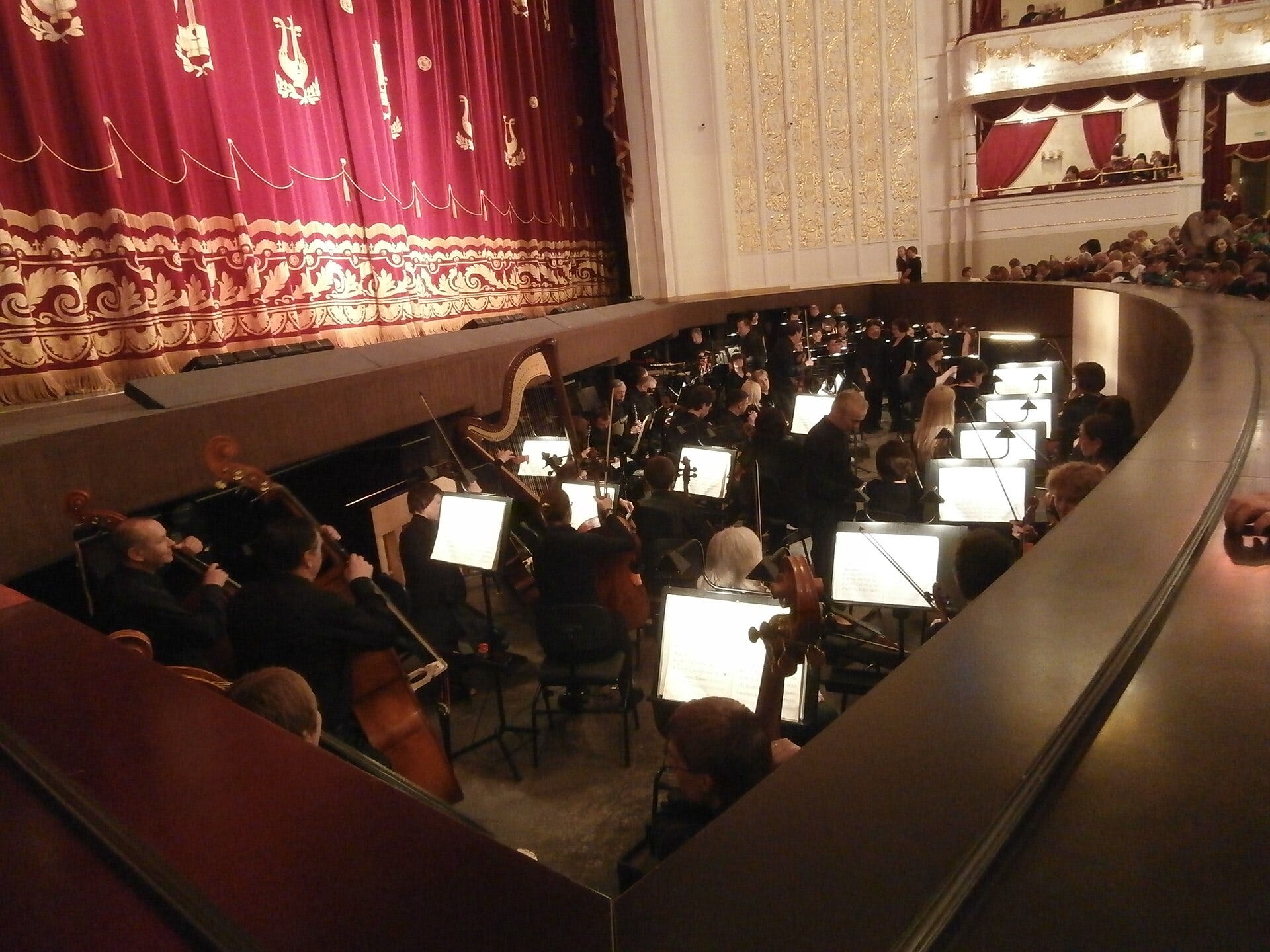
Behind Broadway’s bright lights lies a hiring culture that has long been driven by competition and merit. But that culture is now being reshaped by ideology. Diversity, Equity, Inclusion, and Accessibility (DEIA) initiatives within Broadway’s pit orchestras are no longer rooted in fairness or excellence—they’re promoting exclusion and ideological conformity.
Getting hired to play in a Broadway pit is notoriously difficult. There’s no job posting or standard audition. Instead, it's built on relationships, reputation, and proven skill. Music contractors, directors, and supervisors—many affiliated with the American Federation of Musicians (AFM) union—staff fewer than 400 musicians each season, out of more than 5,400 union members. The competition is fierce, and rightly so: these are among the most coveted and demanding jobs in commercial theater.
Aspiring musicians aren’t handed these roles—they work for them. Many study privately with current players, attend countless performances, and network persistently. I did all of this in my 20s: cold-emailing dozens of music directors from the AFM directory, sitting in pits, absorbing the culture, and learning the ropes. There are no shortcuts. It often takes years just to get on a sub list.
Compare Broadway’s informal system with other top-tier institutions. The Metropolitan Opera uses blind auditions: musicians perform behind a screen so only their sound—not appearance—is judged. Radio City’s orchestra, known for its Christmas Spectacular, holds formal, transparent auditions annually. An open call goes out to all AFM members inviting them to apply.
Perhaps Broadway could benefit from adopting similarly transparent hiring practices. But instead, it seems to be heading in the opposite direction.
Organizations like The Dramatists Guild, MUSE, Rise Theatre, Maestra Music, Inc., BIPOC Arts, and others are working to reshape the industry by prioritizing demographic “representation” over readiness. Many use directories organized by identity, encouraging hiring managers to make decisions based on race, gender, or background rather than skill or experience.
If a white, male musician were selected explicitly because of race or gender, we’d call it discrimination. So why is the reverse considered acceptable? DEIA programs aren’t expanding access through opportunity, they’re shifting outcomes artificially, sidelining years of individual discipline and craft.
These initiatives operate on the unproven assumption that all demographic disparities stem from implicit bias. But how do we measure that? Without context or data explaining why disparities exist, acting on assumptions is both premature and dangerous.
If we applied that logic consistently, we’d accuse the NBA, tech startups, and construction crews of systemic bias too. Here are a few telling statistics from the U.S.:
Are we expected to impose demographic balance across every industry where numbers aren’t evenly split? Should we assume every disparity is the result of bias? By that logic, perhaps more women should commit crimes to balance out prison demographics. (Relax—I’m being facetious.)
In truth, disparities can result from a range of factors: culture, interest, education, personal choice, and more. DEIA frameworks reduce that complexity to a single dimension: identity. And that’s not just reductive; it’s disconnected from reality.
At a recent Theatre Resources Unlimited (TRU) Zoom roundtable, I challenged these assumptions directly. I pointed out how labeling someone “underrepresented” based solely on appearance is not only simplistic but prejudiced. It disregards access, background, mental health, and willingness to grow. Identity is a shallow metric for something as nuanced as artistic merit.
If Broadway genuinely wants to become more inclusive, it should begin by addressing its audience. According to the Broadway League’s 2023–2024 report:
84% of attendees aged 25+ have a college degree
The average household income is $276,375
70% of ticket buyers come from outside NYC
65% of the audience is female
Ticket prices average $157.60, with premium tickets (like Othello) reaching nearly $900. That’s a class and access issue—not a pipeline one. Many out-of-town visitors may not even know about last-minute discounts like TKTS.
If these DEIA-focused organizations truly care about access, they should focus on economic and cultural barriers: subsidizing tickets, strengthening arts education, and supporting school and community outreach. That’s real accessibility.
Perhaps the most alarming development is how dissent is handled. Criticism of DEIA, even when respectful and evidence-based, isn’t debated. It’s met with silence, censorship, or outright hostility. I’ve personally received legal threats, been blocked, blacklisted, and even told I don’t deserve a seat at the table because I’m a white man. That’s not inclusion—it’s discrimination.
Disagreement once fueled progress. Now, it’s treated like a threat. When a system punishes honest questions, that’s usually a sign its foundation is weak. If there’s nothing to hide, why run from scrutiny?
If Broadway genuinely wants to pursue equity, it must be merit-based and identity-blind. As it stands, DEIA doesn’t dismantle bias—it rebrands it under a new name and punishes those who challenge the orthodoxy. It demands conformity to group identity over personal skill, experience, and persistence.
Fairness has never meant guaranteed outcomes. It means equal opportunity—not engineered results. There’s no entitlement to pit work. These roles are earned through passion, sacrifice, and years of invisible effort. Demographics don’t capture the late nights, the unpaid gigs, the practice hours, or the life sacrifices.
If Broadway’s idea of evolution is replacing excellence with ideology, it’s not evolving. It’s collapsing. Skill built this industry, and appeasement will kill it.
This is an essay for our series, “Make Them Hear You: Stories from FAIR Artists.” Learn more about the series and contribute here.
We welcome you to share your thoughts on this piece in the comments below. Click here to view our comment section moderation policy.
The opinions expressed here do not necessarily reflect those of the Foundation Against Intolerance & Racism or its employees.
In keeping with our mission to promote a common culture of fairness, understanding, and humanity, we are committed to including a diversity of voices and encouraging compassionate and good-faith discourse.
We are actively seeking other perspectives on this topic and others. If you’d like to join the conversation, please send drafts to submissions@fairforall.org.

The economics of the entertainment industry is driven by the imbalance of the supply of artists versus the demand. Because of this, there can never be “fairness” in employment. For every “winner” there are hundreds of “losers”. Elevating one class over others by putting your finger on the scale doesn’t result in fairness, it simply redistributes unfairness. Unfortunately, excellence is often the biggest casualty.
Immediately brought to my mind the short story by Kurt Vonnegut 'Harrison Bergeron', which (as AI recounts) takes place "in a dystopian future, where the government mandates absolute equality by handicapping those with superior abilities, ballerinas are forced to wear weights to limit their graceful movements."