

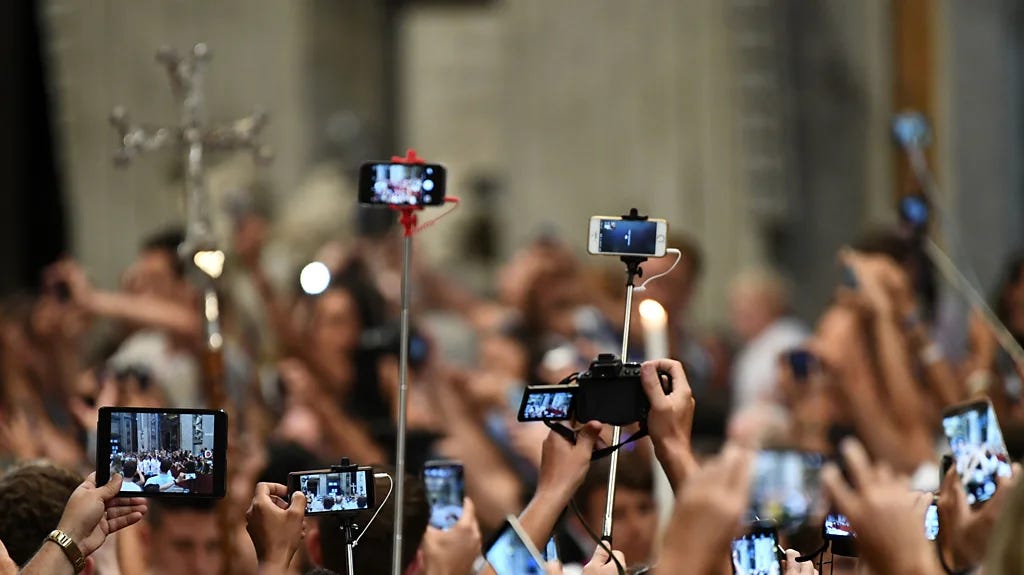
It’s no surprise to many that there is a crisis of mental illness sweeping those largely born after 1990. Young people are reporting substantially higher rates of anxiety, depression and suicidal ideation than previous generations. Better reporting, destigmatisation and advances in psychological medicine account for some, but not all of these changes. Declining social connection is the more serious factor at play.
According to the World Health Organisation, one in seven 10-19-year-olds experiences a negative mental health condition. Suicide is the third leading cause of death among those aged 15–29. This is a crisis of disconnected youth, not only of diagnosis.
Mental illness is nothing new. Sylvia Plath, Vincent van Gogh and Virginia Woolf are infamous examples of artists who suffered from mental illness. Anguish existed long before smartphones; what has changed is the scale. In several wealthy countries, rates of poor mental wellbeing rose sharply in the early 2010s, as smartphones became ordinary. The crisis is exacerbated by the breakdown of social order in family, religion and community. Civic life had already been thinning for decades. The phone emerged into a social world weaker than it looked.
One of the ways humans have historically found community is through religion. Belief in a god offered a larger purpose, and a reason to ‘keep showing up’ among similar demographics. As the Western world moves away from traditional religious practice, fewer shared sources of meaning remain. Nietzsche was ahead of his time when he declared that “God is dead.” If a shared story about how to live no longer holds, people are left to invent one alone — a heavy task, especially for the young.
In many ways, we are living in the aftermath of isolationism. People now organise their lives around individual pursuits — personalised technology, social media, ideology — instead of community or a shared moral belief. The problem is not that individuals matter. Individuality inside a community is not the same thing as isolation with a social feed.
It is nearly impossible to navigate life today without a smartphone. Algorithms present polished and unattainable lifestyles, lock people inside political echo chambers, and push them into pointless, vitriolic arguments with strangers. People spend hours trying to be right on Twitter and Reddit rather than working with their fellow humans. While this speech is technically free, it is not collaborative, and so it offers little to any actual community.
Religion provided a framework for how to live well: an ethic, a sense of duty, and an explanation for how the world came to exist. According to the Pew Research Centre, people who attend religious services regularly are more likely to describe themselves as ‘very happy’ than those who are non-religious or only nominally religious. The ‘happiness-gap’ is not proof that metaphysics produces wellbeing. It suggests that practice matters: showing up, being known, and being answerable to other people. If we reject traditional religion, what replaces its social functions? Peer support, discipline, community, mutual accountability and shared values. Alain de Botton seeks to address this in Religion for Atheists.
Religion has also brought real harms. Unscientific belief has often licensed hatred of people deemed “different” or “unholy,” and denominations have fought one another over the “right” interpretation of their holy texts. Such examples include Catholics and Protestants, Hindus and Muslims, or Israelis and Palestinians. The point is not that only religion produces cruelty, as secular ideologies have done the same; rather that a source of belonging can also become a source of exclusion.
As an atheist myself, I appreciate the community-based aspects of religion while remaining concerned by the superstition, dogma and closed-mindedness that come with it. There ought to be a way to enjoy social cohesion and feel purposeful without believing in things that are not scientifically proven. The Ancient Greeks sought eudaimonia, human flourishing, and Confucianism emphasised personal ethics and family loyalty. Both start from the recognition that we cannot be closed off from each other. In a world this interconnected, there is no good future in a life organised only around the self.
What the present, particularly in the West, needs is a philosophy that does not require belief in spirits and deities, but still gives young people structure, stability, purpose and discipline. Secular Alcoholics Anonymous is a practical example. Traditional AA asks participants to surrender their will to a “Higher Power.” Secular meetings, and books such as Jeffrey Munn’s Staying Sober Without God, keep the fellowship and personal accountability without the prayer. The machinery that helped was never only the requirement for prayer.
Loss of religion is not the only reason for this unease. In the past, there were cows to milk, wool to spin and fields to plough. Comfort is not a moral failing. But as Western society has become more comfortable, more of us are free to ponder the meaning of life. That can bring joy — and dread. Affluence did not cause the crisis by itself. It left a space that community used to fill.
Social media then filled that space poorly. Young people have grown up glued to their phones, comparing themselves to filtered lives online. Jean Twenge, Jonathan Haidt and others have shown that adolescent distress rose after smartphones became ubiquitous, and that teens who spend more time on social media and less time in person report worse mental health. The US Surgeon General has called loneliness an epidemic. Among Americans aged 15 to 24, time spent in person with friends fell by nearly 70 percent between 2003 and 2020. A social media feed is not a substitute for reality.
News and culture have fragmented in the same way. People now build personalised information environments, and algorithms show them more of what they already engage with. Political disagreement becomes more hostile when people operate from different (and potentially inaccurate) pictures of reality. Two people of the same age can now inhabit completely different cultural worlds.
I am not in favour of banning social media. That would not only be a serious free-speech violation, but also damage networking and information sharing. YouTube, for example, has personally had a fantastic impact on my life. But it is hard for vulnerable young people to stop doomscrolling, or to avoid material that encourages them to see themselves mainly as victims, or to develop prejudice against those who do not share their worldview. That returns to the lack of a unifying philosophy in the West, and the abundance of divisive political identities.
The strain between young men and women belongs to the same story. A male loneliness epidemic, and Gen Z women decrying a hatred of men, cannot be good for anyone’s wellbeing. When old scripts for courtship and family collapse faster than new ones are built, dating becomes another arena of comparison and withdrawal. A 2022 Demographic Research Study found that parental divorce can have a larger negative impact on a child’s long-term educational attainment than the death of a parent.
What, then, can be done? No single hobby will reverse a cultural shift. A practical place to start is to rebuild the unglamorous thing religion and civic life once supplied: repeated contact with the same people. Meetup groups, sports clubs, book groups, volunteering, congregations or a shared hobby create face-to-face life for people who spend their days on screens. A group that meets once is an event. A group that meets every Tuesday is a community.
Individuals can construct meaning from what they find worthwhile and what requires sustained effort: reading, creative work, loved ones, physical activity, intellectual pursuits. Lives can be meaningful without superstition. That will not happen automatically. The substitutes for religious and civic life will have to be as regular, as demanding and as shared as the things they replace.
People need community to feel connected to something greater than themselves. We need not return to superstitious beliefs to achieve this. What we need is a philosophy of how to live well, how to treat others, and how to take responsibility for ourselves and our communities — without asking the individual to disappear, and without leaving the individual to invent a whole moral world alone. The Society Project has proposed “societism,” which seeks the wellbeing of society without sacrificing the significance of the individual. It illustrates the thinking secular societies will need if they want purpose and belonging after the old sources of those things have faded.
The mental health crisis among the young is not proof that modernity was a mistake. It is proof that a life rich in options and poor in belonging is harder to bear than we pretended.
We welcome you to share your thoughts on this piece in the comments below. Click here to view our comment section moderation policy.
The opinions expressed here do not necessarily reflect those of Fair For All or its employees.
In keeping with our mission to promote a common culture of fairness, understanding, and humanity, we are committed to including a diverse range of voices and to encouraging compassionate, good-faith discourse.
We are actively seeking perspectives on this topic and others. If you’d like to join the conversation, please send completed drafts to submissions@fairforall.org.

It has created a mental health crisis for all ages. Whether one is 18 or 80 like me, the loss of community makes life more of a struggle
Divorce is nothing new, and I would contend its impact was much greater on Generation X than those coming up today. Back then it was considered both unusual and a major source of stigma for the children. But I digress. Social media writ large is probably the biggest contributor to the issues the author identifies. It creates and reinforces silos in a way that's also very, very portable. Don't like your religion? You could move. Social media follows people everywhere and was designed to be addictive. I also think it's dangerous to ignore the more transient nature of community these days when you leave what's left of the working class. Wealthy families move more frequently, or maintain multiple homes, so their children don't establish roots in what used to be the traditional sense. You also saw this in military families, but there the community of military dependents in some ways formed a substitute (dependents were always outsiders, and often bullied because of their parents' occupation or the simple fact they were Americans overseas). Others don't have that.