
Don't Break Faith with Those Who Die
In the Memory of Richard Bilkzsto - Reflecting on merit and accountability in education.

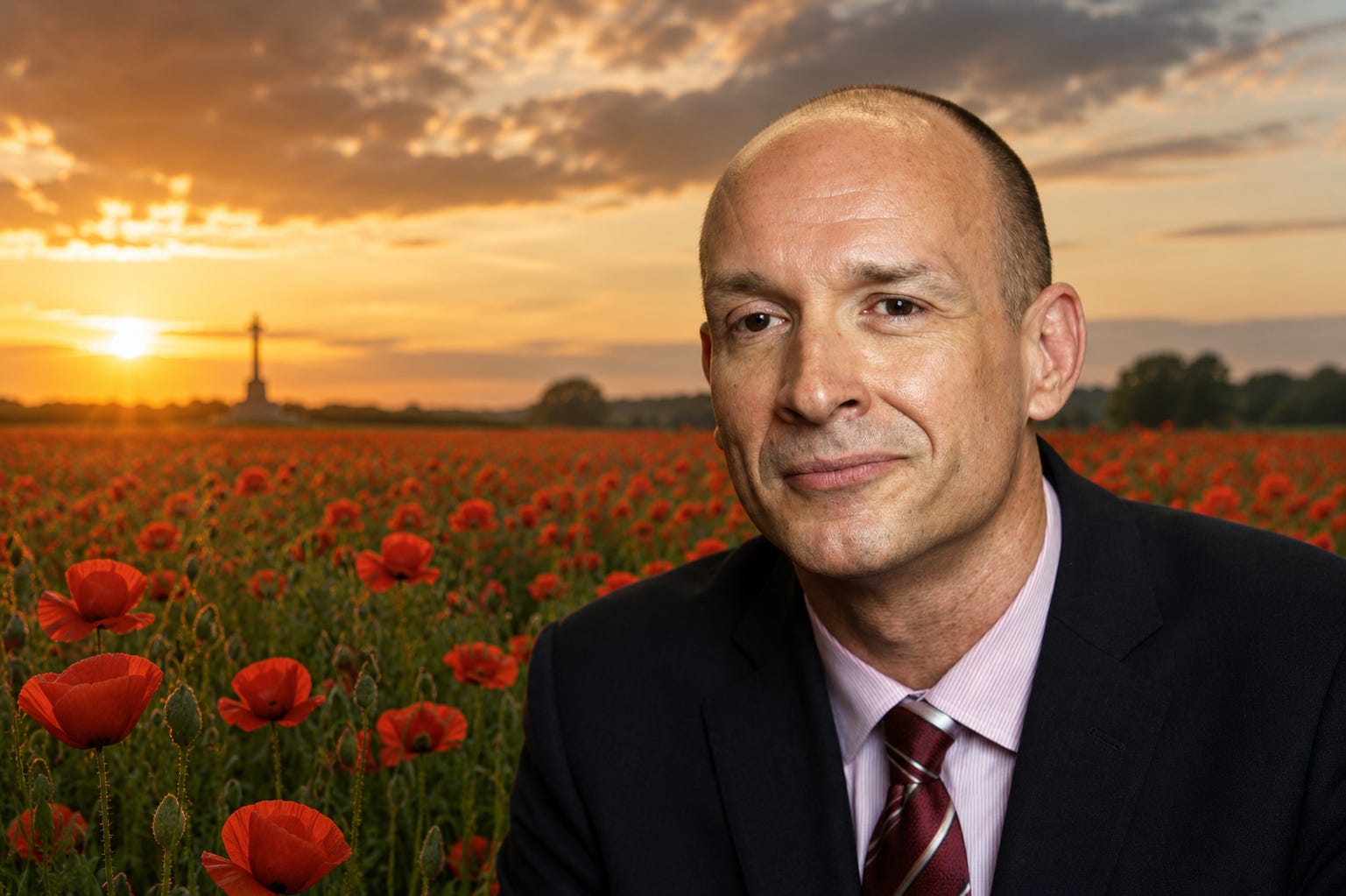
Three years ago, July 13, 2023, I received the dreadful news that our friend, Richard Bilkzsto, had taken his own life. Nothing prepares you for news like that.
Our friendship started through a FAIR meeting for Ontario educators and carried its course through our mutual concerns, commitments, and convictions. Those who knew Richard remember his belief in supporting the most vulnerable students, his efforts to stop the bullies, and his understanding of the needs of students who did not fit in some way or another.
The last time I was in touch with Richard was a week before this tragic event when I had messaged him. His response was brief: two-words, “thank you”. I assumed he was simply busy. I should have called. I should have asked. The “what ifs” and the regrets will not undo this tragedy. They will not bring him back to his family, to us, to the many people he was so passionate about helping or to those whose lives he touched when he didn’t have to. As a retired principal, he could have easily chosen to sit back on a beach, relax, and enjoy the well-deserved, hard-earned freedom of retirement.
But that was not who Richard was.
Even though we will never know exactly what or who pushed Richard to the edge, the fact remains that something did. Someone did. Society did. The system did. A system that claims to value diversity, equity, and inclusion — words I now loathe. A system that constantly beats the drum about the importance of mental health, yet has no qualms about blaming everything on the white man. Yes, that is what he was accused of being by a paid presenter, for expressing his opinions while numerous other administrators – principals and vice principals who attended that session – remained silent and went on with the flow. Appalling! They should have objected, stood up, walked out, denounced. Nope! They did no such thing. They approved the blatant racism by remaining a bystander. Ironically they are the ones running our schools. Go figure!
Openly blaming people simply for being white, specifically men at that time, was the prevailing trend. Now, the attitude seems more subtle, implied in job and admissions applications like an underlying disease that, instead of being treated, has simply been managed.
Richard’s tragic passing in July 2023 stirred an uproar not only in Canada and the United States but also globally, with coverage appearing across different media outlets and in multiple languages. The DEI mandates came under scrutiny and continue to be scrutinized, not only by some institutions and organizations, but most importantly by members of the general public, some of whom are gradually, but finally, beginning to question them.
Yet like any other news story, it is only “breaking” until something else breaks — and as we all know, things keep breaking all around the world. So, to not let Richard’s legacy be forgotten, a group of his friends who shared his values on education, merit, fairness, and equality of opportunity decided to recognize, encourage, and honour exceptional teachers, and future teachers in his honor. Friends of Richard Bilkszto was born. The group continues their advocacy for preserving and improving the education system including but not limited to policies regarding specialized programs.
Why things have to get really bad before they start getting better beats me—it is such an uncommon sense.
Three years ago, under the umbrella of DEI, the merit- and qualification-based admission process for specialized programs was revoked and replaced with a lottery system that considered historical backgrounds and, bluntly put, perceived victimhood as eligible criteria for admission. The community consultation meetings in which many of us — parents and teachers alike — participated and voiced our opposition to the idea, were simply a checkbox exercise; the decision had clearly already been made. A decision that was influenced, in no small part, by the loud voices of those who had the time and energy to accuse the system of racism and, quite literally, disrupt a system that was working and had proven successful. At the very least, it was not failing.
Like many of us, Richard was also opposed to this change. He recognized the social injustices that students in less fortunate families face, he was familiar with the barriers in their way, however, like me, he did not believe the new lottery-based admission policy is the solution. We both had ideas that would address the issue in the long term. He was vocal about his concerns and my proposed solutions received a written rejection and a verbal warning by the people above. Nevertheless, we worked together to try to prevent the change from happening or, at the very least, to educate the public and parents about the inevitable negative consequences of implementing such policies on a large scale without addressing the underlying causes of adversity. At a minimum, conducting small-scale pilot projects, or simply listening to us — the teachers who work with students day in and day out, those who know the lay of the land should have been better explored
That would have made sense.
There is a possibility that the entire process was a way to eliminate specialized school programs that required significant investment and funding by making them appear ineffective. The best way to justify getting rid of them would be to demonstrate that they were no longer successful. That is exactly what happened after the top-down implementation of the lottery system. Many of the students admitted through this process struggled to manage the workload, academic level, and intensity required to complete such programs. As a result, some schools adjusted their programs to better match students’ level. This effectively diluted and lowered the standards of programs initially designed to educate students at a much higher level. Once again, professionals who knew better went along with the flow.
There is something sinister about this approach.
Family and education are the foundations of a society. One would expect these two pillars to be treated as sacred and protected, especially by those entrusted with serving the public. Yet, instead of strengthening and preserving these pillars, there appears to be an insistence on making them irrelevant, fragile, or reduced to something resembling casual entertainment. Whether this is done intentionally or out of ignorance is ultimately irrelevant. The leadership responsible for this flagrancy must be held accountable. After all, we are the ones paying their salaries.
Three years have passed, and the lottery admission policy has now been revoked.
The students entering the specialized programs in the 2026–2027 school year have been admitted based on a centralized evaluation test. It is the closest one can get to merit-based admissions; however, it is still not the ideal approach. Different specialized schools offer different programs, each with its own requirements and standards for admission, which were designed based on the specific nature and demands of those programs. Those who deliver these programs are best positioned to establish the appropriate entrance criteria, and that is something a centralized test cannot fully accomplish. Nevertheless, it is a significant improvement over a lottery system and the consideration of victimhood as a determining factor in admission to specialized programs that require a strong foundation as a prerequisite.
During the past three years, instead of selecting the best of the crop and educating them according to their abilities so they could become the best contributors to their society, as one would expect to be the purpose of our schools, our education system ignored the professional judgment of its own teachers, wasted three years of students’ time, and misused publicly funded programs. The last cohort of students admitted to merit-based specialized programs graduated in June 2026. The next cohort of students admitted through a semi-merit-based process will begin these programs in September 2026. Over the past three years, the larger number of students admitted to these programs, in between these two groups, were placed in a difficult and unfair situation, while many others were denied the opportunity to gain admission. The result speaks for itself.
An inevitable and preventable failure. What a shame.
It has taken three years and an insane amount of work for an army of teachers, parents, individuals, and organizations such as Friends of Richard Bilkszto and Save our Schools Ontario to pressure the Ministry of Education to reverse this decision. Going backwards and returning to where we were in 2023 is not an improvement; that said, it could be considered one if it marks the point at which we stop the downward spiral of destructive policies.
Richard would be happy to know that we are closer to restoring what we had, and therefore the prospect of improvement could now be on the horizon. Rest in peace, Richard. You are in our thoughts and prayers.
We welcome you to share your thoughts on this piece in the comments below. Click here to view our comment section moderation policy.
The opinions expressed here do not necessarily reflect those of Fair For All or its employees.
In keeping with our mission to promote a common culture of fairness, understanding, and humanity, we are committed to including a diverse range of voices and to encouraging compassionate, good-faith discourse.
We are actively seeking perspectives on this topic and others. If you’d like to join the conversation, please send completed drafts to submissions@fairforall.org.
 | A guest post by
|
Thank you for this tribute and for your continued efforts to keep Richard’s memory and legacy alive.
It is progress. God bless Richard.