

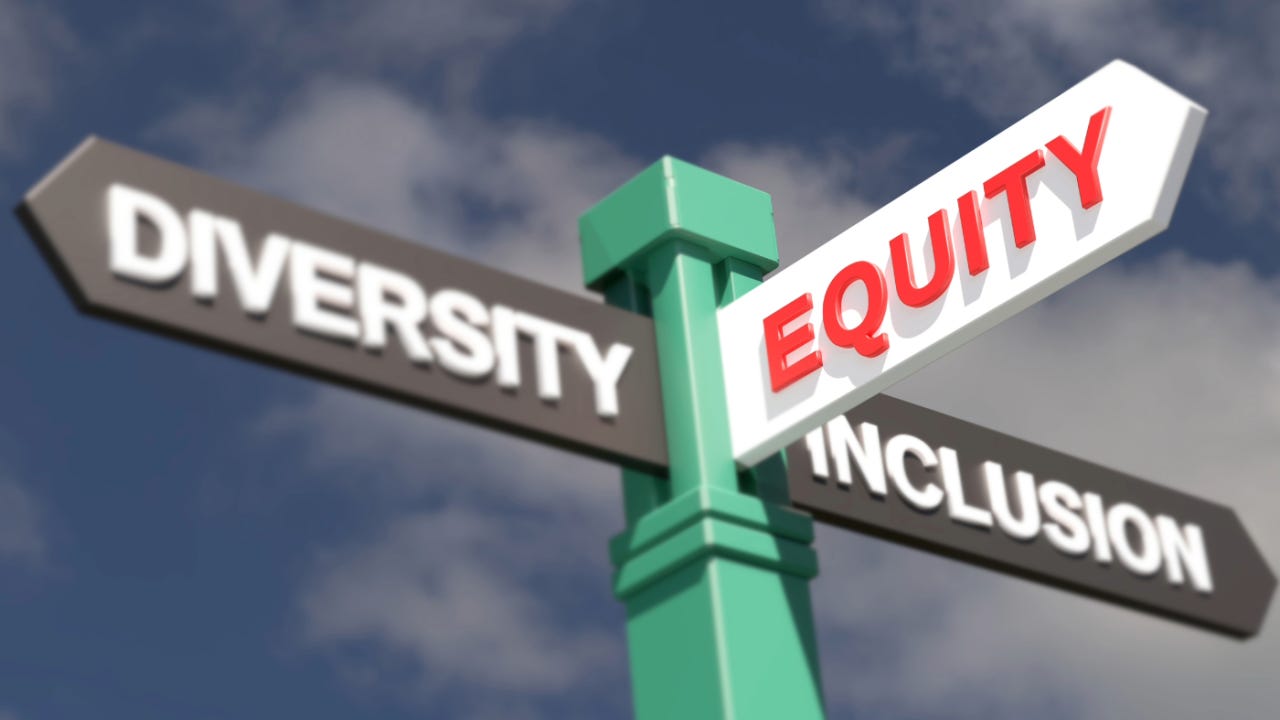
When Donald Trump recently declared the death of Diversity, Equity, and Inclusion (DEI), sensible-minded Americans across the country—myself included—applauded. At last, the great juggernaut of identity politics, that machinery of race-based preference cloaked in the language of justice, had met its end.
Only, it hasn’t. Not yet.
Trump’s executive order restricting DEI initiatives in the federal government was a landmark decision, a long-overdue pushback against the institutionalization of racial essentialism. It was arguably the most significant victory since the Supreme Court struck down affirmative action in college admissions. But the fight is far from over.
Yes, states like Texas, Florida, Alabama, and Kentucky have passed legislation defunding DEI bureaucracies, and many universities have shuttered their diversity offices. But media declarations of DEI’s demise are premature. In reality, the movement is not retreating—it’s rebranding.
DEI has always been a master of linguistic disguise. Today’s strategy is not to fight in the open but to retreat into ambiguity. Titles are changing. Staff are being reassigned. Programs once openly framed as “equity initiatives” are being folded into offices with softer names: “Student Success,” “Well-Being,” “Access and Opportunity.”
Take the University of North Carolina at Chapel Hill. It eliminated 20 DEI-related positions, but quietly reassigned 27 others. The $5.4 million in savings? Redirected toward “student success” and “professional development.” These benign-sounding categories still harbor the same ideological content—training in “cultural competence” (a euphemism for critical race theory), sessions on “microaggressions,” and the like. This pattern repeats across campuses. At UNC Wilmington, the Office of Institutional Diversity and Inclusion was shut down only to have its cultural centers absorbed into Student Affairs. The Chief Diversity Officer simply found a new title elsewhere at the university.
The University of Oklahoma claimed it had closed its DEI office in April 2024. What it did instead was rename it the Division of Access and Opportunity and reassign the staff. The University of Louisville made a similar move a year earlier, renaming its DEI office the Office of Institutional Equity. Nothing changed except the sign on the door.
In Texas—yes, Texas—I encountered a new undergraduate course titled “Psychological Thinking,” which ostensibly aims to introduce students to the basics of psychology. In reality, it offers the same DEI dogma: lessons on “white privilege,” “microaggressions,” and the social construction of identity.
This is not accidental. The DEI establishment is being advised, often by professional consultants, on how to adapt and survive in hostile political climates. In a 2024 webinar hosted by grant platform Fluxx, nonprofit leaders openly discussed how to keep race-based programming “under the radar.” One speaker, LaToya Ratlieff, the grants director at Hello Alice, explained how simply changing a grant requirement from “only open to Black entrepreneurs” to “preference for Black entrepreneurs” can help avoid legal challenges. “You can’t get a lawsuit for giving ‘preference,’” she said. Ratlieff even suggested using AI to sanitize DEI-related language on websites to ward off lawsuits claiming anti-white discrimination.
Major corporations are playing the same game. Eli Lilly removed “racial justice” language from its 2023 proxy statement and stopped publicly reporting its DEI progress. And yet that same year, executive compensation was still tied to diversity goals. Their website still promotes a robust commitment to DEI. Pfizer was forced to open a race-exclusive fellowship to applicants of all backgrounds after a lawsuit, but its internal structure remains dominated by racially segregated “colleague resource groups.” Microsoft, Apple, Starbucks—all have doubled down.
The acronym itself is now fluid. Companies swap “DEI” for “IDE,” placing “inclusion” first in the hopes of softening public reaction. The Society for Human Resource Management (SHRM), with nearly 340,000 members worldwide, changed the name of its annual conference from the “DEI Conference” in 2023 to “Inclusion 2023.” The agenda, however, remains the same. Their 2025 conference website still touts a commitment to “inclusion, equity, and diversity.” The acronym may have changed order. The ideology hasn’t.
Some companies conservatives claimed had abandoned DEI are still hiring for DEI positions on LinkedIn. In some cases, those job postings appeared after they publicly claimed to have terminated those roles.
And while “red” states play whack-a-mole with their DEI departments, “blue” states are charging ahead. In 2023, Washington State mandated DEI training in K-12 public school standards. Maryland required its public retirement system to hire a DEI director. Oregon allocated $50,000 for new DEI initiatives.
Even anti-DEI laws passed in conservative states often include loopholes. Provisions carved out for “accreditation or compliance with state and federal law” allow schools and agencies to continue race-based programs as long as they can justify them under bureaucratic compliance.
It therefore comes as no surprise that an April 2025 report by Parents Defending Education found that 245 universities still maintain institution-wide DEI offices. Another 180 colleges or departments within those universities do as well, including Stanford Law and UC Davis’s College of Engineering.
So no, DEI isn’t dead. It’s shedding its skin.
Whenever you hear that a university or corporation has “eliminated” its DEI programs, ask yourself: is the ideology gone? Or has it simply found a new room to inhabit, a new nameplate, a new acronym?
What victory is there if DEI vanishes in title only, while continuing to push the same grievance narratives, the same race-based preferences, and the same worldview of victimhood and perpetual redress?
Real reform won’t come from word games. It requires structural change. Swapping “equity” for “inclusion” does nothing if the underlying assumptions remain unchallenged. Redacting a DEI report doesn’t mean DEI metrics are no longer shaping hiring, promotion, and curriculum.
We welcome you to share your thoughts on this piece in the comments below. Click here to view our comment section moderation policy.
The opinions expressed here do not necessarily reflect those of the Foundation Against Intolerance & Racism or its employees.
In keeping with our mission to promote a common culture of fairness, understanding, and humanity, we are committed to including a diversity of voices and encouraging compassionate and good-faith discourse.
We are actively seeking other perspectives on this topic and others. If you’d like to join the conversation, please send drafts to submissions@fairforall.org.

I can assure you as a blue state liberal prof, its doubling down...nothing has changed.
Still censored, still run by radical ideologues. People aren't stupid. We need oversight. Fair, but really. Otherwise its more waste and hatred.
This is exactly what is happening at my school -- the positions are renamed but no DEI-peddlers were fired. The dean of DEI has become the dean of Academic Culture and Well-being. The DEI team was renamed into Culture Team while keeping their job descriptions and their pronouns. The university updated our "shared values" by removing the explicit mention of DEI, but keeping the sentiment the same. A memo explaining the change has clarified "that our values remain unchanged, we just found more precise language to express them." If you want more examples -- check out Hx@USC susbtack, which continues to document this shell-game: https://heterodoxatusc.substack.com/p/whats-in-a-name-not-dei-anymore
Even more frustrating is that our university has instituted austerity measures (in response to anticipated federal funding crunch) -- and while these measures include hiring freezes of faculty, staff, and graduate students, no DEI loons were fired.