

Dear Friends of FAIR,
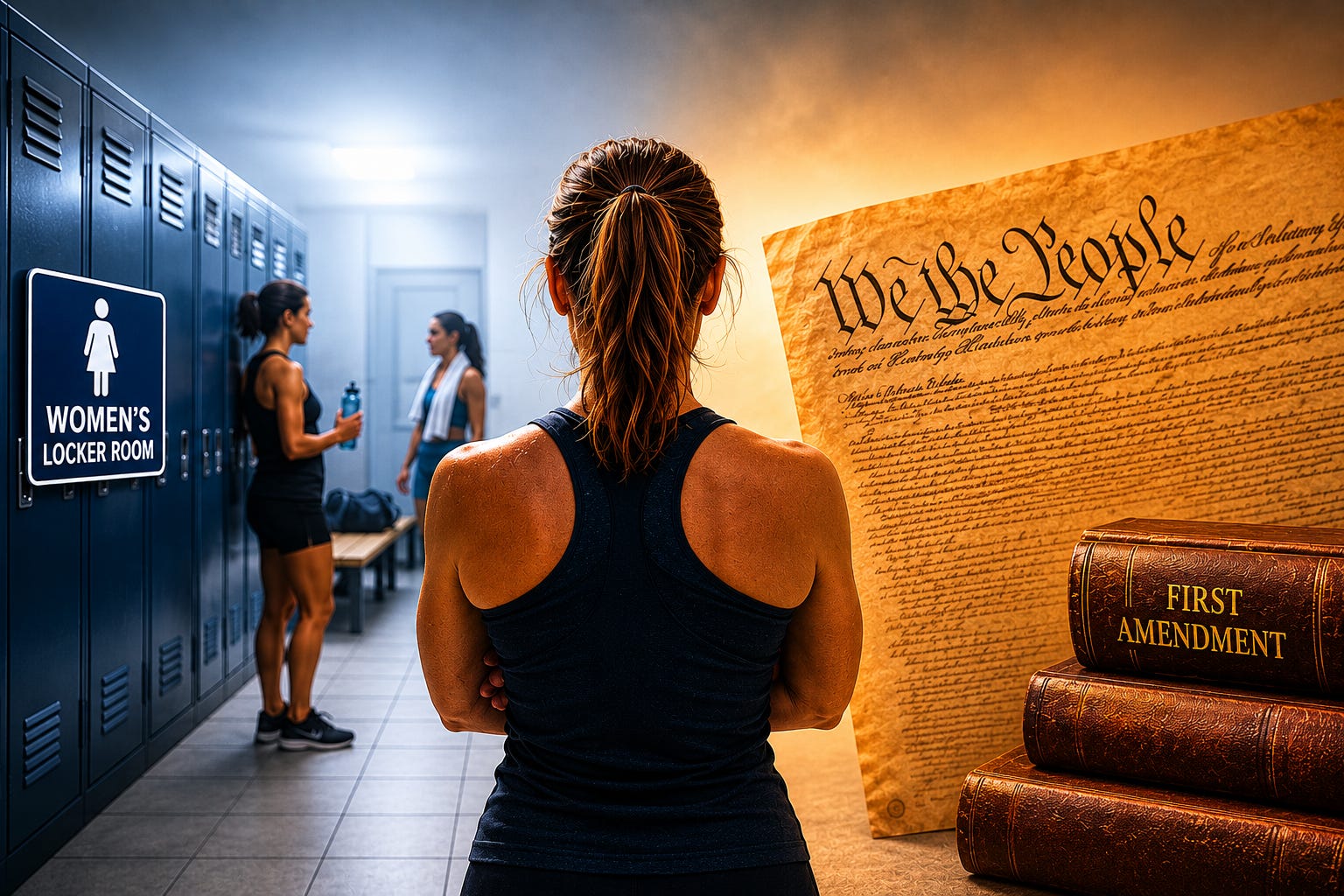
This week, we shared the story of Laureen Boll, a substitute fitness instructor at South Suburban Parks and Recreation District (SSPRD) in the south Denver metro area. By her own description, she is not an activist; she is a mom, a fitness professional, and a person who simply wants to do her job.
Now her job is at risk — not because of anything she did, but because of something she refuses to say.
SSPRD recently updated its harassment policy to include the “deliberate use of the wrong name or gender pronouns.” For Laureen, complying would mean affirming beliefs she does not hold about gender identity. She treats every patron and coworker with courtesy and professionalism, and she uses neutral language wherever possible. But she will not be compelled to speak words she believes to be false. So she formally notified her employer of her refusal — and FAIR stood with her.
In March, FAIR sent a formal letter to SSPRD leadership putting the district on notice: compelling employees to use language that violates their sincerely held beliefs implicates the First Amendment, and FAIR is prepared to pursue legal remedies if Laureen faces discipline or termination as a result. We have not yet received a response from the district.
Laureen’s situation isn’t happening in a vacuum, and SSPRD is not the villain here; it is merely following Colorado state law. But that law, HB 25-1312 (the Kelly Loving Act), has pushed the state into genuinely difficult constitutional territory. The Act expands the Colorado Anti-Discrimination Act to treat chosen names and preferred pronouns as protected aspects of “gender expression.” Refuse to use them in employment or public accommodations, and you risk a discrimination claim.
The result is that well-meaning public employers like SSPRD are caught in an untenable position: comply with the statute and risk infringing on the First Amendment rights of employees, or protect those constitutional rights and risk a confrontation with the state Civil Rights Commission. That isn’t a choice any employer should be forced to make, and it’s not a position any employee should be forced into simply for declining to affirm a contested ideological claim.
Like Laureen, FAIR believes that two things can be true at once: every person deserves to be treated with fairness and dignity — and no one should be required by the government, or a taxpayer-funded employer, to affirm beliefs they do not hold. These principles are not in conflict. They are both essential to a free society.
Laureen is standing her ground. FAIR is standing with her. We will keep you informed as this situation develops.
With gratitude,
Monica Harris
Executive Director, FAIR

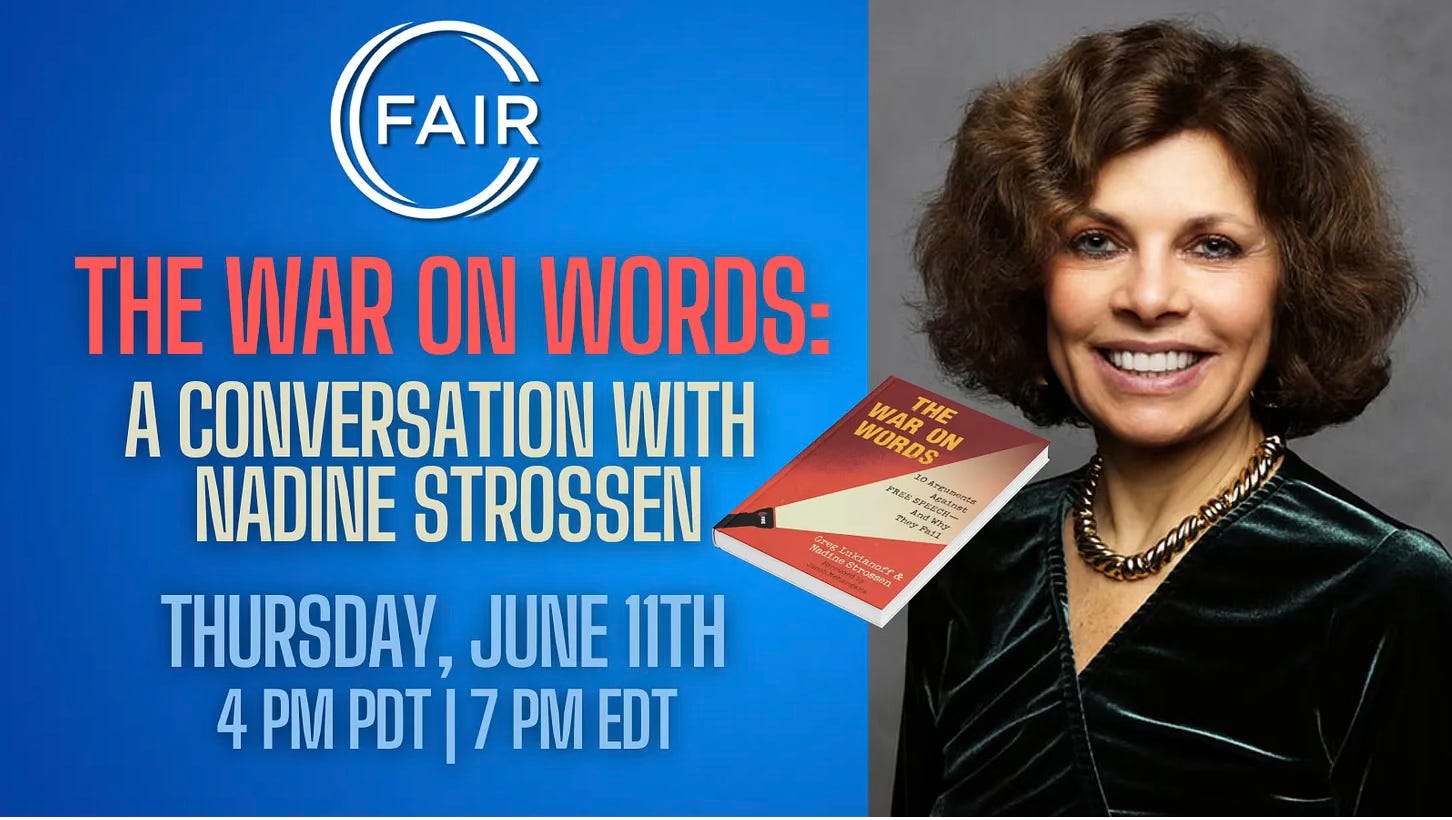
The War on Words: A Conversation with Nadine Strossen
From college campuses to corporate boardrooms to the chambers of Congress, the pressure to restrict speech is intensifying, and it’s coming from every direction. Nadine Strossen and Greg Lukianoff have heard every argument for censorship, and they take each one apart in their new book, The War On Words: 10 Arguments Against Free Speech―And Why They Fail.
Join Fair For All’s Executive Director Monica Harris on Thursday June 11th, 4pm PT / 7pm ET, for a conversation with Strossen, a member of FAIR’s Board of Advisors and former ACLU president, as they dissect the case for censorship and what it will take to defend free expression in an era that is increasingly hostile to it.
This webinar will be livestreamed on FAIR’s X, Facebook, LinkedIn, YouTube, and Zoom.
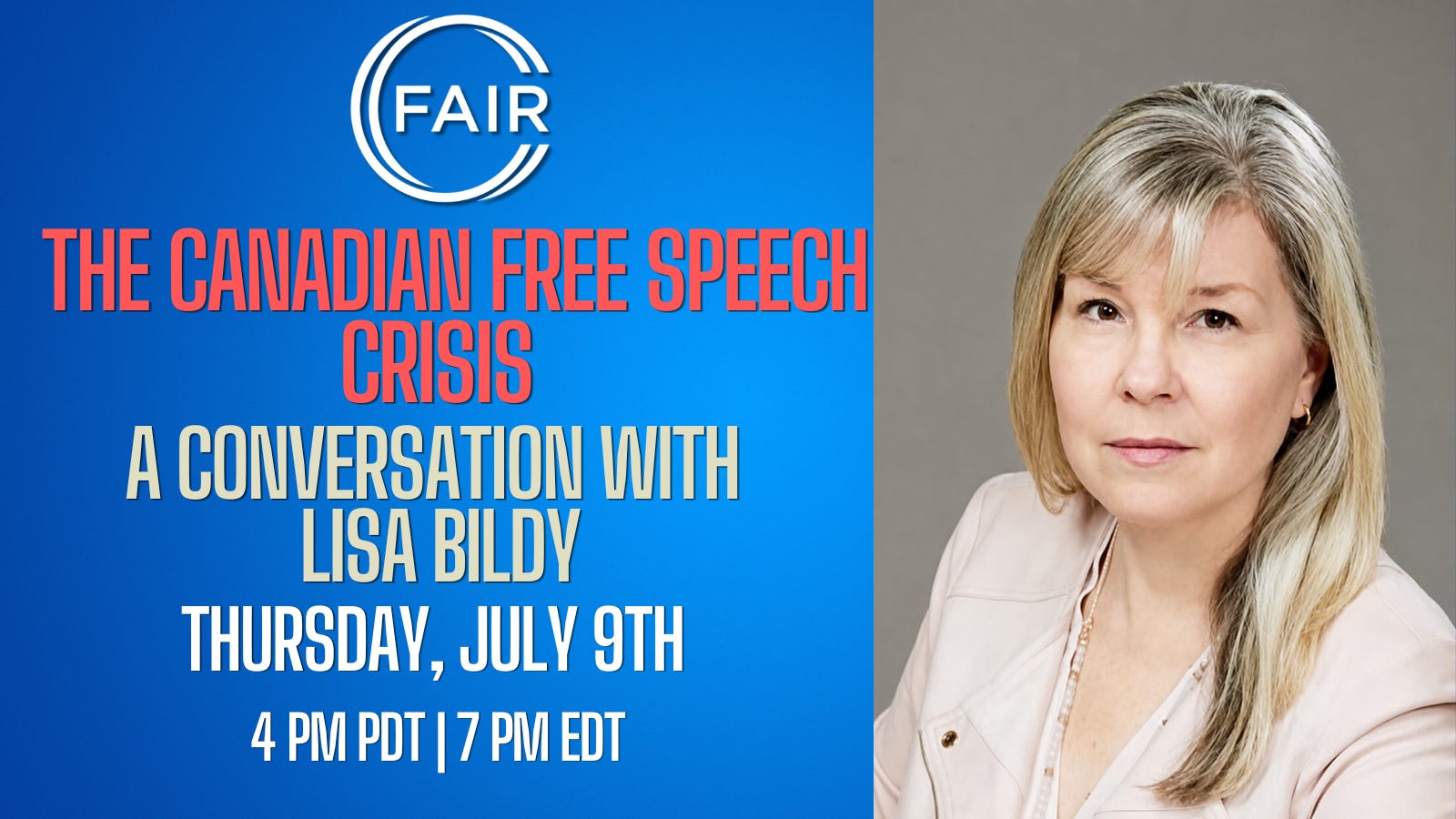
The Canadian Free Speech Crisis with Lisa Bildy
Canada shares our values, our language, and our legal traditions — yet free speech there is under pressure in ways that would have been unimaginable a decade ago. FAIR Advisor Lisa Bildy of the Free Speech Union of Canada will walk us through the landscape: who’s being silenced, who’s pushing back, and the cultural pressures that are reshaping expression north of the border. Join us for a candid look at what’s happening in Canada and why it matters for all of us.

FAIR in Conversation is Back!
FAIR in Conversation has relaunched with a new monthly format built for this moment. We’re leaning away from books and into the issues themselves: the debates, decisions, and developments that are defining what fairness, free speech, and equal dignity mean in America, and beyond, right now.
Each session will center on a pressing topic of the day, drawing on a curated mix of articles, book summaries, short essays, podcasts, films, and other multimedia resources to ground the conversation before opening the floor for discussion.
Sessions will be virtual, open to all FAIR members, and designed to be as accessible as they are substantive. You don’t need to have read anything in advance. Just bring your curiosity, your willingness to listen, and your commitment to engage in good faith.
These are exactly the conversations America needs now, and we are committed to modeling them. Sessions will run monthly through September 23rd. We hope you’ll join us!

FAIR Educators Alliance 2025-2026
Join the FAIR Educators Alliance for the 2025–2026 school year to equip PK–12 educators with the knowledge, strategies, and community support they need to foster schools that are more enriching and free from bias for students and educators.
Each monthly gathering will open with updates and presentations from FAIR staff, fellows, Chapter Leaders, and occasional guest speakers. Together, we’ll explore strategies to support educators, communities, and local chapters—and to advance positive change at the local, regional, and national levels.
Following the presentations, participants will have space for open-forum discussions to connect, seek advice, and coordinate on pressing issues in their schools. Breakout rooms will be divided into PK-6 and 7-12 grade levels with experienced teachers facilitating those conversations.
Meetings: First Thursday of each month at 7 PM ET via Zoom Duration: 1 hour

Note to readers: We have paused the FAIR News podcast. If you prefer listening, rather than reading these newsletters, an audio version is available directly on the Substack app. Thank you for tuning in!
It’s worth noting that “gender identity” peaked some years ago and is now waning.
In 2023, 6.6% of genz identified as”trans”; two years later it was 3.4%. The cult of “gender identity” is collapsing under the weight of its own absurdity.
Ghosts, souls, gender identities: three Unreal Things. There is only biological sex, and it is binary.
Women's spaces now rely on a flawed honor system instead of solid protections. We can't accept this decline in women's security. Our rights are inalienable and cannot be bartered away. This undermines the Universal Declaration of Human Rights and violates international law. It's up to us to fight for these protections since institutions like the UN have failed us and no longer protect their founding document.
There's a "Third Way" that offers a fair solution: create separate, recognized spaces for everyone. This means keeping men's and women's facilities based on biological sex while providing distinct spaces for transgender individuals. Everyone deserves their own secure category without infringing on women's rights.
Sports categories must remain sex-defined to ensure fair opportunities, privacy, and security. Protecting these categories safeguards women's chances, scholarships, and dignity under the Universal Declaration of Human Rights while extending similar protections to transgender people.
This presents a clear choice for policymakers. go back to honouring the Universal Declaration of Human Rights. Protect women's rights. Create separate space for trans, and everyone benefits from safety. Reject it, and it reveals a goal to erase sex as a legal category and undermine women's rights.
Opening women's spaces to self-identified women violates the Universal Declaration of Human Rights. Article 3 ensures personal security, Article 12 protects privacy, and Article 30 prohibits using freedoms to undermine others’ rights. Women’s rights cannot be traded away.
The current approach forces women to navigate constant speech policing, scrutiny and mandatory training just to use their own facilities that have been colonised by an unwanted imposition on their once upon a time enviable rights. Meanwhile, consultants profit off this conflict, perpetuating a dishonest, anti-human rights scheme.
The Universal Declaration of Human Rights aims to prevent totalitarianism in all forms. Weakening these rights brings us closer to the oppressive systems the declaration sought to combat.
Dei represents an anti-universalist mindset that inches us toward Marxism, an ideology responsible for over 100 million deaths. It has failed in 27 countries, leading to GULAGs, secret police, and a wealthy elite while crushing the poor. The language of oppressor oppressed is the langue of genocide - it dehumanises and breeds hatred it has never once worked to create a utopia.