


The Damage Done by Accreditors
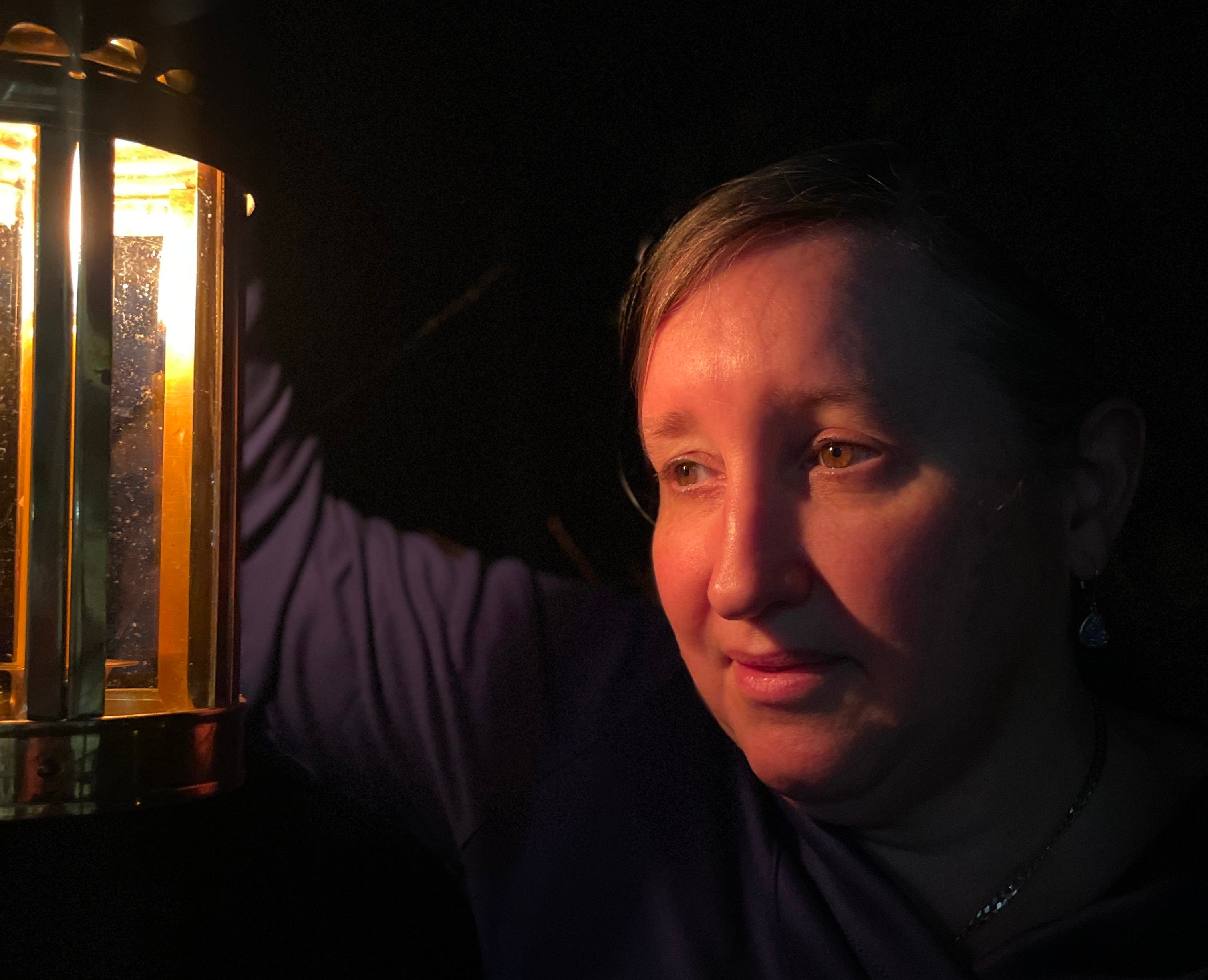
For Heterodox STEM, FAIR Tennessee Chapter Co-Leader Suzannah Alexander writes about her experience with the intolerant orthodoxy and lack of viewpoint diversity in her counselling program, and how this undermines the legitimacy of the profession.
Though I knew beforehand that psychology-based professional circles leaned progressive, I could not wrap my head around the idea that a therapist training program would be instructing students to look at the world in a racist and bigoted way. In my view, such a dogma was an anathema to creating the conditions that would make good therapy possible. I simply couldn’t believe they were serious. So whenever there seemed to be a surprisingly negative response to my comments, I thought I wasn’t making myself clear.
It wasn’t until much later, when I did an in-depth study of the textbooks used for the dreaded Multicultural Counseling Class I would have taken the following semester, that I realized just how diabolical the ideology and indoctrination program really is. Or how this is all orchestrated through accreditation.

The Privilege of the Experiment
For his Substack, Friendly Fire, Hector Herrera reflects on his perspective of America as a new immigrant and explains why he chose this country to be his home.
I am especially in awe of the wisdom embedded in the First and Second Amendments. They are so exceptional, so audacious, that I increasingly suspect much of America’s success is rooted in them. Many nations have constitutions. Many have courts, elections, declarations of rights. But the robust protection of freedom of conscience—and the explicit recognition of the people’s right to defend that freedom, along with their property, from tyrannical government—remains a profound outlier.

Part 1: Donald Trump Told the Truth About Sage Blair
For her Substack BROADview, Lisa Selin Davis details the story of Sage Blair, a teen who was socially transitioned at school, became a victim of sex trafficking, and was separated from her family by courts over their perceived lack of “affirmation.” Blair recently attended Trump’s State of the Union with her grandmother.
This is not just a story of how the school secretly facilitated Sage’s social transition, hiding it from her parents. It’s the story of how school personnel came to believe that to do so was their duty. It’s about how the justice system learned the same talking points about gender identity and came to see un-affirming—or, in this case, unaware—parents as so harmful that their kids were better off without them. It is the story of how a few poorly executed papers in the early 2000s about the importance of family acceptance were misinterpreted—and used to hurt families instead.

Erasing the Word “Woman”
For Quillette, Karleen Gribble investigates the desexing of language in women’s healthcare. She finds that replacing sex-specific terms like “woman” and “mother” is driven by gender-identity ideology and institutional pressure rather than evidence-based, scientific research.
In the absence of research, we are left in a place of unknowing regarding the impact of desexed language. Anecdotal evidence of misunderstanding, aversion, and miscommunication supports adverse consequences. It is likely, for example, that cervical cancer screening promotions describing those eligible for screening as “anyone with a cervix” are not understood by some women. But which and how many women? What are the morbidity and mortality costs resulting from missed screening for women who do not understand these health communications or reject the message? How might misunderstanding or rejection be mitigated? Who benefits from desexed language, and under what circumstances? We do not know the answers to any of these questions. And yet journals, publishers, university ethics committees, health organisations, and others are moving full steam ahead using, promoting, and sometimes enforcing desexed language. This is a completely unacceptable situation. Desexing the language of women’s health is a major intervention, one that should not be made without a strong evidence base.

Taking back the schools: How to reverse the decline in local education democracy
For the Aristotle Foundation, Paul W. Bennett shares his research on the Canadian education system, and calls for a more grassroots, community-focused approach.
Across Canada, the school system is groaning under the weight of its own bureaucracy. Centralized control, layered administration, and top-down governance have hollowed out the very institutions meant to serve students, families, and communities.3 For decades, provincial ministries and regional boards have been building an ever-expanding education “apparatus” that too often stifles innovation and isolates decision-makers from the classroom. The wisest choice has never been clearer: If we want schools that truly serve communities, we must flip the system—replacing top-down governance with bottom-up accountability rooted in the schoolhouse.

In Defense of Effeminate Boys
For The Atlantic, Ben Appel writes about how feminine or gender-nonconforming boys—especially those who may grow up to be gay—are increasingly being interpreted as transgender, and in many cases encouraged toward unnecessary and irreversible medical interventions.
As an adult, I vowed to help create a world where sissy boys like me could find space in society to be themselves, without any pressure to change—a goal that still feels urgent today. What I know now is that gender nonconformity didn’t disqualify me from being male. Effeminate boys, however atypical, are a natural variation of their own sex. The notion that they are really girls is anything but progressive.

FAIR News Podcast
For audio versions of our FAIR News and FAIR Weekly Roundup newsletters, subscribe and listen to FAIR News Weekly on Apple Podcasts, Spotify, Google Podcasts, or via RSS feed.
I'm midway through reading Lionel Shriver's 'Mania' (which is absolutely brilliant), and I've had so many laughs and guffaws at the parallel's between her 'Mental Parity' movement and our current social justice movements.
Thankfully, we have FAIR to help fight back.
FAIR steers readers to paywalls where we are given the option of signing up for another paid subscription to read EACH ARTICLE. That is like subscribing to a new streaming service to watch ONE MOVIE.
However, movies can usually be rented AND the _information_ in paywalled articles can be found for free.