



Oh, Great Nation
This week, we featured an essay by Anisa Fox reflecting on America’s 250th anniversary through the perspective of a Bahamian-American immigrant. Drawing on her experiences growing up in the Bahamas and later moving to the United States, Fox argues that patriotism and honest criticism are not mutually exclusive. While acknowledging America’s flaws, she contends that they should not overshadow the freedoms, opportunities, and stability that continue to make the nation worth celebrating.
Fox’s appreciation for the everyday aspects of American life that are often taken for granted—from reliable infrastructure and educational opportunities to civic freedoms and public institutions informs her sense of gratitude and national self-reflection. She recognizes that America’s imperfections need not diminish its enduring greatness.
“I will never forget the first time a package arrived at my door after I moved to the United States. It felt like magic. I will never forget my first time in a Super Walmart. I thought it was a mall—I couldn’t imagine such abundance. I will never forget my first time riding a train or visiting a library or museum, many of which are free in America. Having police that respond in minutes, a court system that takes its cases seriously, and being able to vote in ways that bring about impact are all things that as an American I am thankful for and as a Bahamian am amazed by.”

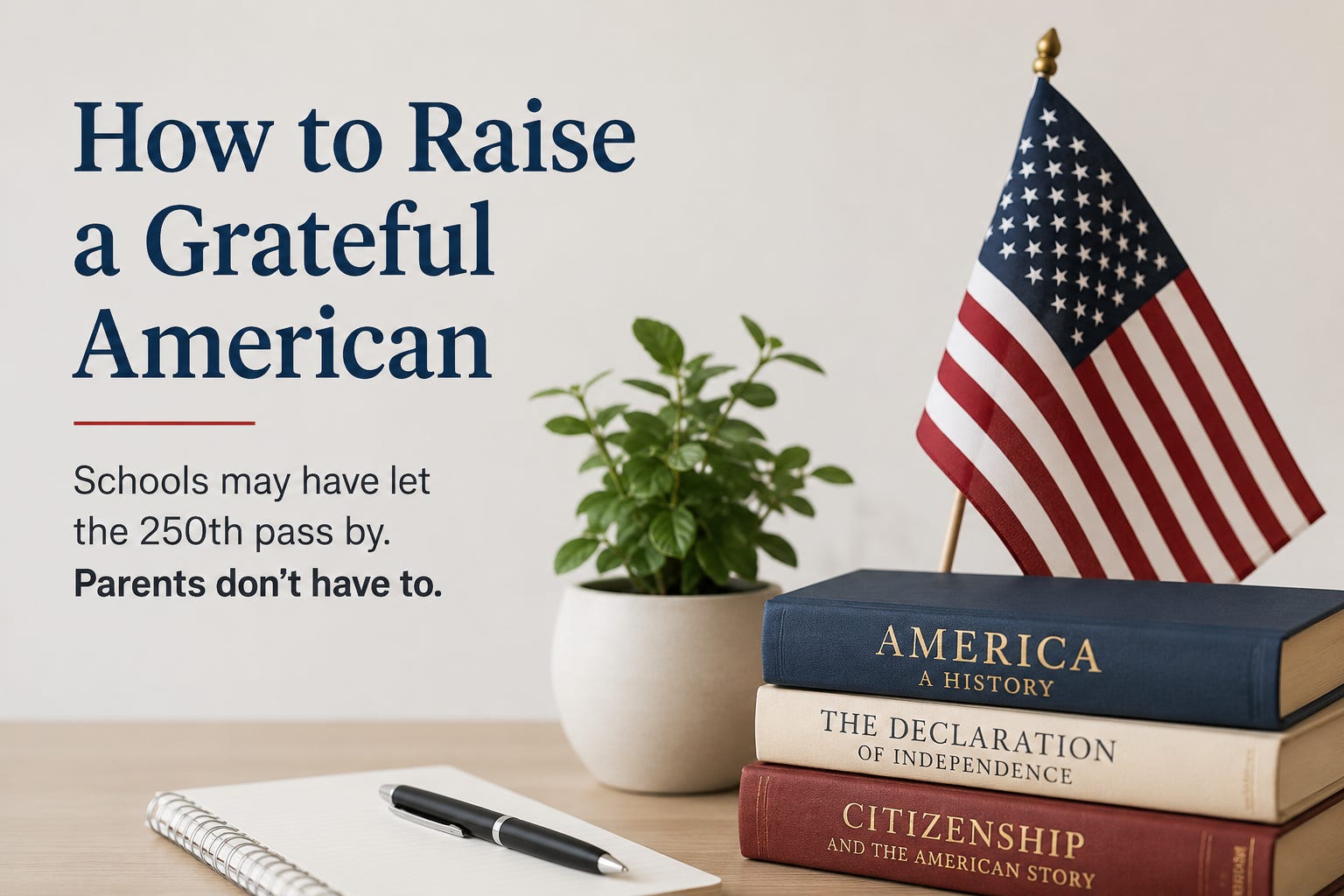
How to Raise a Grateful American
This week, we also recommend an essay by Robert Pondiscio examining the role parents can play in cultivating gratitude and civic responsibility as America marks its 250th anniversary. Arguing that schools alone cannot instill a love of country, Pondiscio encourages families to teach children not only about America’s failures, but also about the freedoms, institutions, and opportunities that generations have worked to build and preserve.
Rather than advocating for blind patriotism, the essay argues that gratitude and honest criticism are complementary civic virtues.
“For all our political divisions, cultural anxieties, and a litany of daily complaints, I suspect most of us would choose America. Not because America is perfect. Not because it is free from injustice, conflict, or disappointment. Simply because if you had to place a bet on which nation offered you the greatest likelihood of living your life in safety, prosperity, dignity, and freedom, you would be hard-pressed to make a better wager. Needless to say, this is not how many Americans think about their country. Nor, alas, is it the way many children learn about it.”

Devon Akmon explores the unique role museums can play in rebuilding trust at a time of growing social division. Drawing on research showing that museums remain among America’s most trusted public institutions, Akmon argues that they are uniquely positioned to foster curiosity, dialogue, and meaningful engagement across political and cultural differences.
Akmon suggests that by encouraging thoughtful conversation instead of ideological certainty, museums can help strengthen the habits of empathy, curiosity, and civic trust that underpin a healthy democracy.
“At a moment when trust in public institutions is fragile, museums hold a rare and valuable position. They are places where people still expect to learn something new and to encounter ideas different from their own. When museums invite visitors to think together about complex issues, whether through exhibitions, conversations or community partnerships, they help nurture the habits of curiosity and empathy that democracy depend on.”