

Dear Friends of FAIR,
The act of peaceful student protest is one of the most deeply embedded traditions in American culture. From the Civil Rights movement with its sit-ins, walkouts, and freedom rides to the Vietnam War protests that reshaped the national conversation on free speech and academic expression, student activism has consistently served to highlight the most important issues of each generation. This year, student walkouts protesting ICE enforcement actions made national headlines and with them came an important reminder about the legal boundaries that govern student protest.
The First Amendment protects public school students’ right to engage in peaceful protest so long as it does not materially and substantially interfere with the operation of the school. In many of the ICE-related walkouts, that line was crossed. Students left campuses without permission, parents were not notified, and in some cases adults organized minors into political action without parental knowledge or consent. Students faced suspension, and in some jurisdictions, adult organizers and participants faced legal liability. The right to protest is real and constitutionally protected. So are the limits.
Friday, April 10, marks the 30th annual Day of Silence, as promoted by Glisten, an organization whose focus is to “advise on, advocate for, and research comprehensive policies designed to protect LGBTQ students as well as students of marginalized identities.” Students who choose to participate remain silent during portions of the school day to show their support of and solidarity with members of the LGBTQ community. Some students may also choose to dress in all-black clothing or wear pins explaining their protest.
The same constitutional principle applies here. The First Amendment protects public school students’ right to participate in the Day of Silence so long as it does not materially and substantially interfere with the operation of the school. And when students choose not to participate, the First Amendment protects them as well.
We at FAIR seek to deliver on our mission by supporting diversity without division. The Day of Silence can be an occasion for students to honor their many differences. On the other hand, we have also seen instances where the Day of Silence leads to unfortunate and unnecessary division among students. In these cases, students feel so ostracized that they withdraw from class participation or avoid attending school altogether.
Whether the issue is immigration enforcement, LGBTQ solidarity, or any other cause students feel moved to speak out about, the constitutional framework is the same, and every parent, student, and school administrator deserves to understand it clearly. That is why we have drafted a template available for all to use. This template discusses the important constitutional protections and limitations at play in student protests of all kinds, including the Day of Silence. If you feel that a thoughtful dialogue with your child’s school on this topic would be valuable, this letter is for you.
You can download the letter here in Word format and amend the highlighted portions to fit your needs. We encourage you to share this helpful resource with your friends and family as well. As always, if your child experiences a violation of their civil or constitutional rights at school, please submit an incident report on FAIR Transparency.
Every day, FAIR works to ensure that our schools and communities remain places where open dialogue, mutual respect, and true equality under the law can thrive. But we can’t do this alone. Your donation today helps us continue to create resources like the student rights letter, respond to incidents of discrimination, and provide guidance to families and educators navigating these complex issues.
Donate here and stand with us in protecting the rights of every student and family.
Together, we can keep fairness at the heart of America’s classrooms and communities.
Warmly,
The FAIR Team

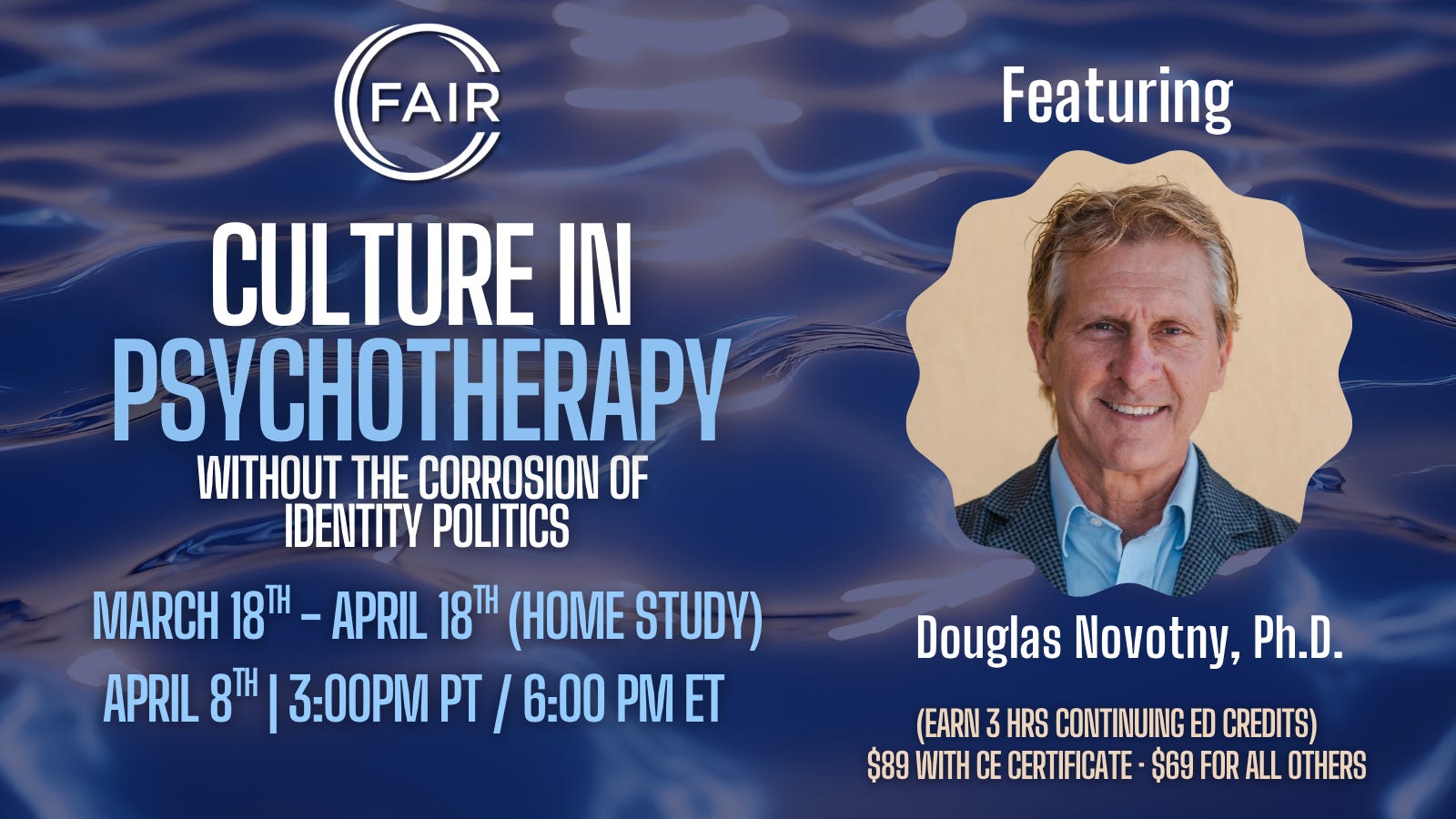
Culture in Psychotherapy — Without the Corrosion of Identity Politics
Join FAIR with Dr. Douglas Novotny for this upcoming course: Amid today’s culture wars, Identity Politics has corroded the teaching and practice of psychotherapy. Many people on both sides feel distrustful, alienated, and/or demoralized. This course gives a structural model for clinical work that re-enlivens moral depth — without moralism. The goal of this course is to clarify concepts and conflicts that impact both daily life and clinical settings.
Research indicates that ideological diversity — seeing topics from different points of view — improves psychology. This course builds on FAIR Advisor Jon Haidt‘s Moral Foundations Theory, a cultural lens to grasp differences across cultures, within cultures, and the experiences of clients and students encountered by therapists. Specific clinical applications will be explored, and critiques and competing moral models will be considered. This structural model helps to explain interpersonal divisions (and intra-psychic ones) and offers ways to bridge them through deep cultural understanding and relational attunement.
This course is available now March 18th - April 18th (Home Study) and April 8th. Course fee: $69 (+ $20 if requesting Continuing Ed. Certificate)

The Open Therapy Institute (OTI) is at the forefront of a burgeoning area of mental health care, developing innovative, evidence-based tools to help people, support professionals, and address social issues. Whether you’re a mental health professional, a patient, the leader of an organization, or just a citizen looking for openness and dialogue, OTI is developing solutions to help make things better.
Membership is for professionals in mental health fields including psychologists, counselors, social workers, psychiatrists, psychiatric nurses, pastoral counselors, and researchers. Membership is open to applicants internationally.

FAIR Educator Alliance 2025-2026
FAIR has launched the Educators Alliance for the 2025–2026 school year to equip PK–12 educators with the knowledge, strategies, and community support they need to foster schools that are more enriching and free from bias for students and educators.
Each monthly gathering will open with updates and presentations from FAIR staff, fellows, Chapter Leaders, and occasional guest speakers. Together, we’ll explore strategies to support educators, communities, and local chapters—and to advance positive change at the local, regional, and national levels. Following the presentations, participants will have space for open-forum discussions to connect, seek advice, and coordinate on pressing issues in their schools. Breakout rooms will be divided into PK-6 and 7-12 grade levels with experienced teachers facilitating those conversations.
Meetings: First Thursday of each month at 7 PM ET via Zoom
Duration: 1 hour

Note to readers: We have paused the FAIR News podcast. If you prefer listening, rather than reading these newsletters, an audio version is available directly on the Substack app. Thank you for tuning in!
As to the day of silence I am not at all in agreement as it merely continues the elevation of victim status and I’m against allowing our schools and our students to be used as political fodder. Where do you draw the line? How about a Day of Silence for all the white students who’ve been subjected to anti white racism in and out of academia or a Day of Silence for men, especially white men, who’ve been relentlessly bashed for decades now, or a Day…….. see where I’m going here. The whole idea could turn our schools into some kind of victim Olympics, no? And that’s assuming that they’d even allow the same opportunities for men or whites
Good work!