

Dear Friends of FAIR,
This summer, two cases at the center of FAIR’s work finally broke into the national conversation — proof that the work we do quietly doesn’t stay quiet for long.
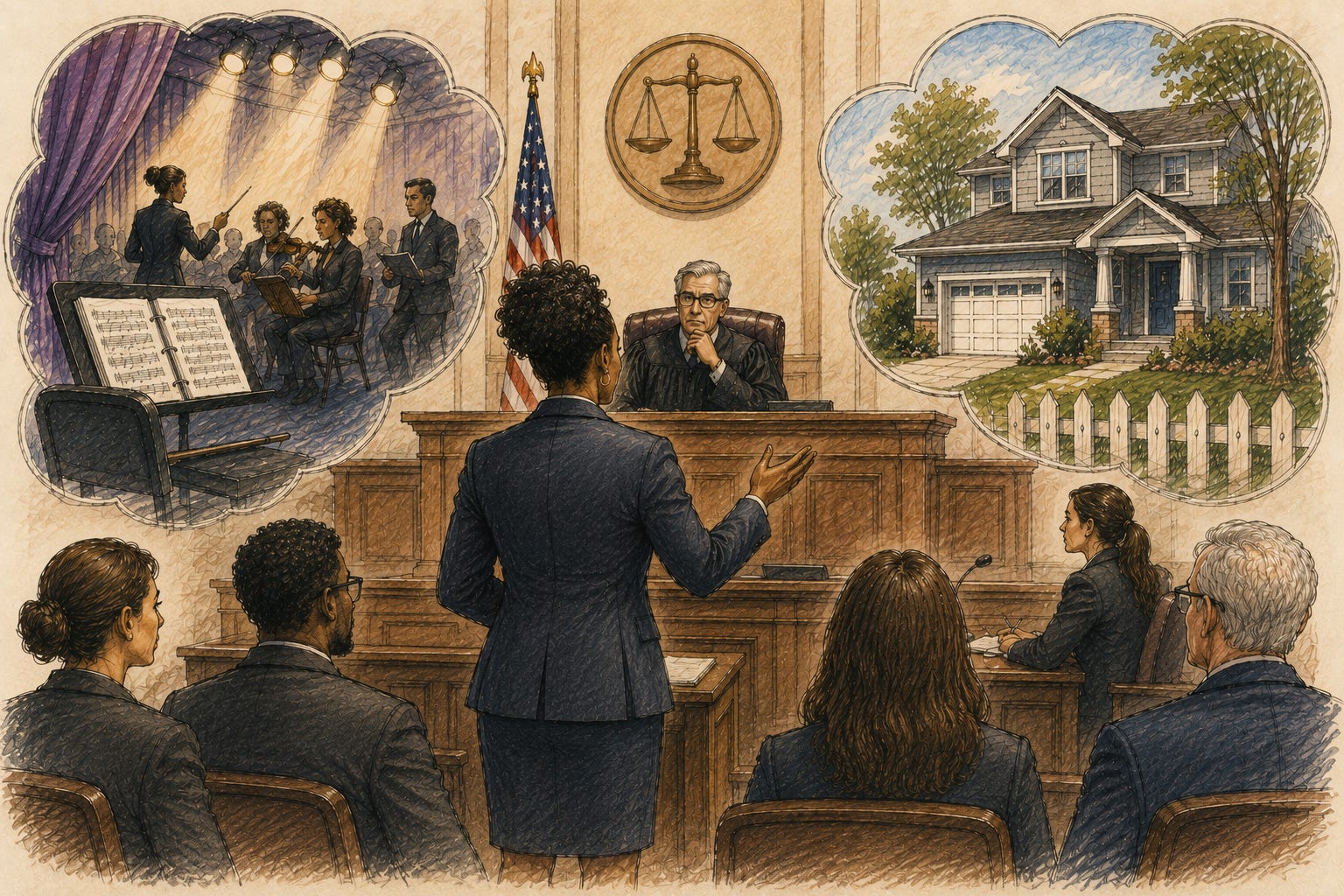
In 2023, the producers of Broadway’s Wicked teamed up with Maestra Music and Musicians United for Social Equity (MUSE) to offer the “Music Director Experience,” a paid, three-week apprenticeship funded in part by federal grants that flowed from the National Endowment for the Arts to the New York State Council on the Arts (NYSCA). There was just one catch: Maestra’s roster is restricted to women and nonbinary musicians, and MUSE only accepts “people of color.” Kevin Lynch, a FAIR in the Arts member and working music director, applied anyway. His applications to both organizations were denied or left indefinitely pending, effectively locking him out because he’s a white man.
Kevin turned to FAIR for help.
In June 2025, we filed a federal civil rights complaint with the NEA, arguing that Maestra and NYSCA had misused public funds to run a hiring program that excluded people based on race and sex, in violation of Titles VI and VII of the Civil Rights Act. Our complaint asked the NEA to investigate Maestra’s use of federal funds, mandate civil rights training, and ensure people like Kevin can compete for future opportunities on equal terms. The timing lined up with a unanimous U.S. Supreme Court ruling in Ames v. Ohio Department of Youth Services, which ruled that Title VII applies equally to all individuals, regardless of whether they belong to a majority or minority group.
In June, the story broke wide open. The American Alliance for Equal Rights filed a federal lawsuit on Kevin’s behalf against Wicked, Maestra, and MUSE building on the same facts FAIR’s complaint had identified. The New York Post picked up the story, and coverage quickly spread as the Washington Free Beacon and The Broadway Maven both weighed in. A complaint FAIR filed quietly a year ago is now part of a national conversation about who gets to compete for opportunities funded by federal tax dollars.
On the other coast, FAIR has been in federal court since October 2024 in FAIR v. Walker, a lawsuit filed alongside Pacific Legal Foundation. The litigation challenges Washington State’s Covenant Homeownership Program, which offers zero-interest secondary mortgage loans to first-time homebuyers who meet certain income, residency requirements, and race requirements.
The program is open to homebuyers who are Black, Hispanic, Native American, Native Hawaiian or other Pacific Islander, Korean, or Indian. Homebuyers of Japanese, Jewish, or European descent don’t qualify, even if they meet income and residency requirements. FAIR argues that the program violates the Fourteenth Amendment’s guarantee of equal protection and has asked the court to declare the race-based eligibility criteria unconstitutional, issue a permanent injunction, and enforce race-neutral eligibility criteria in its Program.
In March, the U.S. Department of Housing and Urban Development opened an investigation into the program, directing the Washington State Housing Finance Commission to preserve records and signaling that findings could be referred to the Department of Justice. Then, in June, the story landed in The New York Times. As I told their reporter a few weeks earlier, Washington’s program sets a dangerous precedent because if discrimination “is selectively used to advance the needs of one group, then it can be selectively used to disadvantage another group.”
Neither case is decided yet, but both are proof of something important: when FAIR takes on discrimination, whether it’s embedded in a Broadway apprenticeship or a state-subsidized mortgage program, the fight doesn’t stay quiet for long. Our work draws the scrutiny it takes to hold these programs accountable, long before a judge ever issues a ruling.
We’ll continue to keep you posted as both cases move forward.
None of this happens without your help. Filing federal complaints, building legal cases, and staying in court until they’re resolved takes funding and resources. If you support FAIR’s fight to eliminate discrimination in employment, housing, and beyond, please donate today. Your gift helps us keep fighting cases like these and keep filing the next one before it ever makes headlines.
Thank you for standing with us.
With gratitude,
Monica Harris
Executive Director, FAIR
Subscribe now to receive FAIR News weekly in your Inbox

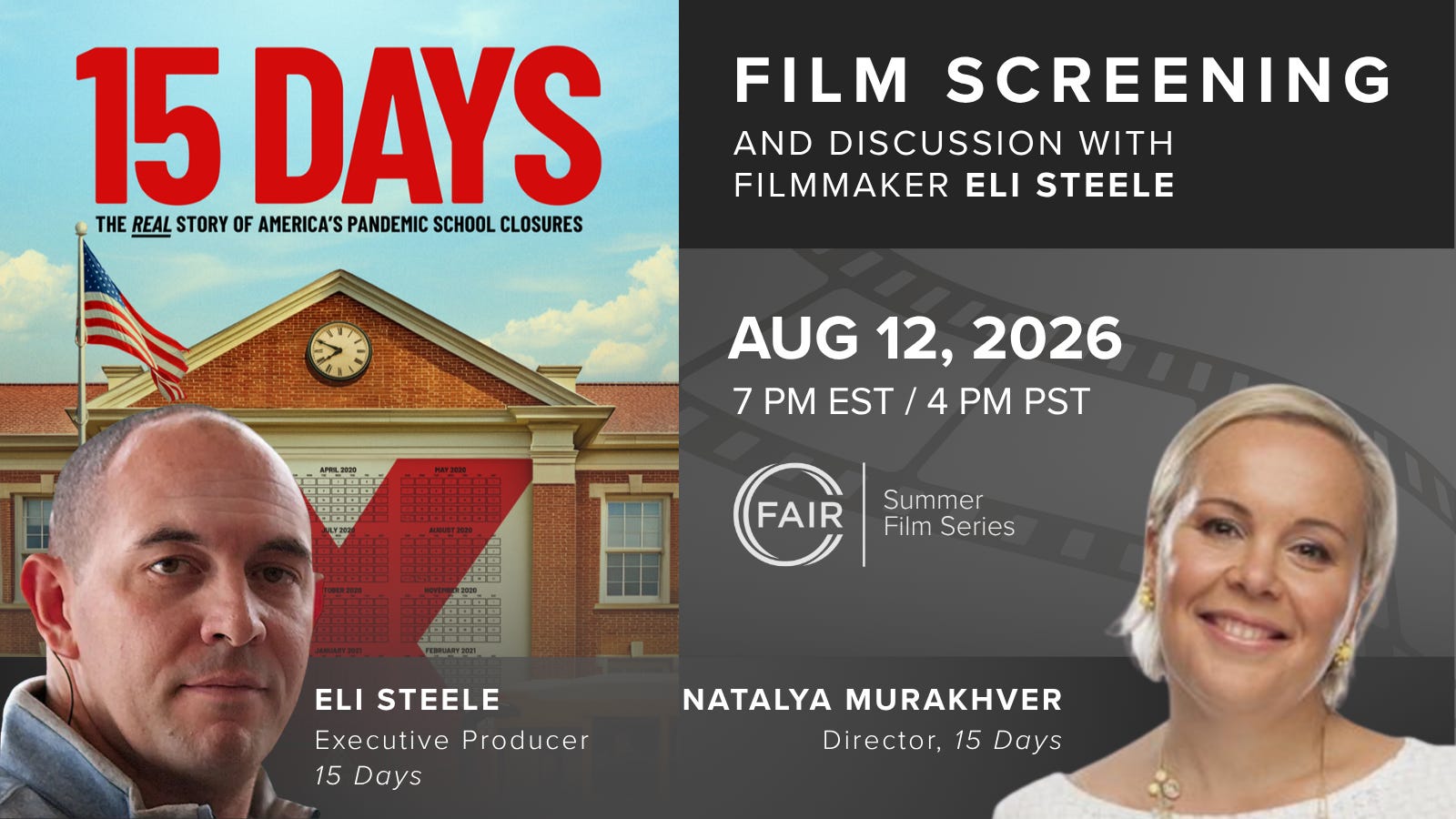
This summer, FAIR’s Film Series will explore these questions through four compelling documentaries produced by Eli Steele and discussions with filmmakers, scholars, and thought leaders.
Join us for this can’t-miss lineup:
🎬 15 Days — August 12 — 69 minute run time then 1 hour discussion
Directed by Natalya Murakhver, co-founder of Restore Childhood, a national nonprofit dedicated to empowering parents in guiding their children's upbringing, education, and health. A longtime advocate for children's welfare, she spearheaded efforts against pandemic-era school closures, co-organizing #KeepNYCSchoolsOpen in 2020 and filing a lawsuit to reopen New York City schools for in-person learning. She launched the #MaskLikeAKid campaign in 2021 and collaborated with global experts in 2022 to establish the Urgency of Normal, advocating for a return to pre-Covid childhood norms. Her directorial debut, "15 DAYS: The Real Story of the Pandemic School Closures," has been viewed more than 1 million times in an exclusive month-long run on X and is now screening around the country, galvanizing parents to reclaim their agency in their children's education and health. Parents can host their own screenings and learn more at 15daysfilm.com.
Date: Wednesday, August 12th
Time: 7pm EST/4pm PST (until about 9:30pm EST)
FAIR in Conversation is Back!
What is the difference between the isms? Socialism, Capitalism, Fascism, Communism…
The United States was founded on a constitutional system that places individual liberty, limited government, and the rule of law at its center. Yet throughout history, competing political philosophies, including socialism and communism, have offered very different answers to fundamental questions about the relationship between the individual, the state, property, equality, and freedom.
How different are these competing visions? Can they coexist within America’s constitutional framework? And what do we actually mean when we use labels like communism, socialism, capitalism, fascism, and democracy?
Whether you believe communism represents a growing influence in American life, think the concern is overstated, or simply want a deeper understanding of the issues, this conversation is designed to encourage thoughtful discussion rather than partisan talking points.
Sessions will be virtual, open to all FAIR members, and designed to be as accessible as they are substantive. You don’t need to have read anything in advance. Just bring your curiosity, your willingness to listen, and your commitment to engage in good faith.
. Sessions will run monthly through September 23rd. We hope you’ll join us!

Note to readers: We have paused the FAIR News podcast. If you prefer listening, rather than reading these newsletters, an audio version is available directly on the Substack app. Thank you for tuning in!