

Dear Friends of FAIR,
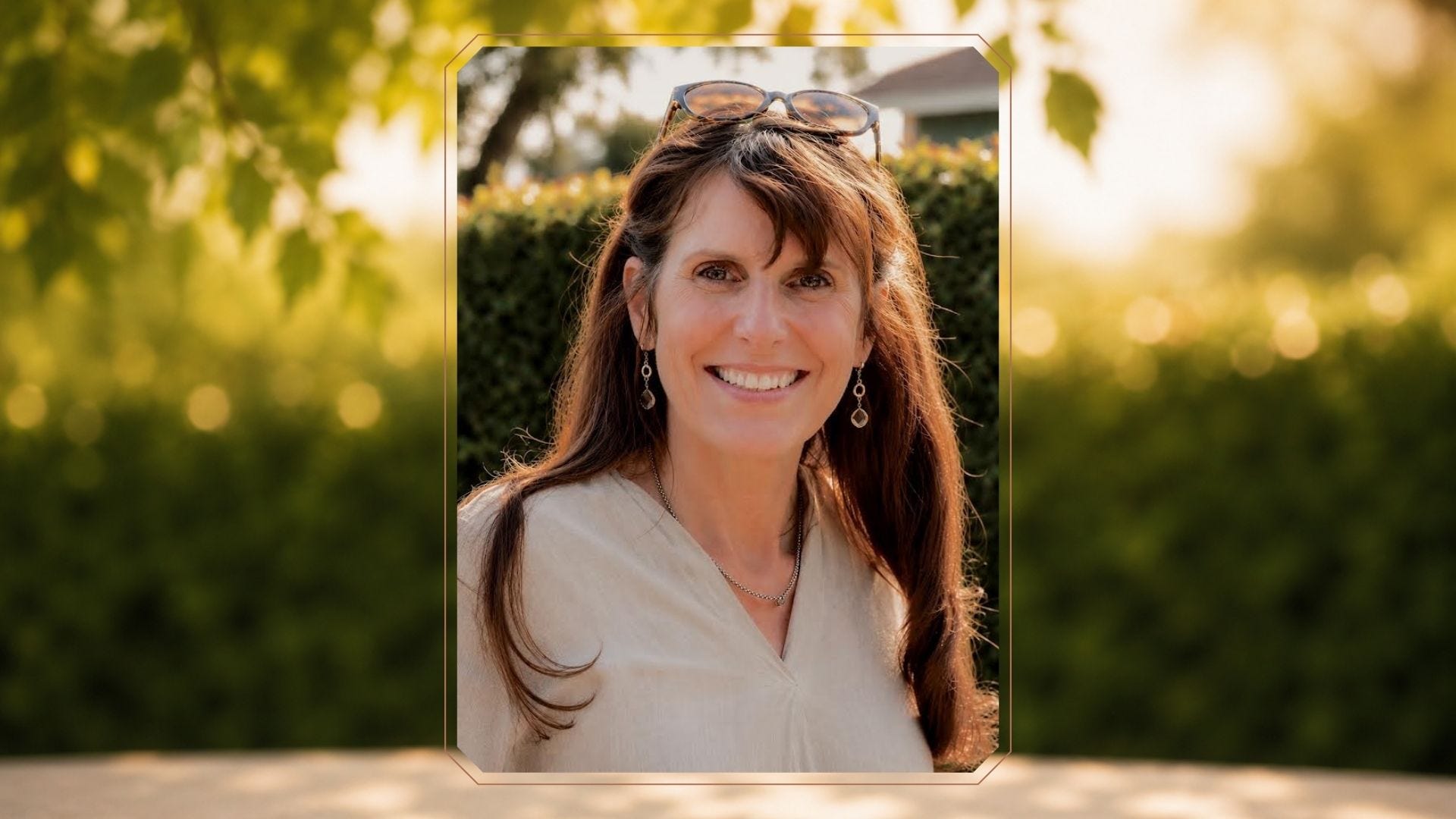
I’m thrilled to announce Karen Howes as Interim Director of FAIR in the Arts, stepping into the role following Brent Morden’s departure. Brent gave this department its shape and gathered the first community of artists around it, and much of what Karen inherits exists because he built it. We’re grateful for that foundation and energized by her vision for what comes next.
Karen is no stranger to the FAIR in the Arts community. She serves as Co-Leader for FAIR’s Tennessee Chapter, has built and sustained FAIR’s writers’ groups, and has been a driving force behind FAIR in Conversation. Anyone who has joined one of those gatherings knows that Karen brings genuine curiosity about other artists’ work and has a rare talent for making a group of fiercely independent creatives feel like they belong to something bigger and more meaningful.
She has spent more than three decades as a playwright, teacher, and builder of arts institutions. An award-winning writer with more than 30 plays produced across the country, Karen has received the Maxim Mazumdar New Play Award, the Bennett Prize for comedy, and a Susan Smith Blackburn nomination. She has taught more than 50 undergraduate and graduate courses, founded Atlanta’s Young Actors Ensemble and Pierian Springs Academy, and holds an MFA from UC Riverside.
Karen comes to this role with a clear diagnosis of the persistent problem in the arts and years of relationships to draw on in addressing it. Artists who value free expression and viewpoint diversity have spent more than a decade discovering how few doors will open to them. Grant funding, prize committees, and programming decisions are shaped by a narrow set of assumptions about what art is for and who is permitted to make it. As a result, many talented people find themselves working in isolation, each of them convinced they’re the only one who sees, or is impacted by, intolerance and groupthink in the arts.
But they aren’t alone, and Karen is committed to ensuring artists know this.
FAIR in the Arts has consistently emphasized that politics is downstream from culture. If we hope to move this country away from identity politics and toward individual dignity, curiosity, and open inquiry, the arts will be instrumental in making this shift. Our community of artists is one of the features that most distinguishes FAIR from other organizations working in this space, and under Karen’s leadership I believe it can become one of our defining initiatives.
Her first priority will be to strengthen communication among the artists already in FAIR’s orbit so our members know each other’s names and their work. Her second will be outreach to artists who share our values but have never heard of FAIR and aren’t aware that there is a home here for them. Her third will be laying the foundation for the department’s long-term growth, so FAIR in the Arts can do more to serve artists tomorrow than it does today.
Karen described the challenge this way:
“Artists, and writers especially, seem to embody two seemingly opposing instincts: we are fiercely independent, typically working alone, yet we also value and need connection, friendship, and a community of people who understand what we are trying to create. One of my primary goals as we re-infuse FAIR in the Arts with energy and purpose is to find meaningful ways for our artists to support one another, champion one another’s work, and bring more artists into the fold.”
Karen is already weighing a range of ideas, some her own and some proposed by FAIR artists and past artist grant recipients. One example: a regular roundup of our artists’ new books, album releases, exhibitions, performances, and screenings, so members can find and champion one another’s work. If you are an artist — whether a writer, a musician, a painter, a filmmaker, an actor, a dancer, a designer, or a poet — and you have been quietly grateful that FAIR exists without ever raising your hand, this is the moment to raise it. Karen wants to know who you are and what you’re working on. Feel free to introduce yourself to her [<karen.howes@fairforall.org>] and share what you’ve done and what’s coming next. We want our members to know what FAIR artists are making.
Plenty of people lament what has happened to the arts, but Karen has spent years building the relationships that make doing something about it possible. That’s the spirit I want FAIR in the Arts to carry forward, and it’s why I’m confident handing her the reins.
But this isn’t work we can do alone. It only happens because people like you make it possible.
Your gift today helps us transform FAIR in the Arts into a nurturing and invigorating home for artists who believe in free expression, viewpoint diversity, and artistic excellence over ideological conformity. No matter the size, your donation helps us reach the artists who are still working alone.
Thank you for standing behind this work, and please join me in welcoming Karen!
With gratitude,
Monica Harris
Executive Director, FAIR
Subscribe now to receive FAIR News weekly in your Inbox

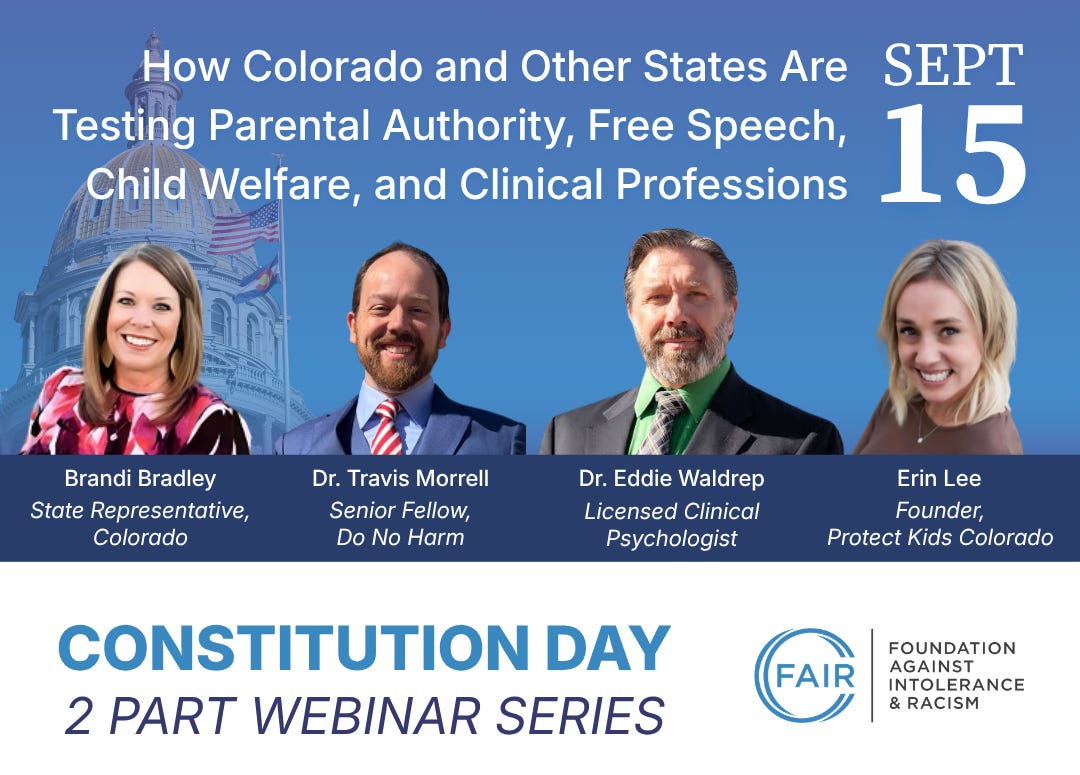
How Colorado and Other States Are Testing Parental Authority, Free Speech, Child Welfare, and Clinical Professions
This will be the first in a two part series intended to highlight new laws that breach our Constitutional rights. Colorado has passed a series of laws that many parents, clinicians, and citizens believe undermine parental authority, chill free speech, place children at risk, and degrade the mental health and medical professions. In this first webinar of the Constitutional Rights Series, four leaders on the front lines will examine how these policies are playing out in real time—and what is at stake for families and free expression.
Featured speakers:
State Representative Brandi Bradley will discuss the steady erosion of parental rights in Colorado and the legislation she has championed to restore them.
Dr. Travis Morrell, Senior Fellow at Do No Harm, sees first-hand how bad medicine morphs into laws that impinge on civil rights.
Dr. Eddie Waldrep, clinical psychologist, will address how therapists are increasingly pressured into self-censorship and why the practice of therapy itself is at risk.
Erin Lee, co-founder of Protect Kids Colorado, will outline three ballot initiatives appearing before Colorado voters this November that offer a direct opportunity to strengthen protections for children’s well-being.
Join us for a clear-eyed look at the legislative landscape and the concrete paths still available to defend the rights of all Coloradans and Americans as we use one state as a case study of what to do when the state and federal laws conflict with each other.
Date: September 15, 2026
Time: 7:00 EST
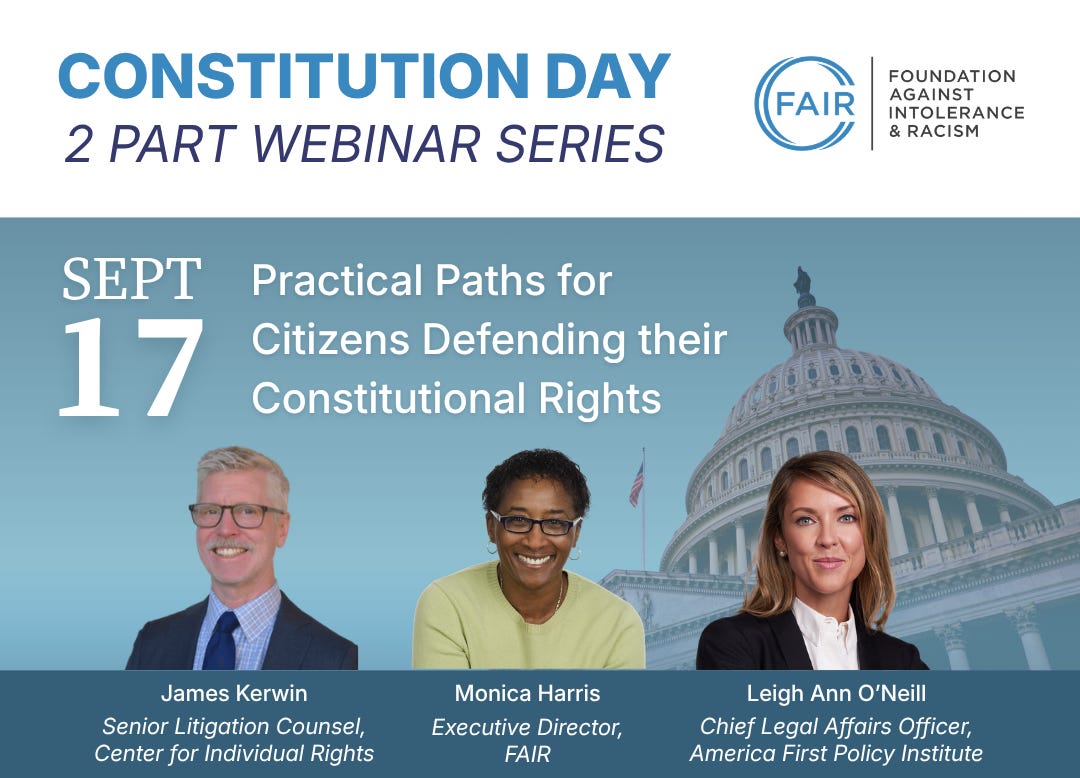
Practical Paths for Citizens Defending their Constitutional Rights
When state statutes clash with the U.S. Constitution and federal law, ordinary citizens are left asking a practical question: What can we actually do? This second webinar in the Constitutional Rights Series moves from diagnosis to action, examining both the legal roots of the problem and the lawful tools available to protect individual rights.
Featured speakers:
James Kerwin of the Center for Individual Rights will explain how Colorado’s Anti-Discrimination Act has become the legal foundation for recent laws that elevate group identity over individual rights and free speech.
Leigh Ann O’Neill of America First Policy Institute will walk through concrete, practical steps citizens can take to safeguard their constitutional protections when state policy conflicts with higher law.
Monica Harris
This session is designed for parents, professionals, and engaged Coloradans and all Americans who want clarity on the legal terrain and realistic next steps for defending their rights.
Date: September 17, 2026
Time: 7:00 EST
FAIR in Conversation is Back!
What is the difference between the isms? Socialism, Capitalism, Fascism, Communism…
The United States was founded on a constitutional system that places individual liberty, limited government, and the rule of law at its center. Yet throughout history, competing political philosophies, including socialism and communism, have offered very different answers to fundamental questions about the relationship between the individual, the state, property, equality, and freedom.
How different are these competing visions? Can they coexist within America’s constitutional framework? And what do we actually mean when we use labels like communism, socialism, capitalism, fascism, and democracy?
Whether you believe communism represents a growing influence in American life, think the concern is overstated, or simply want a deeper understanding of the issues, this conversation is designed to encourage thoughtful discussion rather than partisan talking points.
Sessions will be virtual, open to all FAIR members, and designed to be as accessible as they are substantive. You don’t need to have read anything in advance. Just bring your curiosity, your willingness to listen, and your commitment to engage in good faith.
. Sessions will run monthly through September 23rd. We hope you’ll join us!

Note to readers: We have paused the FAIR News podcast. If you prefer listening, rather than reading these newsletters, an audio version is available directly on the Substack app. Thank you for tuning in!
Sounds like some good stuff. I hope it's beneficial to artists like myself.